When I launched my first blog, I thought a pretty header and a fancy slider would do the heavy lifting. Three months later, bounce rates and a cranky inbox taught me otherwise. Your theme isn’t decoration — it’s one of your most powerful growth tools. Pick the right one, and readers linger, subscribe, and come back. Pick the wrong one, and they bail faster than someone ghosting a bad date. ⏱️ 11-min read
This guide walks new bloggers and small- to mid-size WordPress site owners through choosing a theme that prioritizes speed, user experience, and content features that build loyalty. Expect practical checks, a 7-step evaluation checklist, honest theme recommendations, and post-installation steps that avoid the usual tech overwhelm. I’ll even tell you which tests to run before you fall for that gorgeous demo — because pretty pixels don’t pay the rent.
Choosing a Theme for Loyalty: Speed, UX, and Content
Think of your theme as the living room where your audience decides to stay and chat — or bolt for the exit. A loyalty-focused theme combines three pillars: speed, accessibility, and content-first layouts. Speed means lean code, minimal render-blocking scripts, and sensible defaults like lazy-loading images. Accessibility ensures keyboard navigation, readable contrast ratios, and proper alt text so your content works for everyone. Content-first design puts your writing front and center: clear typographic hierarchy, predictable post templates, and archive pages that make the next article obvious.
Don’t judge a theme by its demo screenshots. Test the live demo with real content (not Lorem ipsum—seriously) to see how titles wrap, images scale, and long-form posts behave. Look for themes that include structured templates: article, list, series/hub pages, and an email signup layout that doesn’t scream “subscribe now or else.” If you publish daily, prioritize templates and flexible post formats; if you publish long guides, favor typographic controls and table-of-contents support.
I once switched a site to a theme that looked like a magazine and lost 18% of mobile traffic overnight — because the demo had hidden scripts and bloated fonts. Moral of the story: a theme that helps readers find and enjoy your content is worth more than one that just ‘looks’ professional. For technical standards and recommended practices, see Google’s Core Web Vitals guide and the WordPress Theme Developer Handbook for what modern themes should do under the hood (https://web.dev/vitals/, https://developer.wordpress.org/themes/).
Benchmark Performance Before Aesthetics
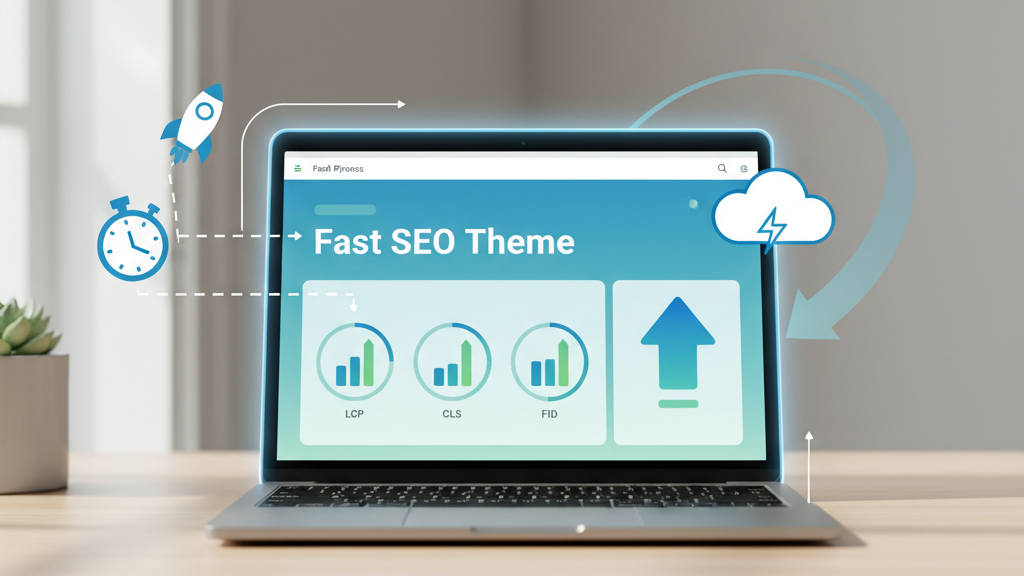
Here’s a blunt truth: no amount of design polish will keep readers on a slow site. Performance is the foundation of loyalty. Before you click “Activate”, run tests and aim for a fast mobile experience — industry advice now recommends Largest Contentful Paint (LCP) under 2 seconds for a pleasant experience. Use tools like Lighthouse, PageSpeed Insights, or WebPageTest to check how the demo performs from different locations and mobile profiles.
When you evaluate a theme, inspect how many scripts and fonts it loads. Fonts can be sneaky performance parasites; a theme with four or five web fonts and weight variants will add significant download time. Prefer themes that allow you to disable unused features and defer non-critical scripts. Pay attention to CSS size and whether the theme supports critical CSS or async loading. If the demo site scores poorly on Core Web Vitals, don’t assume you can magically fix it after installation — some themes are just heavy by design.
Test on mobile data speeds (3G/4G throttling) and watch the waterfall. A fast theme will show a tight, short waterfall with minimal render-blocking resources. If images or third-party widgets take forever to load, that’s not a “tweak later” problem — it's likely baked into the theme demo. In short: choose a theme that performs well out of the box and gives you the knobs to get even faster.
Design for Readability and Navigation
Design is more than pretty colors — it's the scaffolding that helps people read, understand, and click. Prioritize typography: readable sizes (around 16px body on desktop, up to 18px on small screens), line lengths of 60–75 characters, and line-height between 1.4 and 1.6. Avoid cramped type and tiny buttons; nothing says “you’re not welcome here” like illegible body text. Your theme should let you control these settings without writing CSS.
Navigation clarity is a secret weapon for retention. Limit top-level menu items to six to eight and use clear labels (Home, Blog, Guides, About, Resources). Include search in a predictable spot (top-right or inside a visible header). Breadcrumbs are small but mighty: they reduce disorientation on deep article pages and help users navigate category hierarchies. A sticky header with a compact menu keeps CTAs handy without eating screen real estate — but don’t let it dominate the viewport on mobile, or you’ll annoy users like a telemarketer before coffee.
Hierarchy matters: featured posts, series hubs, and archive pages should visually signal what’s important and what’s a bonus. Leave breathing room; white space is like elbow room for the eyes. And for goodness’ sake, allow a dedicated area for calls-to-action that doesn’t feel like a pop-up ambulance chasing them off the road. If the theme forces ads, widgets, or huge sidebars into the primary content column, walk away — that’s not a content-first layout, it’s an identity crisis.
Content-Driven Features That Drive Return Visitors
The best themes act like good hosts: they help readers discover more content naturally. Look for built-in features that extend sessions and encourage subscription without nudging like a clingy ex. Useful elements include related-post blocks, series templates, content hubs, featured post areas, and author bio boxes. These features should be configurable and avoid performance-killing queries for every page load.
Series and hub templates are especially powerful. If you run multi-part tutorials, case studies, or serialized content, a theme that supports sequence pages and progress markers keeps readers coming back. Likewise, featured-post or editorial blocks on the homepage drive exploration — but prefer themes that let you choose manual curation or smart auto-selection based on tags. Manually curated lists are great for control; smart blocks are great for scale.
Comments and community tools feed loyalty, too. Themes that integrate modern comment experiences (threaded replies, lazy-loaded comments, social logins, moderation tools) turn a passive audience into a conversation. Some themes offer built-in like/vote systems or curated showcase blocks for top comments — these aren’t fluff. They make the site feel alive. Also check for internal link widgets and editorial blocks that help you showcase related series or evergreen guides — the easier you make navigating your content, the longer readers stay.
Built-In SEO and Accessibility as Growth Levers
SEO and accessibility aren’t optional extras; they’re accelerators for audience growth. A theme that emits clean, semantic HTML makes life easier for search engines and assistive technologies alike. Look for proper use of heading hierarchy (H1 per post, clear H2 sections), schema for articles, and structured data for breadcrumbs and FAQs. Many modern themes include built-in schema that supports articles, breadcrumbs, and FAQ — which can improve search visibility and click-through rates.
Accessibility is a growth lever because it expands your potential audience and reduces friction. Verify color contrast ratios, keyboard navigability, explicit ARIA labels where needed, and sensible focus states on interactive elements. A theme may look accessible until you try to tab through it; test with a keyboard and a screen reader if possible. Don’t assume plugins will fix every accessibility oversight — a theme that starts accessible saves you hours of retrofitting and potential embarrassment.
Meta controls matter: themes that allow you to customize title tags, meta descriptions, and canonical URLs without a plugin make publishing smoother. That said, you’ll still want an SEO plugin for full control (e.g., Yoast, Rank Math) but avoid themes that fight these plugins. Finally, clean URL structures and logical archive pages help both readers and crawlers. If your theme produces messy permalinks or duplicates content via multiple archive endpoints, reconsider — nothing kills SEO like duplicate content confusion.
Free vs. Paid Theme Options for Beginners
When you’re starting out, the choice between free and paid themes boils down to risk tolerance, budget, and how much time you want to spend fiddling. Popular free themes — Astra, Kadence, Neve, and GeneratePress — offer solid foundations with lightweight code and upgrade paths to premium features. I’ve used GeneratePress to launch simple editorial sites that looked professional and loaded quickly without a paid license. These themes give you a clean starting point and optional paid modules when you need advanced layouts or support.
Premium themes or pro versions can save time with prebuilt templates, advanced performance options, and priority support. But weigh total cost: initial purchase, renewals, compatibility with plugins, and migration friction if you change themes later. Premium support is valuable if you’re not comfortable troubleshooting conflicts. For many bloggers, starting with a reputable free theme and upgrading only when you need specific features strikes the right balance.
Theme portability matters. Some premium themes lock you into proprietary shortcodes, widgets, and page-builder content that get messy if you switch later. Prefer themes that respect WordPress standards and export clean HTML when deactivated. Also evaluate the developer’s track record — frequent updates, a public changelog, and active support forums are signs of long-term reliability. If a theme hasn’t been updated in a year, treat it like a vintage car: nostalgic, but potentially unsafe for daily use.
Customization vs. Bloat: Keep What Matters
Customization is delightful until it slows your site to a crawl. Start by listing only the options you actually need: header layout, color palette, typography, and where your primary CTA lives. Keep that list tight and use it as a filter when browsing themes. If a theme offers 20 header styles and 70 font families you’ll never use, that’s potential bloat disguised as choice. You're buying flexibility, not indecision.
Beware themes that bundle too many proprietary features (mega menus, sliders, social feeds) that you can get with lightweight plugins. Every extra feature is extra JavaScript, extra CSS, and extra maintenance. If a theme makes you install a dozen companion plugins to “unlock” its demos, that’s a red flag. Ideally, your theme should do the essentials well and defer specialized functionality to curated, performant plugins.
Plugin impact is real. Run an audit: if adding a plugin increases your page weight by more than a few percent or adds render-blocking assets, reconsider. Use tools like Query Monitor in staging to see database overhead and slow hooks. And always ask: can this be achieved with a simple block, lightweight plugin, or theme setting? If yes, choose the lighter route. Think minimalism with purpose — like packing for a weekend trip, not a move to Mars.
Practical Implementation: Evaluation, Migration, and Maintenance
Picking a theme is the easy part. Implementing it without breaking your site or burning days of productivity takes planning. I recommend a staged approach: evaluate, test on staging, migrate with a phased rollout, and maintain on a schedule. Here’s a practical 7-step checklist I use when evaluating and switching themes:
- Preview the live demo on desktop, tablet, and mobile with real content — not Lorem ipsum.
- Run performance tests (Lighthouse/PageSpeed, WebPageTest) and record Core Web Vitals baseline.
- Check accessibility basics: keyboard nav, color contrast, and heading structure.
- Confirm plugin compatibility (SEO, caching, forms, membership) on staging environment.
- Review documentation and support channels; test contact by opening a support ticket.
- Create a backup and snapshot of your site before any changes; test restore process.
- Plan a phased rollout: soft launch to a segment of users or redirect a portion of traffic, monitor, then fully switch.
During migration, a staging site is your safety harness. Use a copy of your live site to test theme activation, plugin interactions, and content templates. Check common page types: single posts, long-form guides, archives, tags, pages with forms, and pages with embedded third-party widgets (email opt-ins, social embeds). If something breaks, document the bug, check theme docs, and file a support ticket — don’t try to solve critical PHP errors on a live site at midnight with coffee and dread.
Maintenance is ongoing. Set up weekly or monthly checks: plugin updates, theme updates, backups, and performance audits. Keep a maintenance calendar and automate where possible — scheduled backups, uptime monitoring, and plugin update windows. Security updates matter; choose themes that push updates and communicate changes. If the developer vanishes, you don’t want to be the one playing sysadmin for a theme bug that exposes users’ data.
Post-Installation: Optimizing Your Chosen Theme for Loyalty
Installation isn’t the finish line; optimization is where loyalty actually gets built. Start with caching: a page cache makes pages feel instant. If you’re on managed hosting with server-level caching, configure it first; otherwise consider WP Rocket or W3 Total Cache and enable page caching, minification, and GZIP compression. Test before and after to quantify gains — sometimes caching moves LCP by hundreds of milliseconds, which is huge for retention.
Image optimization comes next. Resize images to the theme’s maximum display widths, compress aggressively (70–80% often looks fine), and serve WebP when possible. Use tools like ShortPixel, Imagify, or a build-step optimizer if you manage many assets. Lazy loading for offscreen images keeps the initial paint fast; most modern themes enable it by default, but verify.
If your audience is global, add a CDN (Cloudflare, BunnyCDN, or StackPath) to reduce latency. Configure HTTP/2 or HTTP/3 if available, and set cache purges so updated posts don’t serve stale images. Monitor performance over time with synthetic and real-user metrics. Google’s PageSpeed is useful, but also set up Real User Monitoring (RUM) via the Chrome User Experience Report or a third-party tool to track how real visitors experience your pages. Small ongoing tweaks — font subsetting, deferring non-critical scripts, and trimming unused plugins — compound into significantly better loyalty.
h