Starting a blog on a free WordPress plan shouldn’t feel like trying to build a Swiss watch with a paperclip. I’ve helped a bunch of friends and early-stage bloggers go from “blank header, help!” to a polished, recognizable top bar in an afternoon — without buying a premium theme. This guide walks you through a repeatable, beginner-friendly workflow to pick a theme, plan a scalable layout, create a crisp logo with free tools, and implement everything so your site looks intentional and loads quickly. ⏱️ 10-min read
You’ll get pragmatic steps, small-design trade-offs I actually use, and a final 5-point checklist to keep tweaks fast. No designer degree required, just a little taste, some testing, and a willingness to delete the ten different header drafts you’ll inevitably make. Let’s make your header work for your content and your sanity.
Choose a header-friendly free WordPress theme
Pick a theme that treats the header like prime real estate, not a junk drawer. On WordPress.org you can filter for free themes that advertise responsive headers, logo uploaders, and header image areas — the basics that let you shape the top of your site without wrestling with code. I usually hunt for themes that mention a header image area, clear menu placement, and a sticky header option; those three features make everything easier later. Check the official directory for options: https://wordpress.org/themes/.
Why this matters: a header image area helps your logo or banner sit intentionally, a sticky header keeps navigation visible when readers scroll, and predictable menu locations (top, left, centered) stop visitors from playing hide-and-seek. Avoid themes that sneak in paywalls or demand half a dozen premium plugins to function — it’s like being offered a sports car with a locked ignition.
Practical test: Preview the theme in the Customizer’s device modes. Does the site identity panel let you upload a logo? Can you move the menu? If the live preview feels clunky or the theme relies on tons of external scripts, move on. I’ve learned the hard way that a “feature-rich” theme can become a performance tax on free hosting; simpler themes are faster, easier to fix, and kinder to your visitors’ internet connections.
Plan a scalable header layout
Before you drag pixels into place, sketch a few header layouts. Think of the header in zones: logo area, site title/tagline, primary navigation, and optional extras (search, CTA, social icons). I make quick wireframes — even a napkin sketch works — and test three standard patterns: logo left + menu right, centered logo + compact menu, and stacked (logo above menu) for narrow screens.
Decide on a maximum header height so the header scales predictably. I aim for desktop heights around 64–72px and horizontal padding of 20–24px, using rem or em units where the theme allows. That gives a rhythm so a larger title won’t shove the logo off the stage. Think of it as haircut proportions: too tall and your header screams for attention; too short and it awkwardly cuts off the name.
On mobile, prioritize what stays visible: usually the logo (or a small mark), the collapsed menu (hamburger), and optionally search. Hide secondary CTAs or move them into a slide-out panel. If you choose a sticky header, consider making it sticky only after a scroll threshold — that way the hero image or first paragraph isn't immediately occluded. In practice, many readers prefer starting with a clean view and getting the sticky header once they're ready to move around — like offering a helpful map after they’ve read the welcome sign.
Create a clean logo with free tools
Your logo is a tiny salesperson — it needs to read well at favicon size and still look sharp on a 1200px wide header. Use vector-friendly free tools like Canva (https://www.canva.com/), Inkscape, or Gravit Designer so your mark scales without pixel panic. I usually design a simple emblem or monogram plus a short wordmark; less is more. If your logo tries to be a casserole of shapes, it will be unreadable at 32px wide.
Design tips I actually use: pick a single, bold shape (initial, circle, or simple emblem), pair it with a short wordmark, and test at 16x16, 32x32, and 180x180. Export an SVG for crisp scaling when the theme and host support it, and a PNG-24 with transparent background for backwards compatibility. Run the PNG through a compressor like TinyPNG to shave kilobytes — file size matters even if you’re on a free plan.
Quick visual sanity check: place your exported logo inside a small square (the avatar or favicon size) and squint. If details vanish or lines thicken like bad eyebrow makeup, simplify. I once tried a delicate script for my header and had to replace it after realizing the “fancy loops” read as doodles on phones. Save yourself that embarrassment.
Choose cohesive colors and typography
A consistent color and type palette does heavy lifting for perceived quality. Choose a primary color, a secondary accent, and a neutral for text/background — that’s it. Keep contrast accessible: use a tool like the WebAIM contrast checker (https://webaim.org/resources/contrastchecker/) to verify your header text meets WCAG. If your text disappears against a background, you can add a subtle overlay or switch to a darker neutral.
For typography, pair a readable sans-serif for body copy with a complementary display or serif for headings. Google Fonts is a great free source — pick one clean sans (Inter, Roboto) and one characterful heading font (Playfair Display or Merriweather). Avoid the temptation to mix five fonts because “it felt artsy”; that’s how sites end up looking like your aunt’s holiday card.
Practical contrast trick: if your header sits over an image, use a semi-transparent overlay or a gradient that preserves text legibility. Also, limit font weights to reduce load times — regular, medium, and bold usually cover most needs. I keep a short cheat sheet with my hex codes and font pairings so every new post header matches the main site, which makes the brand feel like it has a personality rather than an identity crisis.
Implement the header and logo in WordPress (free plans)
Time to bring the design home. On WordPress.org, go to Appearance > Customize > Site Identity to upload your logo, set the site title and tagline, and add a site icon. Use the Customizer's live preview to adjust size so the logo sits comfortably without crowding navigation. On WordPress.com free plans, your options are more limited but still workable: use the header/logo blocks the theme provides or upload a header image if the logo uploader is locked behind a paid tier.
Create a primary navigation menu and assign it to the theme's menu location so links consistently appear across pages. If your theme supports a header image and you want a minimal look, skip it — negative space is a design tool. Accessibility note: add alternative text for your logo and a site icon so screen readers and browser tabs maintain context. This small step helps both usability and SEO.
When testing, check how the logo behaves when the menu collapses. If your logo is too wide and the menu squeezes, return to your logo file and export a compact mark-only version for mobile. I keep both desktop and lean mobile logo files in a "branding" folder — it saves time when a theme asks for different sizes. If you need more control than the Customizer gives, a tiny bit of custom CSS can adjust padding or max-height without breaking anything. Just keep changes documented so you can undo them later.
Make it mobile-friendly and fast
Mobile visitors are unforgiving. The header must be legible, unobtrusive, and quick to load. I aim for logo files under 100 KB — ideally much smaller. Use SVGs for scalability where possible, and compress PNG exports with TinyPNG to keep sizes down. Also, limit the number of web fonts and weights you load; each extra font is like asking the browser to brew another espresso shot before it starts serving content.
Simplify the mobile header: hide lengthy taglines, replace the full wordmark with a small mark, and collapse secondary CTAs into menus or slide-outs. Make sure tap targets are at least 44px high so users don't trigger the wrong link while scrolling. Test on a phone and tablet, and use browser device emulators as a backup. If navigation feels cramped, reduce logo width or switch to a stacked header (logo over menu) on small screens.
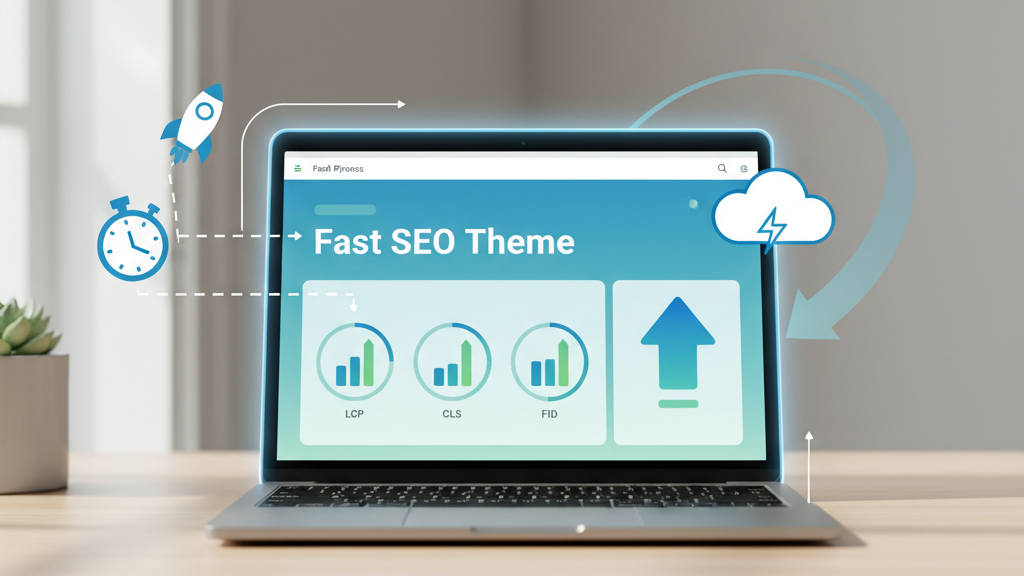
Performance wins: defer nonessential header scripts, minimize render-blocking resources, and choose a lean theme. You can check Core Web Vitals after changes to ensure your header tweaks didn't accidentally tank loading metrics. Remember, a pretty header that takes five seconds to appear is like a doormat that only welcomes people after they’ve left — it defeats the purpose.
Brand alignment with your content plan
Design without a plan becomes decoration. Your header and logo should signal what your blog covers and feel consistent across posts. Create a simple content calendar for 6–12 weeks that includes post themes, visual ideas, and any header variations you might test. I do a basic spreadsheet: topic, proposed featured image style, and whether the post needs a distinct category color or header accent.
Keep your logo timeless and versatile — avoid overly literal icons that lock you into a single topic. If you write about gardening and tech, a trowel crossed with a circuit board will only confuse readers and possibly upset both communities. Instead, pick neutral shapes and color cues that can adapt if your focus shifts.
Use the header to support your voice. Does your blog promise practical how-tos? Keep the header clean and authoritative. Are you running a playful lifestyle journal? Add a friendly accent color and a softer display font. Small changes — a category color strip, a micro-tagline change, or an accent hue for seasonal series — keep the brand fresh without breaking the visual system. Document these choices in a one-page brand guide so future tweaks are deliberate, not emotional.
Test, refine, and use a quick 5-point checklist
Testing turns good design into reliable design. I treat this as a ritual before launching or reworking the header. Here’s a compact, repeatable checklist you can run through in 10–20 minutes:
- Logo scales: Verify the logo reads clearly at favicon (16x16) and header sizes; export SVG or simplify if it pixelates.
- Mobile legibility: View the header at 320px width for phones; check for overlapping elements and cramped navigation.
- Contrast: Use the WebAIM contrast checker to ensure text/icons meet WCAG AA for header text against backgrounds.
- Tap targets: Ensure clickable areas are at least 44px and have comfortable spacing; test on a physical device if possible.
- Load performance: Confirm header assets remain under budget (logo <100 KB, minimal fonts) and check Core Web Vitals for regressions.
When you run this checklist, ask a friend for five minutes of feedback — fresh eyes catch what you miss. I once tweaked a header for hours only to have a friend say, “Why is your logo hiding behind the menu?” It was the kind of observation that saved me from launching a site with a logo that looked like it was playing peekaboo. Keep a short changelog: date, change, and reason. That way, when you inevitably revert a tweak two weeks later, you’ll know exactly why you did it in the first place.
Next step: pick a theme and make your first logo. Don’t let perfection stall progress — a clean, tested header beats a perfect one that never ships.
References: WordPress Themes Directory: https://wordpress.org/themes/ • Canva: https://www.canva.com/ • WebAIM Contrast Checker: https://webaim.org/resources/contrastchecker/