I’ve built portfolio sites for friends, colleagues, and my own projects without spending a dime on hosting—and yes, you can look professional without a custom domain or expensive plugins. This guide walks you through choosing the right free WordPress path, designing a clean visual showcase, optimizing images for speed, and creating a content plan that actually attracts clients. Think of it as the pocket-sized portfolio playbook: practical, slightly sarcastic, and designed to get you booked. ⏱️ 11-min read
If you want a gallery that loads fast, a blog that brings search traffic, and a contact flow that converts visitors into clients—without the wallet ache—read on. I’ll give step-by-step setup tips, design rules that matter, and real-life examples so you don’t have to learn everything the hard way, like I did after using a 6MB hero image and wondering why the internet hated me.
Choose your free WordPress path for a photographer portfolio
First decision: WordPress.com free plan or the DIY WordPress.org route on free/cheap hosting. I usually recommend WordPress.com for photographers who want minimal fuss and a reliable platform. The free plan gives you a yourname.wordpress.com subdomain, a handful of built-in themes, basic blogging tools, and storage that’s modest but workable for a portfolio. The trade-offs: you can’t install third-party plugins or custom CSS, and WordPress.com may show ads unless you upgrade. It’s like renting a nicely furnished apartment—you don’t own the place, but you can move in quickly and look tidy.
WordPress.org, on the other hand, is full ownership: install any theme, add plugins like advanced gallery tools or booking forms, and use a custom domain. But to host it you’ll need a server—some people try free hosts (they exist), but these are often unreliable or painfully slow. If you’re comfortable with a little technical setup and want full control long-term, WordPress.org is the future-proof option. If you’re testing the waters or want to launch fast, WordPress.com free gets you seen quicker.
Decision criteria in plain English: choose WordPress.com free if you want speed to market, reliability, built-in security, and minimal maintenance; choose WordPress.org if you want plugins, custom themes, and complete control (and are ready to pay for or manage hosting). Personally, I start many photographers on WordPress.com and migrate them later—there’s no shame in starting simple. If you want to try the free setup now: sign up at WordPress.com, choose the free plan, pick a short memorable subdomain, and get the base pages ready (About, Portfolio, Contact). It’s the fastest path from camera to client.
Design a portfolio that looks pro on a budget
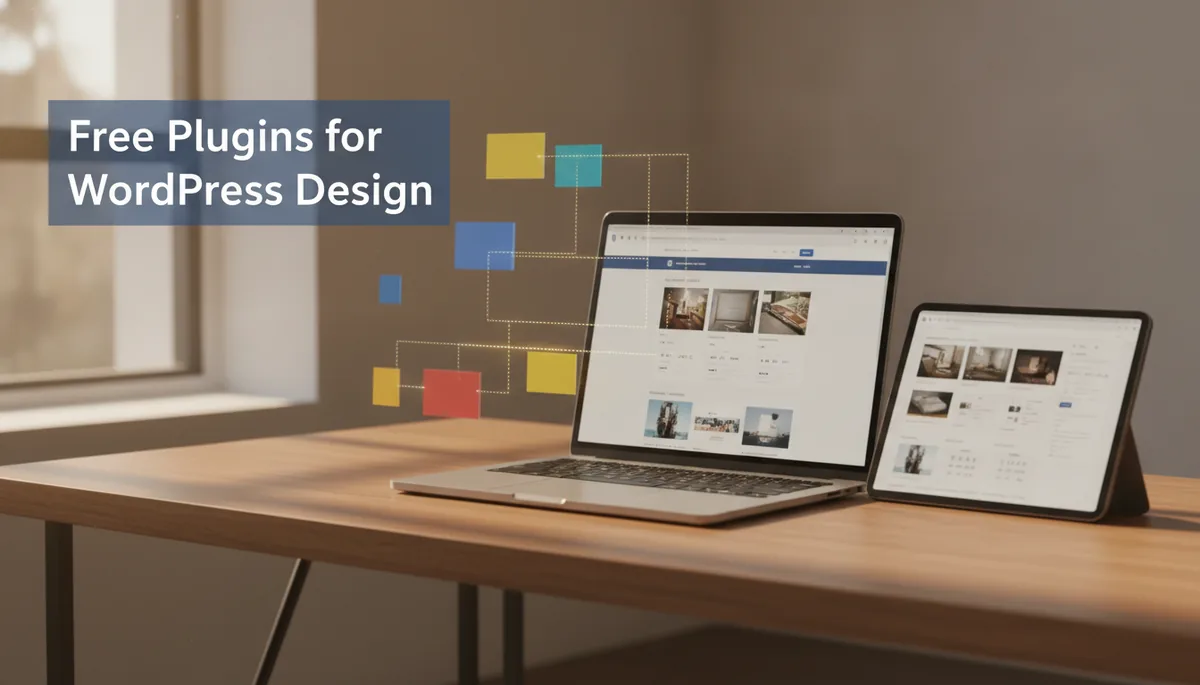
Good design is less about expensive bells and more about choices. Even on a free WordPress plan you can craft a portfolio that looks intentional: pick themes built for photography (Astra, Neve, Kadence have great free variants), prioritize grid or gallery layouts, and tame your color palette. Think of your site as a gallery wall—white or neutral backgrounds, consistent crops, and generous spacing make images breathe. If your theme is shouting louder than your photos, switch it. Your pictures should be the headliner, not the neon banner.
Practical theme tips: search Themes > Filter > Free and look for “photography” or “portfolio” tags. Preview at least three themes on desktop and mobile. I often choose themes that offer a fullscreen hero for a signature shot and a masonry or grid gallery for projects. Free themes from the well-known families (Astra, Neve, OceanWP, Kadence) are fast and responsive—meaning they won’t sabotage your SEO or mobile users. Pro tip: pick a theme with clean typography out of the box; swapping fonts later can cascade into odd spacing headaches.
Customize without coding via Appearance > Customize. Stick to two accent colors and one neutral; pair a bold display font for headings with a readable web font for body text (Google Fonts are free). For image presentation: use cropped thumbnails of the same aspect ratio for gallery pages, and a large, un-cropped hero for project pages. Licensing matters—if you include client photos, add a short caption or license note on the project page. If you sell stock or prints, clearly state usage rules. Design isn’t about complexity; it’s about clarity, repeatable templates, and telling visitors exactly where to look.
Build a fast, image-friendly site structure
Structure is the scaffolding for both client journeys and SEO. Keep navigation simple: Portfolio, About, Services (or Pricing), Blog, Contact. Within Portfolio, add category submenus—Weddings, Portraits, Commercial—so clients jump straight to what matters. I always aim for 3–6 top-level menu items; any more and people pretend to be interested while quietly leaving. Large buttons and thumb-friendly spacing are essential—be kind to mobile thumbs.
Use WordPress’ block editor to assemble galleries: keep each project to 6–12 hero images, not 100. A tight selection tells a stronger story and saves bandwidth. Categorize projects with clear, client-focused names (e.g., “San Francisco Wedding — Golden Gate Park” rather than “Project #12”). For permalinks, use clean slugs: /portfolio/city-portrait-session/ reads well and helps search engines; avoid date-based links that look like a blog timestamped into oblivion.
Taxonomy and internal linking are underrated SEO tools. Tag images and posts with locations, styles, and subjects (e.g., “editorial”, “environmental portraits”, “brooklyn”). Then, link from a blog post about a shoot directly to the portfolio project and vice versa. That creates logical pathways for both users and crawlers. Finally, keep plugins lean—especially on free plans where you can’t add them. Rely on theme features and the block editor for most layout needs. Less is more when your site lives on limited storage and wants to avoid loading like a dial-up mixtape.
Essential image optimization for free platforms
Images are your product, but they’re also heavy. Compressing them properly is non-negotiable unless you enjoy watching visitors leave while a spinner dithers. Use JPEG for most photos, PNG for logos and graphics with transparency, and WebP when you can (modern browsers support it and it often reduces file size significantly). Google’s tests show WebP can save around 25–35% compared to JPEG at similar quality—think of it as the diet plan your images actually stick to. If your audience includes older browsers, provide fallbacks or use tools that deliver the right format automatically.
Resizing matters. I export hero images between 1200–2000px wide depending on site layout, and smaller gallery images at 800–1200px. That gives crisp display without overkill. After resizing, run files through a compressor: TinyPNG and Squoosh are free and do a superb job. Squoosh lets you visually compare settings; TinyPNG is fast and reliable for batch work. Aim to keep most gallery images under 200–400KB when possible—any larger and mobile users on metered connections will start forming escape plans.
Serve images responsibly: use the WordPress image block’s “large” or “medium” sizes instead of inserting full-resolution files, and enable lazy loading so images below the fold don’t load until needed (WordPress includes native lazy-loading). Keep EXIF data for provenance and captions but strip unnecessary metadata to save bytes. Finally, name image files descriptively (e.g., san-francisco-elopement-bridge.jpg) and fill alt text thoughtfully; it helps SEO and accessibility—plus screen readers will thank you. If you ignore alt text, it’s like serving a gallery with the lights off and a sign that says “guess what this is.”
Create a content plan that attracts clients
Content wins trust. A portfolio with no context is a pretty brochure; a portfolio plus a content plan is a lead magnet. Start by defining 2–3 client personas—bride-to-be, creative director at an agency, local small business owner—and list what they search for and what questions they have. That drives blog topics: behind-the-scenes shoot breakdowns, client case studies with before/after edits, location guides, and concise “what to expect” posts for booking. Aim for stories that answer real objections: “How long will my wedding photos take?” or “What does a commercial half-day shoot cost?”
Build a simple content calendar: one in-depth blog post (900–1,500 words) every two weeks and shorter social-ready posts weekly. Create evergreen content—location scouting guides, pose lists, and gear recommendations—that performs over time, plus timely posts for seasonal spikes. I recommend batching content: shoot during a weekend of projects and write drafts on slow days. That keeps momentum without burning you out. Two posts per month is a realistic sweet spot for many photographers balancing shoots and editing.
Structure posts to be skimmable: strong hero image, short intro, H2 subsections, image carousels with captions, and a clear call to action (“View the full gallery” or “Book a consult”). Include practical takeaways in each post—lighting diagrams, gear lists, shot lists—so readers leave feeling smarter (and more inclined to hire you). Don’t forget to optimize images, titles, and meta descriptions for relevant long-tail keywords like “Brooklyn engagement photographer tips” rather than fighting the “wedding photographer” keyword arm wrestle. Content is your slow-building engine; treat it like compound interest, not instant coffee.
Write WordPress posts that rank (with photos)
When your post includes photos, SEO is both text and pixels. Start with a compelling title that blends emotion and search intent: “How I Shot a Moody Elopement in the Redwoods (Lighting + Gear)” beats “Redwoods Shoot.” Use headings to structure the post, and include your target keyword naturally—don’t force it like a square peg into a round caption. Meta descriptions should be concise, helpful, and clickable. On WordPress.com you can edit basic SEO fields; on self-hosted sites, plugins like Yoast or Rank Math do the heavy lifting (but remember those need paid hosting).
Image-specific on-page SEO: descriptive filenames, alt text that serves accessibility and SEO, concise captions that tell a mini-story, and structured data where possible. Alt text should be accurate and helpful: “bride and groom laughing under banyan tree — golden hour portrait, San Diego” is better than “IMG_1234.” Captions get read—use them to add context, link to related portfolio projects, or highlight a client testimonial. Don’t treat captions as an afterthought; they’re often the bridge between a scroll and an email inquiry.
Internal linking helps pages rank faster. Link from blog posts to the related portfolio project, and from service pages to helpful blog posts. Create pillar pages for services (e.g., “Wedding Photography — Packages & Process”) and cluster related blog posts around them. For social sharing, optimize Open Graph and Twitter Card metadata so shared posts show the best image and a clear description—this improves click-through rates on Pinterest, Facebook, and wherever your audience lurks. On WordPress.com, social previews are handled automatically, but double-check the image size and crop in the post editor to avoid awkward thumbnails that look like they were chosen by a drunk raccoon.
Grow organic traffic without paid ads
You don’t need a massive ad budget to get clients. Start with Pinterest—photographers, rejoice, it’s basically a visual search engine. Create vertical pins (1000x1500 px recommended), use keyword-rich descriptions (think “outdoor engagement photoshoot tips”), and pin both project pages and blog posts. I’ve seen photographers get consistent referral traffic from Pinterest with minimal effort; it’s the online equivalent of putting up a great flyer in a café that happens to be in front of millions of people.
Instagram is still essential for discovery and relationship building. Use high-quality squares or reformat for Stories and Reels; link your WordPress portfolio in your bio and use Linktree only if you truly need to juggle many links. Cross-post smartly: pin blog posts and portfolio projects to Pinterest, share those pins on Facebook groups, and snapshot behind-the-scenes clips to Instagram Stories. Automations like IFTTT or Zapier can post new WordPress content to social accounts automatically, saving you hours of copy-paste chores. For more streamlined distribution, tools like Trafficontent can automate and scale sharing—but don’t rely on automation as a substitute for genuine engagement.
SEO basics still matter: target long-tail keywords, build internal links, and encourage backlinks by contributing guest posts, local directories, and client testimonials. Reach out to venues you’ve shot at and ask to be listed on their preferred vendors page—that’s a high-quality local backlink. Also, be patient: organic growth compounds slowly, but steady content, proper image SEO, and consistent pinning or posting multiply over months. Treat your portfolio like a garden: plant frequently, prune occasionally, and don’t be surprised when things bloom in surprising places.
Showcasing success: examples and what to copy
Seeing what works is one of the fastest ways to get inspired. Look for WordPress.com photographers who keep homepages clean: a featured gallery, a concise bio, and a clear “Hire me”