Starting a blog doesn't have to feel like lighting money on fire and watching traffic reports cry themselves to sleep. I've launched and optimized small WordPress sites that began earning within weeks — not years — by focusing on organic content, conversion-first setup, and free or low-cost tools. Think less “splashy ad spend” and more “smart plant-and-harvest.” ⏱️ 10-min read
This guide walks you step-by-step from the platform decision to content, SEO, monetization, and tiny-budget growth hacks. I’ll share concrete numbers, templates, and a 30–90 day plan you can follow whether you’re a hobby blogger, solopreneur, or small business owner. No jargon, just practical moves that get payback faster than a $50 boost post evaporates.
Why a low-cost WordPress blog often beats high ad budgets for fast ROI
Paid ads are great when you need instant visibility — like blasting confetti at a party — but they stop working the moment you stop paying. Organic content, on the other hand, compounds. An evergreen post that costs you time to write can drive traffic and sales for months or years. It's the difference between planting an apple tree and buying apples by the bag; the tree keeps giving.
Do the math: imagine a $50 ad campaign that brings 500 clicks (CPC = $0.10) and converts at 1% with a $20 average order — that’s 5 sales x $20 = $100 gross. Sounds fine, except you must keep buying ads. Now compare that to one well-optimized evergreen post written for $50 (your time or a small freelance fee) that gets 100 organic visits per month. If conversion is 2% with $20 average order, that's 2 sales per month — $40 monthly, and it keeps paying. By month three, you've out-earned the single ad spend and continue to compound.
Ads still make sense when you’re launching a product, promoting time-limited offers, or testing market fit. My rule: test with $5–$50 to validate an idea, then funnel profits into content that lasts. Automation tools such as Trafficontent can also slash the time to publish SEO-optimized posts and images, turning a one-off investment into ongoing returns.
Choose the right starter path: WordPress.com vs WordPress.org (free and cheap options)
First fork: WordPress.com or WordPress.org? I always tell beginners: ask whether you want speed or control. WordPress.com’s free tier gets you online in minutes — ideal for playing around or a lightweight hobby blog. But it’s like renting a storefront on their terms: limited plugins, restricted monetization, and branded subdomains. You can upgrade, but costs climb fast.
WordPress.org (self-hosted) is where the freedom lives. You control plugins, themes, SEO, monetization options, and site structure. It costs a little more upfront — domain plus hosting — but gives a much higher upside. For 2025 ballpark: domain ~$10–15/year, budget hosting typically $3–10/month on introductory plans (Bluehost, SiteGround, DreamHost, or Hostinger). Expect $30–120 for the first year if you pick an introductory host and a domain. That’s small change compared to monthly ad spends.
Decision checklist (fast):
- If you want zero fuss, hobby-level, and no money: WordPress.com free tier.
- If you plan to monetize (affiliate links, digital products, email list): choose WordPress.org.
- If you want minimal monthly cost + full control: pick a budget host, grab a domain, enable HTTPS.
My experience: I started on WordPress.com to learn the ropes, then migrated to .org when I wanted affiliates and better SEO control. Migration is straightforward and worth the small investment if you want real ROI. For official resources, see WordPress.org for downloads and Google’s advice on hosting/SSL on Search Central.
Free themes and must-have plugins that give a pro look and faster growth
You don’t need a designer who charges like they import fonts from a private island. Start with a clean, fast theme and a few essential plugins. Speed matters — visitors and Google both hate sluggish sites. My go-to free themes are GeneratePress, Astra, and Neve: lightweight, responsive, and easy to customize. They give a “polished” look without the bloat of many free themes that try to be everything but succeed at nothing.
Essential free plugins I install on every early blog:
- Rank Math or Yoast SEO — for metadata, sitemaps, and basic SEO guidance.
- WP Super Cache or WP Fastest Cache — caching for faster page loads.
- UpdraftPlus — automatic backups in case your cat walks across the keyboard and erases dinner.
- WPForms Lite or Contact Form 7 — to collect emails and inquiries.
- Smush or ShortPixel (free tier) — image optimization.
One paid/upgradable suggestion: a premium cache or CDN (Cloudflare Pro or WP Rocket) can be worth $50–100/year if your site needs speed and revenue depends on it. For content automation and fast SEO-optimized publishing, Trafficontent integrates with WordPress to generate posts, social images, FAQ schema, and UTM tracking — useful when you’re doing the heavy lifting solo.
Content plan that drives traffic and conversions (templates + calendar)
Content without a plan is like a canoe without a paddle: charming, but you'll drift. I recommend a compact framework of 3–5 content pillars that align with your monetization. For example, if you sell craft supplies: “Beginner Projects,” “Product Reviews & Recommendations,” and “Business Tips for Makers.” Pick pillars that map directly to revenue channels.
Three evergreen post templates that convert:
- How-to + product tie-in — Teach a useful skill and naturally recommend the product you affiliate with. Start with the reader’s pain, walk the steps, and close with a clear CTA to the product or download. Think “How to finish a DIY necklace in 30 minutes (tools I use).”
- Head-to-head comparison — “X vs Y” posts convert well because people searching those phrases are close to buying. Include a simple comparison table and a recommended pick with reasons.
- Step-by-step guide (deep evergreen) — Long-form, actionable guides become cornerstone content. Link cluster posts back to this pillar to boost authority.
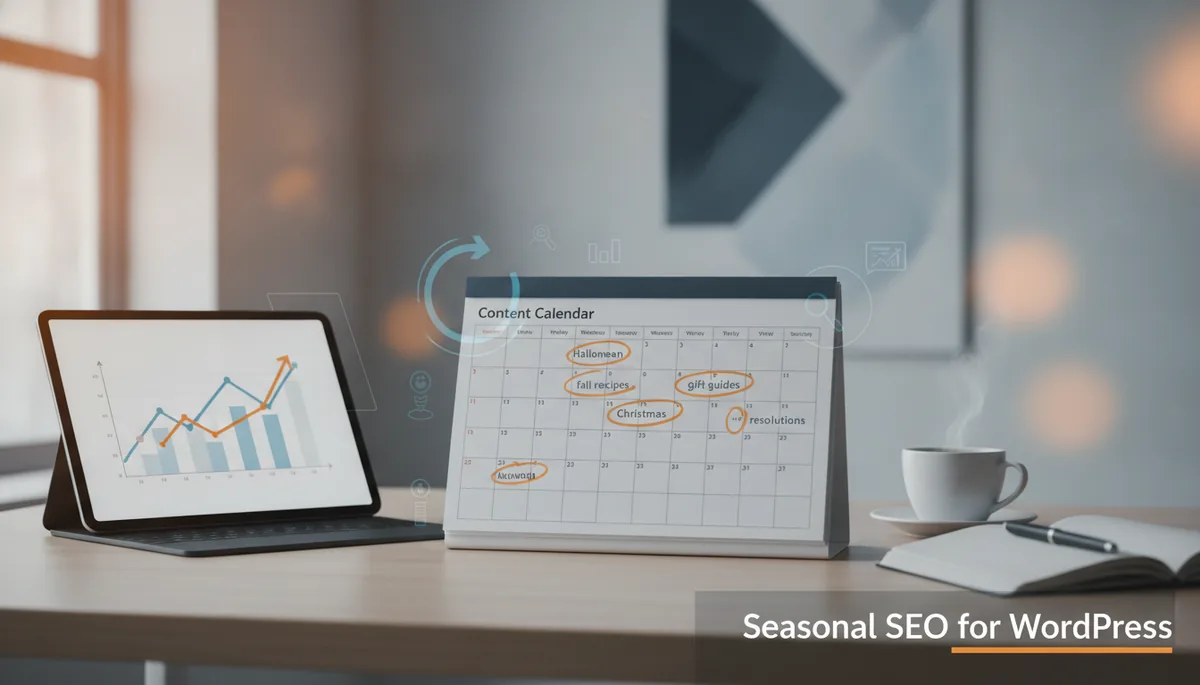
90-day content calendar template (simple):
- Weeks 1–4: Publish 3 pillar posts (one per pillar) + 1 short promotional post.
- Weeks 5–8: Publish 2 supporting posts per pillar + start an email opt-in incentive.
- Weeks 9–12: Promote best performers, create one digital product, and prepare outreach for guest posts.
Batch writing and using an automation tool like Trafficontent for drafting and scheduling can keep you consistent without burning out. My mantra: consistency beats perfection; templates keep quality and speed.
SEO tactics beginners can do for free to rank faster
SEO doesn’t require a subscription to a $99/month tool to be effective. Start with free, high-impact actions using Google Search Console and a few lightweight research habits. Search Console shows what queries already bring impressions — low-hanging fruit. Use Google’s Keyword Planner (free with a Google Ads account) or free extensions like Keyword Surfer to find long-tail queries with clear intent. Also, scan the “People also ask” box and related searches for question phrases you can answer directly.
On-page SEO checklist for every post:
- Include the target keyword near the start of the title and in one H2.
- Write a concise meta description (~150 characters) that invites clicks.
- Optimize images (compressed, descriptive alt text) and enable lazy loading.
- Use clean URLs with the keyword and keep them short.
- Add internal links to 2–3 related posts (older or pillar content) and use descriptive anchor text.
- Consider FAQ schema for question-style posts — Rank Math or Yoast can help generate it.
Fast internal-linking plan: after you publish a new post, spend 10–15 minutes updating two relevant older posts to link to it. This small action sends signals to search engines that your new page is part of a topical cluster — and it helps users stick around, which improves rankings. For deeper reading on Search Console and indexing, Google’s Search Central is a good authoritative reference.
Monetization methods that don’t rely on heavy ad spend
You can start earning with a small audience if your monetization ladder is smart. I prefer a mix: affiliate posts, low-cost digital products, and an email funnel that nudges readers toward purchase — all without paying for traffic. Here’s how each plays out on a shoestring.
Affiliate-focused product posts: write honest reviews and comparisons targeting purchase-intent keywords. Include real examples, pros/cons, and a clear CTA. If you follow a niche, aim for merchants with recurring commissions (SaaS) or solid affiliate payouts (hosting, tools). Don’t be sleazy — disclose relationships; trust converts better than hype.
Simple digital products: create an ebook, template, or mini-course priced $7–$29. For many creators, a $15 template kit or checklist yields high-margin sales. Promote via blog posts and an email sequence of 3–5 messages that provide value and then pitch the product.
Sponsored posts and native sponsorships: once you hit steady traffic and a targeted email list, reach out to niche brands for sponsored content. Start small — one sponsored post per month — and use your analytics to prove value.
Example monetization timeline: Month 0–1 build site + 3 pillar posts; Month 2 launch an email opt-in and 1 digital product; Month 3 run small $20 boosts to validate the product page if organic traffic is slow. A one-paragraph converting post format: hook → teach 3 steps → showcase product tie-in → social proof → CTA with opt-in or purchase link. Simple, replicable, effective.
Distribution and growth hacks on a shoestring
Publishing a post and hoping it gets traction is like throwing a message in a bottle into the ocean and waiting for a rescue boat. You need distribution that multiplies reach for near-zero cost. Repurposing is your friend: turn a long post into multiple short assets and publish across platforms.
Repurposing formula:
- One long blog post → 3 X (Twitter) threads or an X carousel; 3 LinkedIn posts customized for that audience.
- Create 6–10 Pinterest pins using vertical images (Trafficontent can automate image creation) and link them to the post.
- Make 3 short videos (Reels/YouTube Shorts/TikTok) that highlight key tips or before/after results.
Guest posts and niche communities: pitch three guest posts per month to blogs or newsletters in your niche. Participate actively in forums and subreddits where your audience hangs out — not spam, but helpful answers linking back to relevant posts. Use scheduling tools (free tiers of Buffer or Hootsuite, or Trafficontent’s autopublish features) so your content hits multiple channels without manual effort.
Finally, use UTM parameters when sharing links so you can track which platforms actually send conversions. That way you stop guessing and start investing time where it pays off.
Track ROI, iterate, and where to spend your first $50–$200
Metrics you should track from day one: organic traffic, top landing pages, email signups, conversion rate (sales or signups per visit), and revenue per post. Google Analytics and Search Console handle most of this for free. I keep a simple spreadsheet that tracks the lifetime revenue of each pillar post — once a post pays for itself, it becomes a model to replicate.
A/B testing plan (cheap): test two headlines and two CTAs for your top-performing post. Run each variant for a week or until 200–300 visits have accrued, then pick the winner. Headline changes are low-cost and often yield the biggest lift.
Where to spend $50–$200 first (prioritized):
- Domain and SSL if you haven't already (~$10–$20/year).
- Reliable email provider (ConvertKit free tier or MailerLite starts low) — $0–$20/month depending on list size.
- Faster hosting upgrade or a small caching plugin ($30–$100/year) if your site is sluggish.
- Small, targeted ad test ($50–$100) to validate an offer or drive a high-intent post (Pinterest ads often convert well for evergreen content).
Spend when you see early wins: if an evergreen post gets consistent traffic and converts at >1–2%, spend to amplify it. If not, fix the post — improve intent match, add internal links, and A/B test the CTA. My parting practical tip: start with the free tools (Search Console, Google Analytics), invest small to validate, and let organic content deliver the compounding returns.
Next step: pick one pillar, write one converting evergreen post using the templates above, publish it, and set a 30-day plan to promote and track it. Repeat and scale what works — that’s how a tiny blog turns into steady income without a bottomless ad budget.
References: WordPress.org, Google Search Central, Google Keyword Planner