If you’re a solo creator or small WordPress team, seasonal content is the marketing cheat code you didn’t know you needed. I’ve used seasonal hooks to lift traffic, convert casual readers into email subscribers, and build repeatable campaigns that don’t require living in a content hamster wheel. This guide walks through a full-year approach—quick wins, a reusable calendar, research methods, convertible formats, SEO and WordPress setup, promotion playbooks, and simple measurement so you can iterate without losing your mind. ⏱️ 10-min read
Think of this as a friendly, caffeinated coaching session: practical steps, real examples, and just enough sarcasm to keep you awake. Each section gives a specific action you can take this week and a template mindset to reuse every season. Let’s make the next holiday, school cycle, or industry event work for you—without the burnout or the “throw a pumpkin on it” content strategy that every blog tries in October.
Seasonal content baseline and quick-win setup
First things first: map the calendar your audience actually cares about. Not every holiday matters to your niche. Ask: when do my readers buy, worry, celebrate, or search? For a parenting blog it’s back-to-school and summer camps; for a travel blog it’s spring break and holiday escapes; for a productivity site it’s New Year’s planning season. I start with a 4–8 week radar—what’s coming up soon—and identify 1–2 quick posts to capture immediate demand.
Quick-win posts aren’t elaborate. They’re timely, useful, and fast to create. Examples: a “Last-Minute Gift Ideas Under $50” roundup, “Back-to-School Checklist for Busy Parents,” or “How to Prep Your Site for Holiday Traffic” (yes, that’s one I wrote and refreshed yearly). The trick is to repurpose existing evergreen content rather than inventing from scratch: refresh a popular budgeting post into “Holiday Budgeting, 5 Rules That Keep You Sane.” It’s like putting a seasonal sweater on a tried-and-true outfit—instant relevance without wardrobe panic.
Action steps:
- Create a 4–8 week list of seasonal moments: national days, niche events, sports, school cycles.
- Pick 1–2 quick-start posts per moment (roundups, checklists, FAQ-style how-tos).
- Repurpose an evergreen post where possible and add a timely headline and intro.
Imagine being the person who publishes “Halloween costume hacks” the week before Halloween—except useful, not the same five Pinterest pins everyone reblogs. Quick wins buy you breathing room to execute bigger seasonal pillars later.
12-month seasonal plan with templates
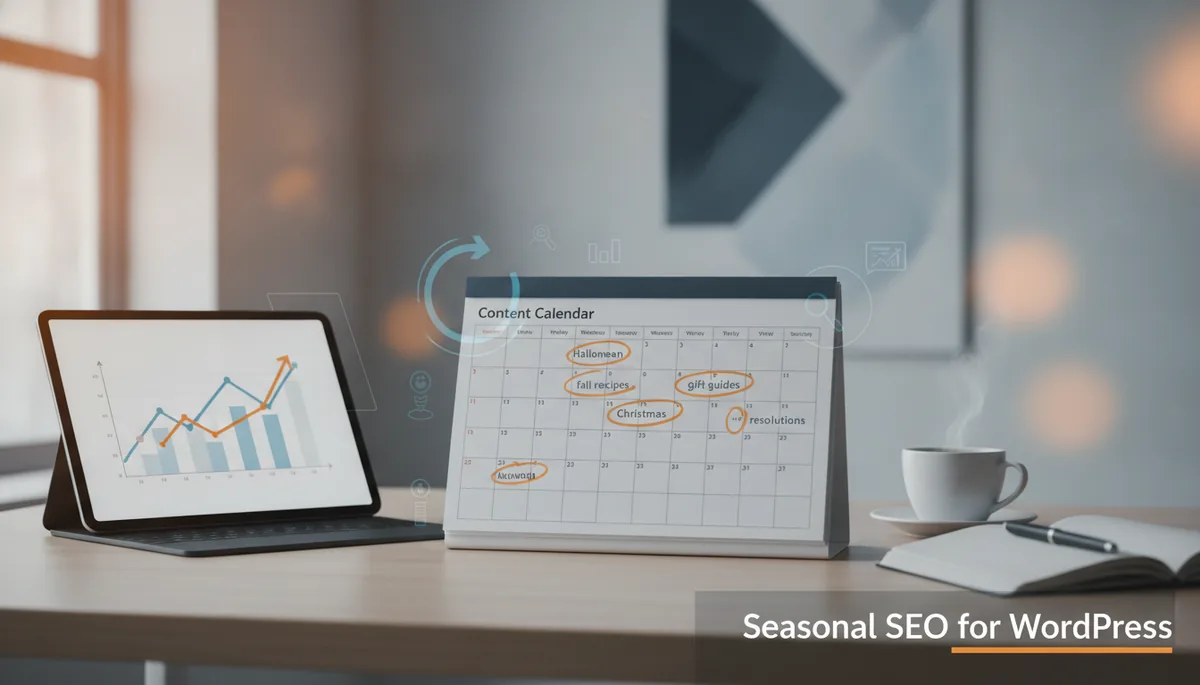
Once you’ve proven the quick wins, build a 12-month plan that won’t make you burn out by March. I use quarterly themes to anchor content—think of them as seasonal pillars that rotate but don’t reinvent the brand. For example: Q1 is Planning & Reset (New Year, tax season), Q2 is Refresh & Prep (spring cleaning, graduations), Q3 is Adventure & Back-to-School, Q4 is Holidays & Year-End Wrap. Each quarter gets a primary pillar post, two supporting posts, and a suite of bite-sized social assets.
Templates keep the machine humming. For each pillar I have an outline template: headline + 3 key sections + resource box + opt-in. For roundups I use a standard contributor request email and a product comparison table template. For checklists I have a printable PDF layout ready to drop in. These templates shorten content creation time and maintain quality—like having a favorite recipe you can make with your eyes closed.
Calendar setup:
- Place pillar posts at the start of a season to anchor internal links.
- Schedule supporting posts 2–4 weeks apart to keep momentum.
- Slot promotion tasks: visuals, email copy, and cross-post timing onto the calendar.
Use a simple shared calendar (Google Calendar, Trello, or a WordPress editorial calendar plugin) and assign a “publish readiness” checklist: draft, images, SEO, opt-in, schedule. If you’re a solo act, batch the writing and visuals across a few focused days—your future self will thank you. Templates let you scale without turning into a content robot.
Seasonal keyword research and topic ideation
Seasonal content needs the right keywords at the right moment. I start with Google Trends to spot search spikes—type in your seed terms and toggle the time range to see yearly patterns. Pull seasonal phrases (e.g., “holiday gift ideas 2025,” “back to school lunch ideas”) and then expand with long-tail variants via Keyword Planner or an SEO tool of your choice. The goal isn’t one perfect keyword; it’s a cluster: primary seasonal term, two supporting long-tails, and a few question-based queries.
Generate 20–30 ideas per season so you never stare at a blank doc on deadline. Mix formats: evergreen pillars, timely roundups, how-tos, and short social pieces. For idea generation I use a simple matrix: Topic vs. Format vs. Intent (informational, commercial, navigational). For example, “best winter jackets” (commercial) becomes a “Best Winter Jackets 2025” roundup, while “how to layer for winter” (informational) becomes a how-to guide with internal links to the roundup.
Quick research workflow:
- Scan Google Trends for upward spikes and seasonality patterns (filter by country if needed).
- Use Keyword Planner / an SEO tool to gather volume and related queries.
- Build a 20–30 idea list for each season, grouped by format and intent.
Think like a helpful librarian: match what people are asking now with content you can actually produce. If everyone suddenly searches “DIY spooky decorations,” don’t publish a 5,000-word manifesto—give them a quick, scannable checklist and a downloadable template. Searchers want answers, not your blog post’s life story.
Content formats that convert readers into fans
Traffic is nice; fandom is better. Convert readers into fans by pairing useful formats with a crystal-clear next step. I lean on a handful of high-converting formats: pillar guides, curated roundups, step-by-step tutorials, printable checklists, and low-friction freebies (email opt-ins or one-page downloads). Each piece has a built-in cadence: read > value delivered > logical next action (subscribe, download, follow).
Here’s how I structure a high-converting seasonal post: compelling, season-forward headline; quick scannable intro that acknowledges the reader’s immediate need; a how-to or list that delivers value; embedded micro-conversion (free checklist, comparison table, or worksheet); and a final “what to do next” box. For instance, a “Holiday Hosting Checklist” will include a printable timeline PDF, product affiliate links, and an invite to join a holiday-planning email series. It’s like giving someone a recipe and handing them the grocery list with your store link—helpful, not pushy.
Embed opt-ins naturally:
- Use a simple inline opt-in near the section where readers feel most stuck.
- Offer a printable or quick win (checklist, template) as the lead magnet.
- Add clear, low-friction CTAs—“Download this 1-page checklist” beats “Sign up for my newsletter” in conversions.
Don’t overcomplicate the freebie. A clean PDF or editable Google Doc that solves the seasonal problem will outperform an elaborate gated course. Your job is to be useful now; fans appreciate that more than glossy gatekeeping.
On-page SEO and WordPress setup for speed and discoverability
SEO for seasonal posts is both tactical and technical. On-page basics matter—title with season + year, meta description with a value hook, H2/H3s organized logically, and alt text for images—plus schema when appropriate (FAQ schema is a seasonal hero because Q&A formats often land rich snippets). If you want Google to put a seasonal snippet in front of people, give it what it loves: clear structure and direct answers. For structured data, see Google’s structured data docs for a quick primer.
On the WordPress side, speed and reliability are non-negotiable. Seasonal posts can spike traffic quickly; you don’t want your site to collapse like a house of cards when people actually arrive. Use a caching plugin (WP Super Cache, W3 Total Cache, or premium options like WP Rocket), optimize images with lazy loading and WebP where possible, and pick lightweight plugins—every extra plugin is a potential source of bloat. If you use an editorial calendar plugin, pick one with a visual timeline to avoid chaos.
Internal linking strategy:
- Link seasonal posts to evergreen hubs and relevant products or services.
- Create a season hub page that aggregates posts (helps search engines and readers).
- Refresh older seasonal posts and point them to new pillars to preserve authority.
Pro tip from my own mistakes: run a load test or monitor performance before a big seasonal push. Nothing deflates momentum like a 503 error when everyone wants your holiday guide. For structured data and developer guidance, check Google Search Central's documentation on structured data for rich results.
Promotion and distribution for seasonal content
Great content is meaningless if no one sees it. Promotion is the amplifier. Schedule a cross-channel plan: Pinterest for evergreen and gift guides (visual traffic goldmine), X for timely commentary, LinkedIn for industry-seasonal analysis, and Instagram or TikTok for short, engaging clips. I repurpose one pillar into multiple assets: a long-form blog post, 3–5 Pinterest pins, a short video, and an email sequence. That way one idea feeds five channels without reinventing the wheel—think of it as content recycling, not creative laziness.
Email is your secret weapon. Launch a short, targeted campaign for the seasonal pillar: teaser email, main release, and a last-chance reminder. Use curated subject lines tied to urgency and value. I often run a small sequence where the first email delivers a quick win (a checklist) and the second invites them to deeper content. It’s low pressure, high value—far better than blasting “read my post” into the void.
Automation and tools:
- Schedule posts and visuals with a social scheduler; batch uploads to Pinterest and X.
- Repurpose a blog post into a video or carousel—short formats perform well across platforms.
- Consider content automation platforms (like Trafficontent) to bulk-create SEO-friendly drafts and distribute assets if you want to scale without a bigger team.
If you don’t have a team, plan promo in smaller, intentional bursts. It’s better to promote well in two places than to half-heartedly spray content across every network and hope. Be where your people are and post useful, timely things there.
Measurement, iteration, and fan-building tactics
Seasonal strategy should be iterative: publish, measure quickly, and tweak. Track the right metrics—traffic patterns (sessions, new vs. returning), engagement (time on page, scroll depth), shares, and conversions (email signups, purchases). I use GA4 for event tracking (CTA clicks, downloads, and form submissions) and WordPress insights or Jetpack for quick post-level metrics. Add UTM tags to social campaigns to see which channel drove the conversion, not just the click.
Run quick headline and format tests. For seasonal posts, headlines can make or break visibility. I A/B test two headline structures in social promos and two meta descriptions in organic search via changing and tracking performance over short windows. If a listicle outperforms a how-to in one season, lean into lists next year—patterns repeat. Capture what works in a “wins” doc so your future self can copy-paste success instead of re-inventing it.
Fan-building tactics:
- Use low-friction opt-ins (checklists, one-page roadmaps) so readers join your list mid-season.
- Follow up with a short nurturing sequence that delivers more seasonal value (no spam, just more helpful stuff).
- Create a seasonal hub or archive and send repeat visitors back to new pillars—familiarity breeds loyalty.
Finally, treat each season like a small experiment. Not every idea will be a homerun—some will be practice swings. Document what audience segments respond to, which CTAs convert, and which formats die quietly. Iteration beats perfection. If a seasonal roundup increased signups by 30% last December, make it a repeatable template and double down next season.
Next step: pick one upcoming seasonal moment from your 4–8 week radar, create a single pillar outline using the templates above, and schedule one promotional email. That one focused, repeatable action is often the difference between a plan and momentum.
References: Google Trends, Google Search Central (Structured Data), WordPress Plugins Directory