You're here because you built a WordPress site and you want people to actually find it — not just your mom and that one cousin who keeps liking everything. Good. I’ve guided dozens of beginners through the SEO basics, and the quickest wins come from a tidy foundation, a small toolset, and predictable habits (not SEO wizardry or expensive link schemes). ⏱️ 10-min read
In this hands-on guide I’ll walk you through the exact steps I give friends over coffee: set up a fast, secure WordPress foundation; pick the right theme and plugins; build a practical content plan; write posts that search engines and humans both enjoy; speed up UX; promote smartly; measure results; and follow a six-week action plan. Expect concrete checklists, tiny experiments you can run in a weekend, and at least one sarcastic food analogy per section. Let’s get your site ranking without tears or tearsheets.
Build a Fast, SEO-Ready WordPress Foundation
Think of your website as a coffee shop on a busy street: location matters, utilities must work, and the door shouldn't stick. The first step is hosting — not the cheapest bargain-basement option, but a host known for speed and uptime. I recommend looking at hosts with SSD storage, HTTP/2 or HTTP/3 support, and strong caching layers. If you’re not sure where to start, WordPress.org lists hosts that meet basic recommendations: https://wordpress.org/hosting/.
Install WordPress (most hosts offer one-click installs). Then, before you get distracted by theme colors, change your Permalinks to "Post name" (Settings → Permalinks → Post name). Clean URLs are like tidy shop signage — they help both humans and search bots. Set your site title and tagline carefully: not a manifesto, but descriptive and keyword-aware. Enable SSL (HTTPS) — most hosts provide a free certificate — because users and Google both prefer secure sites.
Finally, cover the basics: choose a daily or weekly backup solution (host backups, UpdraftPlus, or similar), enable simple security (block suspicious logins, use a strong admin password, and add 2FA if you can), and install an SEO plugin (Yoast or Rank Math). These initial choices stop your site from being a slow, insecure mess that nobody trusts — including search engines. Yes, you can skip this, but that’s like opening a shop with no locks and a “Back in 2030” sign.
Pick Plugins and a Theme That Stop the Page Speed Dial
Your theme and plugins are like the furniture and staff in your café: excessive chandeliers and a drum circle are cool, but they’ll burn your budget and annoy customers. For beginners, choose a lightweight, well-supported theme such as Astra, GeneratePress, or Kadence. These themes are built for speed and keep the page weight low — think streamlined espresso machine, not a bakery oven that doubles as a jacuzzi.
Keep plugins minimal. Every plugin adds potential speed or security overhead. Install only essential tools: a caching plugin (LiteSpeed Cache, WP Fastest Cache, or WP Super Cache), an image optimization plugin (ShortPixel, Smush, or EWWW), an SEO plugin (Yoast or Rank Math), and a simple backup tool (UpdraftPlus). Resist the urge to add every shiny widget; if a plugin duplicates functionality already provided by your theme or hosting, pick one and delete the other.
Another tip: test performance before and after installing a plugin. I once saw a popup plugin triple the page size — great for leads, terrible for rankings. Use staging environments (many hosts offer them) to try things without wrecking your live site. If your site is crawling, prune plugins, switch to a lean theme, and consider a CDN like Cloudflare to speed global delivery. Minimalism here is strategic — you want a race car, not a convertible filled with antique furniture.
Design a Content Plan That Drives Traffic
Publishing random posts and hoping for traffic is like throwing flyers from a blimp: dramatic, slightly illegal, and largely ineffective. Instead, pick 3–5 pillar topics that represent the core of your site — your "menu" items. If you run a gardening blog, pillars might be "vegetable gardening," "houseplants," and "pest control." For a SaaS product, pillars could be "how-to guides," "industry insights," and "case studies."
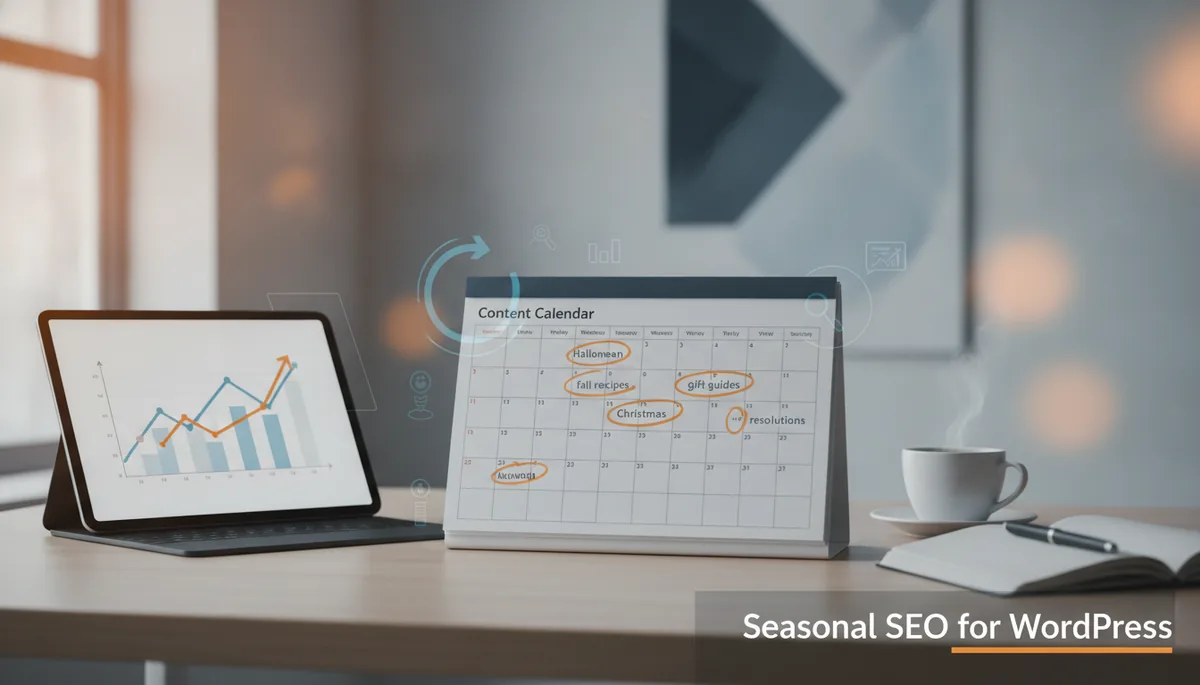
Within each pillar, use keyword clustering: identify a main keyword for the pillar and 8–12 related long-tail keywords for supporting posts. Tools like Google Keyword Planner, AnswerThePublic, or paid tools (Ahrefs, SEMrush) can help. I like to build a simple content calendar (spreadsheet) with columns: topic, primary keyword, search intent (informational/commercial), target publish date, internal links, and media needed. This sheet becomes your editorial GPS.
Create a planning template for each post: title, meta description, target keyword, H2 outline, internal links (2–4), images, and a call-to-action. When I coach beginners, I tell them to batch topic research and outlines over two days — writing is faster when the blueprint is done. And yes, Trafficontent can speed this planning by suggesting SEO-optimized outlines and images, but the human angle — your voice — is non-negotiable. Think of your calendar as a habit scaffold, not a strict prison sentence.
Write Posts That Rank: On-Page SEO Essentials
Good on-page SEO is equal parts structure and empathy: make it clear to readers and search engines what the page is about. Start with a keyword-focused title that reads naturally. Include the primary keyword in the first 100 words and in at least one H2. Use headings like a table of contents — H2s for main sections, H3s for subsections — because nobody wants to trudge through a wall of text unless you paid them.
Meta descriptions should be 150–160 characters, offer a clear value proposition, and include your main keyword once if it fits. Alt text for images should describe the image and context (not “image123”). For example: “step-by-step pruning of indoor ficus to reduce leggy growth” is far more useful than “ficus.jpg.” Add internal links to related articles — I aim for 2–4 per post — to help search engines discover more pages and to keep readers clicking. That’s digital hospitality.
Consider structured data: FAQ schema for common questions or HowTo schema for tutorials improves SERP real estate and can earn rich snippets. Many SEO plugins add schema automatically, or you can insert small blocks using JSON-LD if you're comfortable. Above all, write for humans first: if your page reads like a robot wrote it, you’ll annoy both readers and algorithms. A rule I give newbies: write the post, then read it aloud. If it sounds like you, it’s good. If it sounds like a tax form, rewrite.
Create Fast, Engaging Content: Speed and UX Tips
Speed and readability are a UX power couple. Compress and resize images to the exact display size, and use modern formats when possible — WebP or AVIF will usually beat JPEG and PNG on file size. Plugins like ShortPixel, Smush, or EWWW automate compression. Enable lazy loading so images load as users scroll; WordPress now supports native lazy loading, but double-check with a plugin if you need more control.
Run Google PageSpeed Insights (https://developers.google.com/speed/pagespeed/insights/) and check Core Web Vitals after major changes. LCP (Largest Contentful Paint) often trips people up — a hero image or unoptimized font can be the culprit. Use system fonts sparingly or load fonts asynchronously. I once swapped a heavy hero image for a smaller cropped version and cut LCP in half; the site still looked great and readers didn't notice I’d saved us both time.
Format for skimmability: short paragraphs, bullet lists, bolded key phrases, and clear CTAs. Use multimedia — diagrams, short videos, or GIFs — sparingly and compressed. Also ensure mobile layouts are touch-friendly: large buttons, stack content vertically, and avoid intrusive interstitials. UX improvements keep bounce rates low and dwell time up — which indirectly helps SEO. Basically, make your site fast and friendly; don’t make users feel like they're solving a Rubik’s Cube just to read your post.
Distribute and Promote: Beyond Organic SEO
Publishing is not promoting. Think of your content like a perfectly toasted sourdough: great on its own but wasted if it stays in the oven. Schedule shares to platforms that match your niche. Pinterest is excellent for evergreen visual content (recipes, DIY, style), X (Twitter) works for quick updates and links, and LinkedIn wins for B2B and long-form professional pieces. Use consistent visuals and short, curiosity-driven captions.
Automate where it helps: Trafficontent and social schedulers can queue posts and tailor images for each platform. But please — don’t set it and forget it; engage. Join niche communities (Reddit, Facebook groups) and add value before linking. Nobody likes a link-dropping stranger — be the helpful commenter, not the spammy billboard.
Use UTM parameters to track each distribution channel in Google Analytics. A simple example: ?utm_source=pinterest&utm_medium=social&utm_campaign=summer-guide. Track which channels drive organic traffic, clicks, and conversions. Email newsletters still work — treat them like a direct line to your top fans. I’ve seen small sites triple their first-month traffic by combining Pinterest pins, one well-timed LinkedIn post, and a targeted email blast. So yes, promotion is a muscle; send it to the gym.
Measure, Iterate, and Grow
Data is your friend until you start arguing with it. Set up Google Analytics 4 and Google Search Console immediately and verify ownership (https://search.google.com/search-console). GA4 handles user journeys and conversions, while Search Console shows search performance: queries, impressions, clicks, and average position. Create a simple dashboard that tracks organic sessions, top landing pages, CTR, and conversions (newsletter signups or product clicks).
Prioritize pages with high impressions but low CTR. Those often need better title tags or meta descriptions — small changes with big potential. Also look for pages with good rankings but poor conversion; maybe your CTA is weak or the page copy doesn’t match intent. Run small experiments: rewrite three headlines across top pages and measure CTR changes for two weeks. Try publishing at different times of day and see what moves the needle.
Iterate in short cycles. Fix high-impact speed issues, refresh old posts with new data or links, and expand pages that already rank for related keywords. Use internal linking to pass authority from pillar pages to new posts. I recommend treating SEO like gardening: plant, water, observe, and prune. If you’re consistent, you’ll see compounding growth instead of frantic, short-lived spikes.
Starter Roadmap: 6-Week WordPress SEO Action Plan
If you want one thing to follow, here’s a practical six-week plan I give beginners. It's realistic, chunked, and avoids the “do everything at once” syndrome. Week 1: set up hosting, install WordPress, enable SSL, change Permalinks to /%postname%/, install Yoast or Rank Math, a caching plugin, and create backups. Verify Google Analytics 4 and Search Console and submit your sitemap.
Weeks 2–3: research 3–5 pillar topics, build a content calendar with 4–6 posts, and outline each post with H2s and internal link plans. Start writing the first 2–3 SEO-focused posts, including meta descriptions and alt text. Week 4: publish at least one pillar post and two supporting posts. Optimize images, enable lazy loading, and test mobile UX and Core Web Vitals.
Weeks 5–6: launch distribution — schedule social posts (use Trafficontent if it helps), send an email announcement, and post in niche communities. Add UTM tags to track sources. Review GA4 and Search Console: note pages with high impressions but low clicks, slow-loading pages, and pages with weak calls-to-action. Run two small experiments (rewrite meta tags and tweak a CTA) and measure results. Use the checklist below as a printable reminder:
- Week 1 checklist: hosting, SSL, permalinks, backup, SEO plugin, GA4, Search Console
- Weeks 2–3 checklist: pillar topics, keyword clusters, content calendar, outlines
- Week 4 checklist: publish pillar + supporting posts, image optimization, mobile test
- Weeks 5–6 checklist: distribution schedule, UTMs, analytics review, two experiments
Next step: pick your hosting and theme today. Seriously — everything else is easier once your site's clean, fast, and not haunted by a dozen rogue plugins.