Start your WordPress blog the right way: with a lean hosting stack, sensible defaults, and a content workflow that drives traffic without turning your site into a slow, ad-stuffed mess. I’ve built and tuned blogs that readers actually enjoy using — not sites that feel like dial-up wrapped in nostalgia — and in this guide I’ll walk you through the practical steps to get from fresh install to fast, rankable posts. ⏱️ 10-min read
Think of this as a coffee-shop chat with a friend who’s done the grunt work: I’ll give you the checklist, the why, and the tiny decisions that compound into big speed wins. Expect concrete tools, a few sarcastic analogies, and a simple two-week cadence you can use to iterate without losing your mind.
Lean hosting and WordPress setup for speed
Before you tweak plugins and optimize images, check what you’re starting with. Server choice defines the baseline: aim for SSD storage, PHP 8.x or newer, and Nginx (or at least an up-to-date Apache with HTTP/2/3). Ask for MariaDB or modern MySQL and run a quick TTFB test—if your host still behaves like a dial-up modem, it’s time to change lanes.
Pick a hosting plan that’s lean and predictable: scalable CPU/memory, built-in server caching (page/object), and simple controls so you don’t need a PhD in server voodoo to enable caching. A tiny CDN on top of that is the cherry: your images don’t win the race alone, but edge delivery helps.
Install a fresh WordPress.org core (latest version), remove unused themes and plugins, and disable modules you won’t use. Turn on compression (GZIP or Brotli), enable HTTP/2 or HTTP/3, and enforce secure defaults. I once migrated a hobby blog to a lean host and saw LCP drop from 4.8s to 1.3s — the reader experience went from “ugh” to “whoa.”
Quick checklist:
- Server: SSDs, PHP 8+, Nginx or modern Apache; MariaDB/MySQL
- Enable host-level caching and compression (Brotli/GZIP)
- Install latest WordPress core; delete unused themes/plugins
- Use a CDN for static assets
(If you want the official WordPress server requirements, see WordPress.org.)
Choose a lean theme and essential plugins
The theme is your site’s skeleton: pick one that’s light, well-maintained, and doesn’t sprinkle performance kryptonite across your pages. Favorites in the lean crowd include GeneratePress and Astra — not because they’re trendy, but because their markup is clean and they don’t try to be a theme, a page builder, and a circus at once.
Limit plugins to 6–8 essentials. Less is better than clever. Your core plugin stack typically includes a caching solution, image optimizer, SEO tool, backup tool, and a lightweight security plugin. Good combinations: WP Rocket (or WP Fastest Cache) for caching, ShortPixel/EWWW/Imagify for images, Rank Math or All in One SEO for metadata, UpdraftPlus for backups, and a lean security tool like Wordfence or Sucuri.
Avoid bulky page builders for primary layout. They’re great for non-technical clients who want drag-and-drop, but for speed-conscious blogs they often produce marbled HTML and a CSS diet low on digestion. If you must customize, use a child theme for tweaks so updates don’t eat your changes.
Audit plugins monthly—deactivate and delete anything you haven’t used in a month. If a plugin’s developer hasn’t updated it in a year, treat it like a suspicious leftover from a party. Test theme and plugin changes on staging before pushing to production to avoid surprises.
Image, asset, and media optimization
If images are the guilty party for slow pages, optimization is your sleight of hand. Serve next-gen formats (WebP or AVIF) when possible, with sensible fallbacks to JPG/PNG. Many CDNs auto-convert images; otherwise, use an optimizer plugin (ShortPixel, EWWW, or Imagify) that generates WebP/AVIF on upload.
Use responsive images (srcset) so each device gets the right size. Don’t store 4000px originals for a 720px hero — resize on upload, set a sane maximum width, and regenerate thumbnails if you change breakpoints. WordPress ships with native lazy loading for images, but verify it’s active and that legacy embeds are handled cleanly.
Automate the workflow: compress on upload, strip unnecessary metadata, and let your CDN serve already-optimized files. Purge orphaned media periodically—unused screenshots, old logos, and draft images silently bloat backups. I once inherited a site with a media library like a hoarder’s attic; cleaning it cut backups in half and made restores faster.
Practical steps:
- Enable image conversions (WebP/AVIF) via CDN or plugin
- Set max upload widths; use srcset for responsive delivery
- Enable lazy loading for off-screen images/videos
- Run a media cleanup to delete orphaned files
Bonus sarcastic note: uploading 10MB hero images for mobile is the digital equivalent of asking readers to carry a piano upstairs — charmingly misguided.
Caching, CDN, and delivery optimization
A good caching + CDN setup is like giving your site rocket fuel without rewriting the engine. Start with a solid caching plugin (WP Rocket, WP Fastest Cache, or W3 Total Cache) and enable page caching, browser caching, and object caching. If your host supports Redis or Memcached, pair it with object caching for dynamic requests.
Use a CDN to serve static assets (images, CSS, JS) from edge locations. Cloudflare is a robust free option; BunnyCDN and StackPath are excellent paid alternatives. Configure Cache-Control headers (long max-age for versioned files — commonly 1 year) and use versioned filenames so you can bust the cache when releasing updates.
Optimize delivery by preconnecting to critical origins, preloading key assets (fonts, critical CSS), and using font-display: swap to avoid invisible text during font load. Minify CSS/JS only if it actually helps — sometimes concatenation breaks things, and sometimes it’s the speed potion you need. Test both ways.
Finally, enable Brotli (or at least gzip) compression and ensure HTTP/2 or HTTP/3 is active, which helps multiplex requests and reduces latency. If you’re wondering whether to combine every optimization at once: change one thing at a time. If you try everything in one go, you won’t know which tweak helped and which broke the footer.
Content planning for speed: templates, calendars, and fast writing
Speedy sites and speedy publishing go hand in hand. The secret is a predictable content workflow: reusable templates, a clear calendar, and focused writing sprints. Make templates for the hook, body structure, closing CTA, and SEO fields so every draft starts with structure rather than blank-page despair.
Build an editorial calendar around search intent clusters. Outline pillar posts and supporting articles, assign target keywords, estimated word counts, and realistic deadlines. This mapping reduces research chaos and enables batch work: research day, write day, edit day. I use 90/60/30 minute sprints when I’m on deadline: research, draft, polish — rinse and repeat.
Create starter blocks for internal linking (e.g., “Why this matters”, related topics, CTA to funnel pages) so you don’t reinvent anchors each time. Reuse those blocks to reinforce navigation and conversions without adding heavy media. When you’re starting out, prioritize clarity and scannability over cinematic visuals.
Use lightweight planning tools: a simple Google Sheet or Trello board with topic clusters is more than enough. If you publish at scale and want automation, tools like Trafficontent can speed up the drafting-to-publishing workflow — but ensure your caching/CDN keeps up as volume grows.
Sarcastic take: planning is boring, but it’s less embarrassing than a 1,200-word post with three images and zero readers.
Speed-focused post creation: writing templates and SEO
Speed-focused writing is about producing useful posts that rank — without overloading the page. Templates that include SEO prompts (keyword, intent, H2 outline, meta description) save time and keep each post aligned with user needs. Keep paragraphs short (2–4 sentences), use scannable subheads, and deploy bullet lists for quick takeaways.
Include structured data sparingly: Article schema or FAQ schema when relevant can help SERP features, but don’t jam pages with bloated JSON-LD. Instead, make the content itself useful and let schema be the garnish, not the main course. Prefill internal link suggestions with anchors to cornerstone content to boost crawlability and on-site value.
Limit heavy media per post: one hero image optimized as WebP/AVIF, one inline screenshot, and a compressed thumbnail for social sharing is plenty for most how-to and list pieces. Defer or lazy-load third-party embeds and scripts so they don’t block first paint.
Sample post template (short):
- Title + target keyword
- Hook (30–50 words): why it matters
- H2 Section 1: problem + quick solution
- H2 Section 2: step-by-step / examples
- H2 Section 3: troubleshooting / alternatives
- CTA: internal funnel / affiliate link
- Meta description + canonical + minimal schema
If you’re tempted to stuff keywords like a Thanksgiving turkey, don’t. Keep it human, useful, and fast — Google likes both speed and good writing, and so do readers.
Performance measurement and iteration
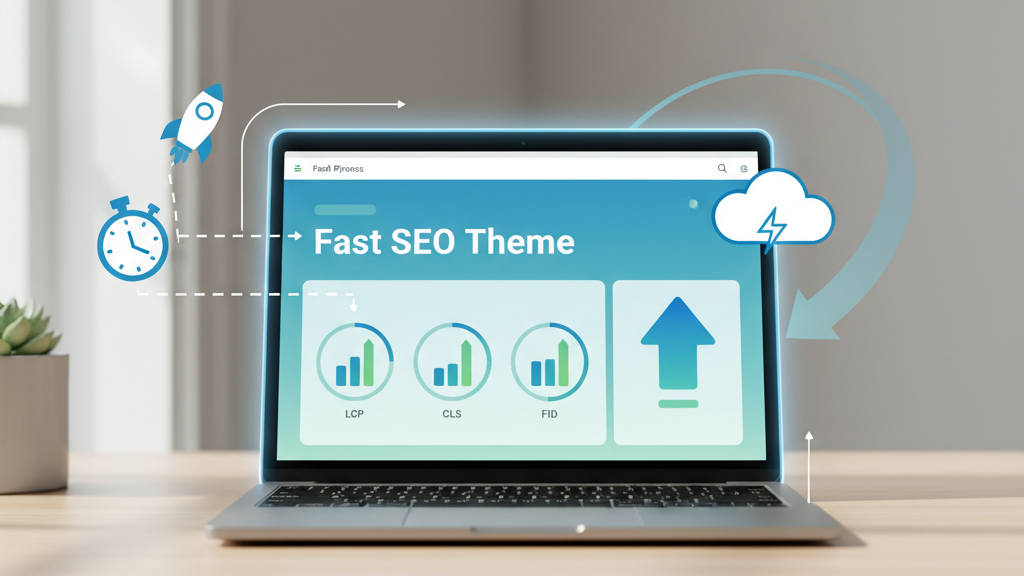
Optimization without measurement is guesswork. Start with baseline metrics: Lighthouse scores and Core Web Vitals — LCP, CLS, and FID (or TTI). Record these values with a date and a short note about your stack. Practical targets to aim for: LCP < 2.5s, CLS < 0.25, FID < 100ms.
Use PageSpeed Insights and Lighthouse for audits (they give lab and field data). Log results in a simple changelog: what you changed, when, and the impact. Change one thing at a time so you can attribute gains. For example, first enable server caching, measure; then add CDN, measure again. I follow a two-week cadence: Week 1 implement changes; Week 2 audit and decide.
Keep experiments small and reversible: version your deployments or test on staging. If a tweak reduces Lighthouse but breaks layout, roll back and try a different approach. Over time, the changelog becomes your private playbook and prevents the same mistakes from repeating.
Example log entry:
- 2025-06-01: Enabled Brotli & Redis → LCP dropped 1.2s; CLS unchanged
- 2025-06-15: Converted hero images to WebP → LCP dropped 0.6s
Sarcastic aside: change everything at once and you’ll learn nothing — except how to panic while debugging an inexplicable footer shift.
Growth without slowing down: monetization and workflow
Scaling traffic and revenue doesn’t have to make your site a sludge pit. The trick is to design monetization around speed: lazy-load ad scripts, prefer asynchronous affiliate widgets, and reserve heavy external scripts for dedicated pages (like a sponsored review), not every post.
Ad choices matter. Use ad networks that support asynchronous loading and lazy requests so the core content renders first. Consider sponsored content hosted on standalone pages rather than injecting multiple ad scripts into every article. For affiliates, weave links naturally and load conversion forms after the main content or server-side to avoid render-blocking scripts.
Automate maintenance tasks to keep your attention free for growth: nightly backups, scheduled plugin updates on staging, and automated reports. Tools like WP-CLI, ManageWP, and Trafficontent (for publishing workflows) reduce manual friction. Create SOPs for outsourcing: template briefs, tone guides, and a short checklist for editors to ensure posts are optimized and lean.
Finally, be stingy with third-party scripts. Each external widget is a potential speed tax. If an external tool dramatically helps conversions, find ways to defer it, load it conditionally, or isolate it to landing pages.
Funny truth: ad networks are like gremlins—feed them too much JavaScript and your site will mysteriously slow down at midnight.
Next step: run a baseline test with PageSpeed Insights, note your LCP/CLS/FID, and pick three items from this guide to implement in the next two weeks—hosting tweaks, one image optimization, and one content template. Small, measurable wins compound faster than you think.
References: WordPress requirements, PageSpeed Insights, Cloudflare CDN