Is your WordPress blog opening at the speed of a dial-up modem in a thunderstorm? You’re not alone. I’ve spent years fixing sites that looked great on the surface but crawled like a reluctant sloth under the hood. This guide gives you the practical, technical moves every WordPress owner—new or seasoned—can use to win Google’s favor without bleeding cash on paid ads. ⏱️ 10-min read
We’ll walk through why Google cares about the nuts and bolts of your site, fast and friendly ways to speed things up, how to ace Core Web Vitals, and how structured data (aka giving Google a cheat sheet) lifts your snippets and click-throughs. Expect concrete steps, real examples, and the occasional sarcastic aside—because fixing slow sites shouldn’t feel like reading a legal contract.
The 'Why': Why Google's Technical Report Card Matters More Than Ever
Think of Google as the bouncer at the internet club—and now she’s not only checking IDs, she’s sniffing the vibe, the music quality, and whether the bathrooms are usable. Keywords still matter, but Google’s algorithms increasingly judge your site on user experience: speed, stability, clarity, and the signals that tell crawlers what your pages actually are. If your blog is slow, jumpy, or full of hidden junk, Google will quietly slide your pages toward the bottom of the results. Not dramatic. Just effective.
I’ve fixed sites where the content was chef’s-kiss, but the experience was like stepping on Lego: people left fast and rankings followed. Technical SEO is the backstage crew: caching, structured data, responsive design, and clean HTML that lets Google’s bots find and understand your posts. Nail this and you’ll get the organic lift that makes paid ads feel like an expensive Band-Aid. As I always tell people: “Pretty content without technical polish is like a sports car with a flat tire.”
Reference: Google’s Core Web Vitals initiative shows how UX signals influence search — a must-read for perspective on why this matters. (https://developers.google.com/web/)
Speed Demons: How to Make Your WordPress Blog Fly (Without a Rocket Scientist)
Speed isn’t optional. A few seconds of loading delay kills engagement, frustrates readers, and squashes conversions. I’ve seen pages drop visitors like hot potatoes simply because an image wasn’t optimized. The good news? You don’t need a PhD in networking to make your site fast—just a few sane, high-impact steps.
- Caching is your best friend: Install WP Rocket or LiteSpeed Cache. These plugins serve pre-built HTML so your server doesn’t re-run PHP on every request. Enable cache preloading and smart exclusion for truly dynamic bits (think carts, checkout, or personalized headers).
- Image optimization: Resize to the display size, compress (lossy is often fine), use WebP where possible, and lazy-load below-the-fold images. If an image is heavier than my last phone bill, it’s too heavy.
- Use a CDN: Cloudflare, StackPath, or KeyCDN move static assets to edge servers near your visitors. Turn on Brotli compression and, if your host supports it, HTTP/3 for better multiplexing and lower latency.
- Choose the right host and tech stack: Use a host tuned for WordPress, PHP 8+, and fast storage (NVMe). Shared hosting isn’t evil, but cheap shared hosting can feel like stuffing your site into an elevator that only works every third Tuesday.
- Trim plugins and third-party scripts: Audit scripts—ads, trackers, and widget-heavy plugins add requests and blocking time. Defer noncritical JS and only load third-party code where it matters.
Pro tip from my own site: enabling server-side caching plus Cloudflare cut a client’s average load by nearly half in under an hour. Yes, really. No rocket scientist required—just the right knobs and a little patience.
Reference: Run a PageSpeed Insights or Lighthouse audit to see where your biggest wins are. (https://developers.google.com/speed/pagespeed/insights/)
Core Web Vitals: Google's Secret Sauce (and How to Get a Taste)
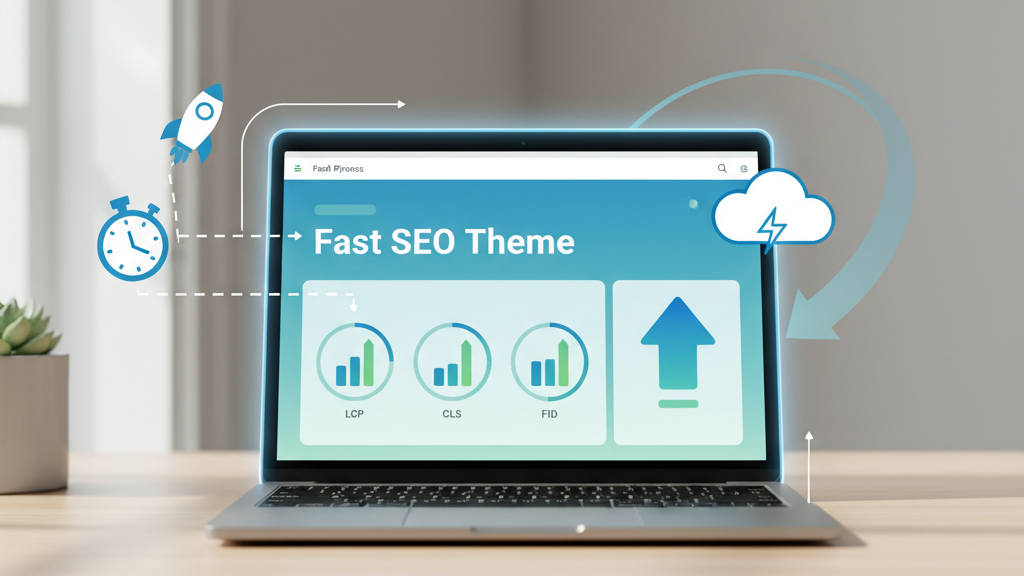
Core Web Vitals are Google’s condensed UX report card, boiled down to three metrics. If you treat them like alphabet soup, you’ll get nothing but indigestion—so let’s translate them into plain English and actionable fixes.
- Largest Contentful Paint (LCP): How long until the main content becomes visible? If your LCP is slow, optimize hero images, prefetch critical assets, and reduce server response time. Think: make the page show its face faster than someone checking if you’ve got Wi-Fi.
- Cumulative Layout Shift (CLS): This measures unexpected jumps in layout. That random ad or late-loading image that makes a button move under your thumb? That’s CLS. Reserve space for images/ads with width/height or CSS aspect-ratio, and avoid injecting UI elements above existing content.
- First Input Delay (FID) / Interaction to Next Paint (INP): FID measures how responsive your site is to the first interaction; INP is a newer, more comprehensive metric Google is pushing. Reduce main-thread work: defer heavy JS, split bundles, and keep scripts async where possible.
Where to check your scores: use PageSpeed Insights for page-level data, and Google Search Console’s Core Web Vitals report for site-wide trends. Fixes are usually obvious once you look at the audit: compress the big images, defer the non-urgent scripts, and stop letting third-party widgets behave like clingy exes.
In one project I worked on, simply fixing a few above-the-fold images and removing a blocking analytics tag dropped LCP by ~2.5 seconds. The moral: small adjustments yield big UX dividends, and better UX = happier readers + better organic performance.
Reference: Deep dive into Core Web Vitals and remediation strategies at Google’s developer docs. (https://web.dev/vitals/)
Structured Data: Giving Google the Ultimate Cheat Sheet for Your Content
Structured data is the SEO equivalent of whispering the cliff notes into Google’s ear: “This is an article. These are the author and date. This part is an FAQ.” When done right, it turns ordinary snippets into rich results—star ratings, FAQs, breadcrumbs—that stand out in search results and lift click-through rates.
I’m not asking you to become a JSON-LD wizard overnight. Most WordPress owners get big wins from plugins that add clean schema automatically, and from selectively adding FAQ or HowTo schema where it makes contextual sense. Think of schema as labeling your content with intent—search engines love clarity.
- Common schema types for blogs: Article/BlogPosting, FAQPage, HowTo, and BreadcrumbList.
- Preferred format: JSON-LD is the cleanest way to add markup without cluttering HTML.
- Practical use: FAQ schema can show answers right in search—this is often an easy CTR win. Use it only for real Q&A content, not for stuffing every question you can think of into the page.
“But what if I mark up the wrong thing?” I hear that at least twice a week. Don’t panic—use the Rich Results Test (and the Schema Markup Validator) to check for errors and avoid duplicate markup from multiple plugins. If Google sees conflicting signals, it might ignore your markup entirely, like a judge ignoring a lawyer who won’t stop shouting.
Reference: The unified vocabulary at Schema.org is where the standard lives. (https://schema.org)
Beyond the Basics: Advanced Moves for the Tech-Savvy Blogger (or Wannabe)
Ready to move from “helpful amateur” to “technical ace”? These advanced moves aren’t mandatory, but they stack and compound—small wins add up fast. If you enjoy poking behind the curtain, this is where the fun begins (and where your hosting bill starts to feel appreciated).
- Smart internal linking: Build pillar pages and cluster content with intentional links. Use descriptive anchor text and avoid linking every instance of a keyword—think helpful map, not a spiderweb of SEO desperation.
- Database optimization: Clean up post revisions, transients, and orphaned metadata. WP-Optimize or manual SQL maintenance can reduce bloat; smaller DB = faster queries. Running an occasional OPTIMIZE TABLE is like taking out the trash.
- Critical CSS and font loading: Inline critical CSS for above-the-fold content and defer the rest. Serve font-display: swap to avoid invisible text during font loads.
- Edge caching and server-level tuning: Where possible, use host-level caching and tweak PHP-FPM settings, object cache (Redis/Memcached), and include Page Rules at your CDN for cache control.
- Reduce crawl waste: Use robots.txt and noindex for low-value pages, submit a clean sitemap, and keep your site structure flat so bots find content quickly. Crawl budget isn’t glamorous, but it’s real.
I once trimmed a site’s plugin set, consolidated 1,200 orphaned post meta entries, and applied object caching—traffic loved it and the server load dropped by half. If you enjoy tiny wins that feel disproportionately satisfying, this is your playground. If you don’t, at least hand this to a trusted developer with directions and bribe them with coffee.
Your Tech SEO Toolbox: Plugins, Google Gadgets, and AI Magic
You don’t need to memorize a dozen command-line tools. Instead, keep a curated toolbox of plugins and Google services that do heavy lifting without drama. Here’s what I use and recommend when I’m in “make-things-fast-and-searchable” mode.
- Caching & optimization: WP Rocket, LiteSpeed Cache, or host-managed caching. Combine with Autoptimize or similar for CSS/JS aggregation if necessary.
- Image handling: ShortPixel, Imagify, or built-in WordPress image optimization. Convert to WebP automatically if the plugin supports it.
- Schema & SEO: Rank Math or Yoast for automated JSON-LD, and a lightweight FAQ or HowTo schema plugin when you need granular control. Avoid stacking multiple schema generators—pick one and stick to it.
- Monitoring: Google Search Console for indexing, Coverage, and Core Web Vitals; PageSpeed Insights and Lighthouse for page audits.
- AI shortcuts: Tools like Trafficontent can automate post generation, add FAQ schema, and craft Open Graph previews so you spend less time formatting and more time creating. Use AI as a productivity amplifier, not a substitute for editorial judgment.
A practical workflow I use: write in a content tool, export to WordPress, let a schema-enabled plugin add base JSON-LD, then use PageSpeed Insights and GSC to verify. If I need speed wins, I toggle server-side caching and a CDN, and run another audit. Rinse and repeat. It’s the digital equivalent of a morning routine—if your routine includes coffee and not breaking your site.
The Payoff: Why This 'Nerd Stuff' Makes Your WordPress Blog (and Wallet) Happier
Let’s get pragmatic: why invest in technical SEO? Because the returns compound. Faster pages increase engagement and conversions. Better Core Web Vitals help visibility. Structured data lifts click-through rates. Together, those gains reduce your dependence on paid ads and improve the lifetime value of the traffic you already own.
Real-world receipts: a client called “Gadget Guru” cut LCP by about 4 seconds through image compression, server tuning, and smarter lazy loading. Organic traffic rose 25% and conversions improved by 12%—not a bad ROI for a few hours of technical work. Another site, “Wanderlust Whiskers,” added Article and FAQ schema across evergreen posts. Their result? Rich snippets showing FAQs in search increased their CTR and made their content visible for more queries without buying clicks.
Here’s a quick mental model: content gets you in the game; technical SEO keeps you on the scoreboard. If you treat technical work as an optional nicety, you’re leaving ranking potential and ad-free growth on the table. Spend a few afternoons optimizing and you’ll notice traffic behaving differently—longer sessions, fewer bounces, and real engagement that turns into monetization without constantly topping up an ad budget.
Next step: run a quick PageSpeed Insights report, review the top three suggestions, and fix the easiest wins first—images, caching, and deferred scripts. If that sounds intimidating, pick one page, treat it like a project, and celebrate the small victory. I promise the numbers will reward you.