If you’re building a blog on WordPress and want predictable organic growth, you need a content process that behaves like a small, efficient factory—not a chaotic craft fair. I’ve built and audited WordPress blogs that climbed from zero to steady, searchable traffic by treating content like a product: define the customer, map the need, build the thing, and measure whether people actually buy it (or at least read it). This guide hands you that process end-to-end, with practical templates, real-world examples, and the kind of witty commentary you’d expect from someone who’s debugged a 404 at 2 a.m. ⏱️ 12-min read
We’ll move from high-level goals and personas into intent-driven keyword research, then to a repeatable publishing workflow, WordPress setup, on-page nuts-and-bolts, promotion, and measurement. Each section includes concrete steps and a quick, usable checklist you can drop into a Google Sheet or Trello board and start using today—no mysticism, just results. Think of this as your SEO content recipe: follow it and you’ll stop guessing and start growing.
Define SEO goals and audience
Before you pick a topic, ask: what am I actually optimizing for? Too many bloggers write because it “feels right.” That’s adorable, but goals are the GPS for your content. I recommend SMART SEO goals: Specific, Measurable, Achievable, Relevant, Time-bound. Example: increase organic sessions by 20% in six months, secure top-3 rankings for two core keywords, and raise on-page conversion rate by 1.5% on a primary landing page. Those targets tell you which topics to chase and which experiments to run.
Next, build 1–2 personas—yes, just one or two. Overdoing personas is like collecting craft coffee mugs: satisfying but useless. A practical persona includes a name, core goal, top 3 questions, and the likely search intent (informational, navigational, transactional). For example: “Anna, aspiring small-business owner — searches: ‘best WordPress hosting for small business’, ‘how to add contact form’, intent: transactional → wants to buy hosting or service.” Map each persona’s top questions to primary topic buckets. This helps you choose keywords that match real needs at the right stage of the journey.
Finally, tie topics back to business outcomes. If your blog’s aim is lead gen, prioritize high-intent pieces and pillar pages that funnel readers into gated content. If it’s ad revenue, focus on volume and topical breadth. Revisit goals quarterly—SEO is patient work, but it responds to consistent direction. Think of this step as choosing a destination before you rent a car; otherwise you’ll end up somewhere called “Content Oblivion.”
Keyword research strategy for WordPress content
Keyword research is the compass, not the whole map. I start with a handful of seed topics tied to my niche—say “WordPress SEO,” “site speed,” or “best hosting.” Then I run those seeds through tools like Google Keyword Planner and Ahrefs to capture real user phrasing, volume, and difficulty. Don’t get seduced by broad head terms; they’re expensive and competitive. Instead, prioritize long-tail phrases: specific queries that reveal clear intent and are easier to rank for—think “how to compress images in WordPress without losing quality” rather than “image optimization.”
Organize keywords by intent: informational (how-to, tutorials), navigational (brand or product names), transactional (buy, sign up, best). For each seed, build a small cluster: one pillar keyword with 1–2 related long-tail targets. Use keyword difficulty and domain rating filters to create an “attainability” score—your own simple rubric: high volume + low difficulty = go; low volume + high difficulty = maybe, if it aligns with a pillar.
Tools are guides, not oracles. I like saving a shortlist of 20–30 prioritized topics to test over the next 6–12 weeks—more than that is noise. Run a quick SERP audit for each target: who’s ranking, what formats (lists, guides, videos) dominate, and whether featured snippets or People Also Ask boxes are appearing. That tells you both opportunity and the content format to use. Pro tip: track queries with high impressions but low CTR in Search Console; those are ripe for a title/meta test and usually offer quick wins.
Content planning template and calendar setup
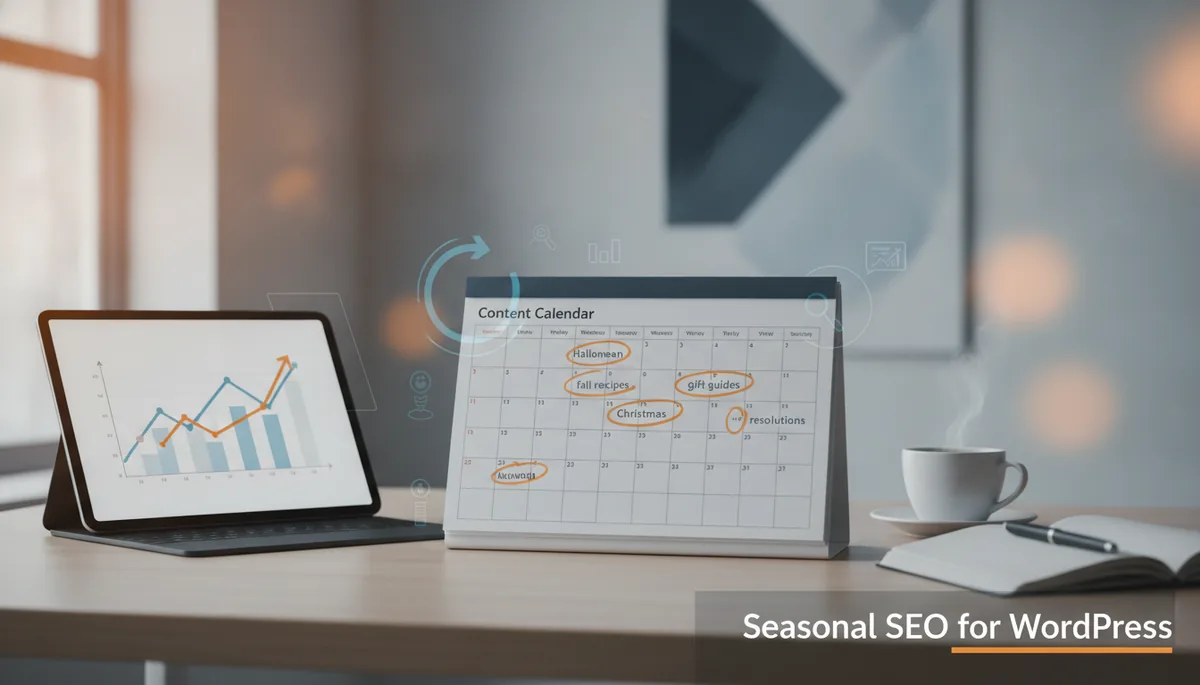
A good editorial calendar is a living contract, not a Pinterest board of dreams. Build a lean template with these fields: title, target keyword, persona, intent, CTA, outline, metadata (title tag + meta description), assets needed (images, schema), publish date, owner, and status. Keep it in a shared Google Sheet or Trello board so everyone knows who’s accountable—no mystery handoffs, no “I thought you were doing it.”
Populate a 6–12 week calendar with a mix of pillar and cluster posts. For every pillar publish, schedule 2–4 supporting posts that link back to it. That internal-linking strategy is the SEO equivalent of building a highway to your most important pages. Assign owners and realistic deadlines; cadence beats perfection. If you can publish once a week consistently, do that. If you can only manage twice a month and maintain quality, do that instead.
My practical setup: a master sheet with a “pipeline” tab (ideas), “in production” (drafts, assets), and “published” (URL, publish date, KPI baseline). Add a content brief template that includes a 3–4 line angle, key points to cover, suggested H2s, and internal links to use. If you use automation tools like Trafficontent, you can connect drafts to scheduling and distribution channels—handy, but don’t skip the human edit. A calendar without ownership is like a car without an engine: it looks pretty and goes nowhere.
SEO-friendly post templates and formats
Consistency is your secret weapon. I create reusable post templates in WordPress or my content editor so every post follows a predictable spine: H1, concise intro, H2s for major points, H3s for subsections, and a closing CTA. That structure helps readers skim and search engines parse context—both are important unless your goal is to impress tumbleweed.
Develop format-specific outlines: How-To (intro → numbered steps → tips → recap), List (intro → 7–12 items with concise blurbs → conclusion), Review (specs → pros/cons → verdict → alternatives), Case Study (context → process → results → lessons). Use those templates to speed drafting and maintain quality. For each template include metadata notes: suggested title length (≈60 chars), meta description (≈150–160 chars), and where to place the target keyword (title, first 100 words, one H2, image alt text).
Media matters. Add a recommended media plan to each template: hero image (1200×630 ideal for social), 2–3 in-content images with alt text, and an optional short video or GIF to increase time on page. Remember to write descriptive image filenames and alt text that help accessibility and SEO. Also, add a JSON-LD snippet placeholder for schema where relevant—how-to schema for tutorials, product or review schema for reviews, and article schema for long guides. Templates are like training wheels: remove them when you’re confident, but keep them for the inevitable wobble.
WordPress technical setup and performance
Technical SEO is the plumbing. It’s not glamorous, but you’ll notice it when it leaks in public. Start with a responsive theme that’s clean and fast—no need to flex with a feature-heavy theme if it slows your site to a crawl. Test pages on real devices and use tools like Google PageSpeed Insights to measure Core Web Vitals; aim for fast Largest Contentful Paint and low Cumulative Layout Shift. If your page loads at the speed of a dial-up mixtape, readers will bail.
Install a solid caching plugin (WP Rocket or W3 Total Cache), enable minification and deferred JS where possible, and use a CDN (Cloudflare is a solid free option). Compress images at upload with Smush or Imagify and support modern formats like WebP to cut payload. Enable lazy loading for images and vids so the browser doesn’t fetch everything at once—nobody asked for that photo of your author bio above the fold.
On the infrastructure side, set up XML sitemaps with Yoast or Rank Math, configure robots.txt to allow crawling of necessary assets, and ensure canonical tags are active to avoid duplicate-content chaos. Use a simple deployment checklist: test on staging, confirm sitemap updates, and purge caches after publish. Treat your CMS like a lab: small, repeatable tests and rollback plans make life much easier when something unpredictable breaks at 3 a.m.
On-page optimization and internal linking
On-page SEO is a checklist you can run in five minutes if you’ve done the earlier work. Craft title tags that start with the main keyword and fit ~60 characters. Write meta descriptions that answer the query’s “what’s in it for me?” in ~150 characters. Place the target keyword or close variant in the first 100 words and in at least one H2. Scatter related terms naturally—think of them as supporting actors, not stage hogs.
Images should have descriptive filenames and alt text that both describe the image and, where appropriate, include a relevant phrase. Don’t shoehorn keywords; instead, describe: “how-to-add-google-analytics-to-wordpress.jpg” is both useful and SEO-friendly. Use schema with JSON-LD for rich results: how-to, FAQ, article, and product schemas add clarity to Google and increase chances of enhanced listings.
Internal linking is where the magic multiplies. From each pillar page, link to 3–5 cluster posts and vice versa. Use descriptive anchor text—not “click here”—so links carry relevance. A simple rule: every new post should link to at least two existing pages and be linked from at least one pillar. This flows authority through your site and helps Google understand topic depth. Finally, use canonical tags for near-duplicates and set up redirects cleanly if you change URLs—broken links are like leaving your front door open during a rainstorm.
Production workflow: drafting, review, publish
Pick a lightweight editorial workflow and stick to it. My recommended stages: idea → brief → draft → SEO QA → editor review → final edits → publish → promote. Keep roles clear: who writes, who reviews for accuracy and tone, who checks SEO, and who publishes. Use version control in WordPress (or a Google Doc history) so you can roll back if someone decides “this sentence needed emojis.”
SEO QA should include a quick checklist: keyword in title, keyword in opening paragraph, meta description filled, internal links added, images optimized, schema included where relevant, and readability pass (short paragraphs, bullets, headings). Run a readability and SEO scan using Yoast/Rank Math to catch obvious issues but don’t treat the plugin as the proofreading deity. Humans still matter.
Leverage automation for schedule and distribution. Schedule posts for optimal times, use UTM tags on promoted links to track traffic sources, and auto-generate Open Graph previews for social. Tools like Trafficontent can automate draft generation and distribution—handy, but always human-edit for voice and accuracy. Before hitting publish, do a final checklist: staging review done, canonical confirmed, 301 redirects mapped if needed, sitemap pinged, and cache purged. Publishing should feel celebratory, not frightening.
Distribution, promotion, and measurement
Publishing isn’t the finish line; it’s halftime. Promote each post via social channels that match your audience—LinkedIn for B2B, Pinterest for visual how-tos, and X (Twitter) for newsy pieces. Optimize Open Graph images and titles to increase CTR when shared; think of them as billboards for your content. Send the piece to your newsletter list with a short, benefit-led blurb and place on-site widgets for related posts to capture readers already on your site.
Track basic KPIs: organic sessions, keyword rankings, time on page, bounce rate, and conversion events (newsletter signups, product trials). Link GA4 with Search Console to see query-level performance and use a dashboard (Looker Studio) to visualize trends. Measure weekly for quick signal and monthly for trends. When a piece has high impressions but low CTR, test title tags and meta descriptions. When time on page is poor, add media or restructure the introduction—often the fix is simpler than you think.
Use A/B testing sparingly: rotate titles or metas for a set period and measure CTR uplift. Keep a small “what worked” log so you can replicate wins. If a post outperforms expectations, expand it into a pillar with cluster posts. If it underperforms, don’t panic—refresh with updated data, new subheadings, and improved internal links. Promotion is half strategy, half persistence. Also, rubber-meets-road tip: set clear monthly review meetings to adjust priorities based on performance. If you don’t review, you’ll repeat the same mistakes like a sitcom character refusing to learn.
Measurement, tracking, and iterating
SEO is a long-term conversation, not a single meeting. Start by defining your KPIs clearly: organic traffic, CTR, average position, and conversion rate. Build dashboards in GA4 and Looker Studio that auto-update so you don’t live in spreadsheets manually pasting graphs—life’s too short. Track baseline metrics at publish, then measure 4, 8, and 12-week performance windows to see how search engines and users react.
Use Search Console to find queries where your pages have high impressions but low CTR—those are low-hanging fruit for title/meta tweaks. Use GA4 Explorations to compare device performance, landing pages, and conversion funnels. Run periodic content audits: flag posts older than 12 months with traffic decline for refresh. A typical refresh includes updated facts, a clearer H2 structure, richer media, and better internal links—often enough to recover lost traffic in 4–8 weeks.
Finally, adopt a disciplined testing approach. Test one variable at a time—title, meta, or H2 structure—and run for a stable period before judging. Keep a short experiment log: hypothesis, variant, start/end dates, and outcome. Over time you’ll build a playbook of what works for your niche. If SEO were a sport, this is your training log; skip it and you’re benchwarmers material.
Next step: pick one pillar topic, run the keyword research exercise from Section 2, and add it to your calendar with a brief and deadline. If you want, I’ll share a simple Google Sheet template to get you started—because the first week of consistency is the hardest, and someone should make it easier.
Helpful references: Google’s SEO Starter Guide (https://developers.google.com/search/docs/beginner/seo-starter-guide)