If you run a small WordPress site or are just getting serious about blogging, you don’t need flashy one-off posts—you need dependable content that behaves like a rented apartment with great tenants: steady, predictable, and low maintenance. I’ve spent years helping bloggers and small businesses build content that keeps working weeks, months, and years after publication. This guide gives you formats, templates, SEO tactics, conversion wiring, and setup advice so your WordPress posts become reliable traffic machines—not internet fireworks that fizzle after the first spark. ⏱️ 12-min read
Read this as a hands-on playbook: ready-to-use post types, practical examples, and step-by-step ideas you can implement this weekend. I’ll share what I actually use with clients (yes, the same boring but effective habits), mention a few tools that make life easier, and sprinkle in a little sarcasm so it doesn’t feel like reading a dry manual. Consider this the recipe book for content that pays rent.
Evergreen formats that consistently drive traffic and conversions
Think of evergreen content as the slow-cooked meal of your editorial calendar: it takes a bit of prep, but it feeds people for weeks. The highest-return formats are simple and repeatable: Ultimate Guides, How-To Tutorials, Resource Roundups, Checklists, and Template Posts. Each serves a different stage of reader intent but shares one trait—timeless utility. People search for solutions that don’t care what month it is: "install WordPress," "choose a theme," "speed up site"—these queries are evergreen.
Here’s how to tailor each format to WordPress: Ultimate Guides become cornerstones—comprehensive hubs that link out to focused tutorials (e.g., "The Ultimate WordPress SEO Guide" linking to articles on site speed, schema, and internal linking). How-to Tutorials are step-by-step problem solvers with screenshots and code snippets; they reduce friction and increase trust. Resource Roundups curate plugins, themes, or hosting providers with pros, cons, and context—people love curated lists because they save time and decision fatigue. Checklists and templates are downloads people actually use; they’re perfect for capturing emails.
Make each format conversion-ready by building a clear next step into the content. For instance, a "How to Secure WordPress" tutorial ends with a downloadable checklist gated behind an email opt-in and links to a managed security service. Turn each evergreen post into at least one conversion funnel: newsletter sign-up, product trial, or affiliate click. Yes, evergreen posts attract traffic—when they’re built around solving persistent problems and sprinkled with conversion nudges, they also convert. Like a Swiss Army knife: small, reliable, and not likely to start a fire in your living room.
Starter guides that pay back fast: get set up and grow
When someone is new to WordPress they want one thing: fast, reliable answers. That’s where starter guides shine—quick wins that build authority and invite users deeper into your site. I recommend publishing a set of three to five foundational posts within the first month. Examples that perform consistently: "WordPress Starter Checklist," "How to Switch from WordPress.com to WordPress.org," "Free Setup Steps After Installing WordPress," and "Beginner’s Guide to Choosing a Theme." These are the posts people land on when they’ve decided to start, not browse.
Structure each starter post to deliver immediate value: a clear promise in the first paragraph, an easy-to-follow process with screenshots or short video clips, and a next step (a checklist PDF, or a beginner bundle of related posts). For instance, my "WordPress Starter Checklist" is a single, printable page with essential actions: install an SEO plugin, set permalinks, enable caching, configure security keys, and pick a responsive theme. People love checklists because they’re actionable—no fluff, just "do this now." They’re also great lead magnets.
Promote these quick wins where your audience already hangs out. Email your list, pin the guide to your homepage, post it in relevant Facebook groups and subreddits (respect the rules), and add it to onboarding emails if you offer services. A smart trick: create a "start here" landing page that aggregates these starter posts—visitors who are new will thank you, and returning readers will appreciate the organized path. Starter guides are the short-term investments that compound into authority: publish them early, and you’ll get referrals, backlinks, and new subscribers without needing an ad budget that makes your bank account weep.
Strategic content planning for sustainable traffic
Traffic that lasts is planned, not lucky. Strategy starts with audience insight: who they are, what they worry about, and where they search for answers. I do this by auditing support tickets, reading comments on competitor posts, and listening to customer calls—yes, I eavesdrop ethically. The goal is to map recurring problems to post ideas with real search demand. Use simple tools: Google Search, forum searches, and a glance at Google Trends. If a topic shows steady interest, it’s often worth the time.
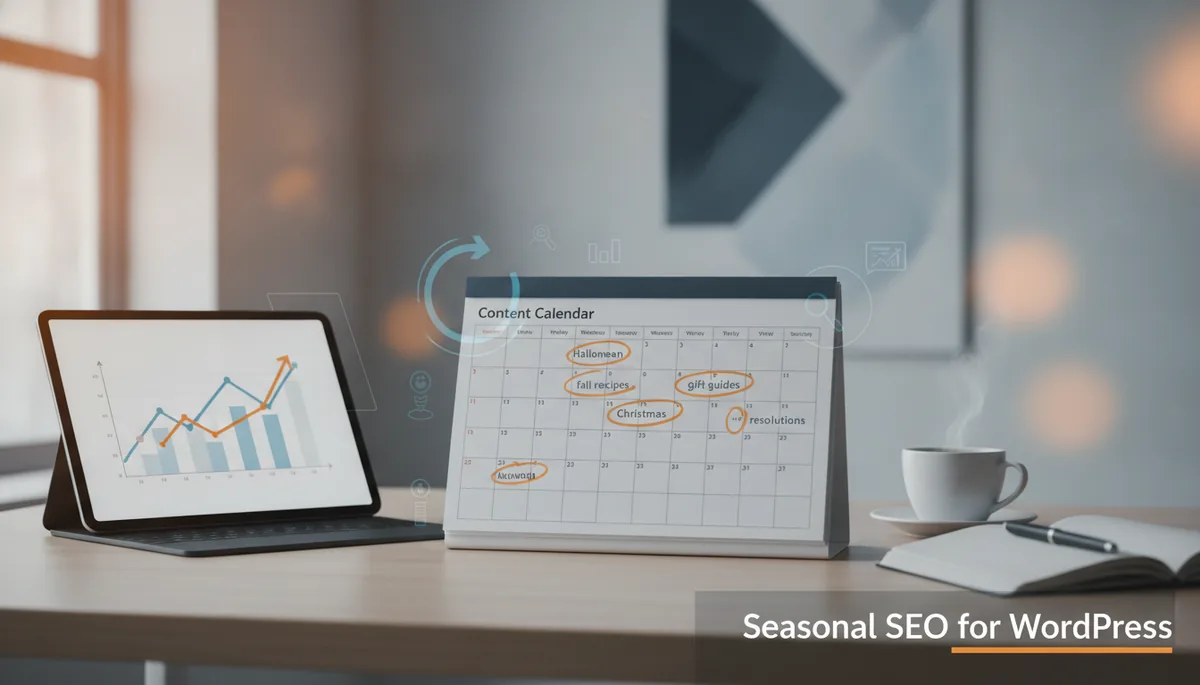
Build a content calendar that blends pillars and satellites. Pillar content (the Ultimate Guides) covers broad topics and acts as the hub. Satellite posts (tutorials, case studies, updates) target specific queries and link back to the pillars. This internal linking strategy creates topical authority and helps search engines understand your site. Seasonality matters too—for WordPress, updates often spike around major WordPress releases, Black Friday hosting deals, and plugin version changes—so schedule timely posts and refreshes around those moments.
Use templates to plan and reuse work efficiently. A simple planning template includes: target keyword, search intent, headline, H2 outline, CTA, target conversion, and publish/update date. For updates, set a quarterly review for top-performing evergreen posts: check accuracy, refresh screenshots, and replace broken links. Repurposing is your friend—turn a long guide into a checklist, a short video series, or a tweet thread. A good content calendar is less about rigid dates and more about consistent rhythms: publish, promote, measure, update. It’s like flossing—annoying at first, but you’ll avoid expensive problems later.
SEO playbook for WordPress posts that rank
SEO on WordPress isn’t mystical—it's methodical. Start with keyword research: find queries that match reader intent, balance search volume with difficulty, and pick the ones you can realistically rank for. Aim for a mix of low-competition "how-to" queries and broader pillar topics. Tools like Google Keyword Planner, Ubersuggest, or Ahrefs help, but a quick manual check (search the term and examine the top results) reveals intent faster than a dozen charts.
On-page SEO essentials: put the primary keyword near the start of your title tag, craft a benefit-driven meta description, and use clear heading structure with H2s for main sections and H3s for subpoints. Keep title length around 50–60 characters to avoid truncation. Alt text on images is non-negotiable—describe the image and include the keyword naturally. Use a reputable plugin—Yoast SEO or Rank Math—to guide on-page signals, sitemap generation, and schema markup. These plugins do the heavy lifting and reduce human error. (If you want automated content production with schema and distribution, Trafficontent is an option I’ve used to scale posts while keeping SEO basics intact.)
Internal linking is often underestimated. Create a clear map of cornerstone guides and link to them from related posts using descriptive anchors—don’t link "click here." Add contextual links in-body and a "Related posts" or "Further reading" block at the bottom to keep readers moving. Implementing FAQ schema for common questions in your posts can lift visibility and click-throughs—Google loves structured help text. Finally, monitor with Google Search Console and simple site analytics: watch impressions, CTR, and average position for your target keywords. Small, consistent on-page habits compound into durable rankings—no smoke and mirrors, just tidy work.
Crafting conversion-first posts and CTAs
Every post should have a purpose beyond pageviews. That begins with defining a conversion goal for each article—newsletter sign-ups, downloads, trials, or purchases. For example, a "How to Speed Up WordPress" tutorial might aim for email captures via a free checklist, while a case study could funnel readers toward a consultation. Put the goal in your brief before you write; it focuses the content and helps you measure success.
Integrate CTAs in a way that feels natural and useful, not annoying. Use three touchpoints: an entry-level CTA in the intro (short and helpful), contextual CTAs mid-article where engagement peaks (after a key insight or step), and a stronger CTA at the end (download, trial, or next tutorial). Wording matters—swap "Buy now" for "Get the checklist" or "Try the free tool" to reduce friction. For gated assets, create a "content upgrade" that directly relates to the post: a downloadable checklist for a how-to, a template for a tutorial, or a mini-template bundle for a resource roundup.
Test headlines and CTA placements with small experiments. Use A/B testing in your email subject lines, or swap CTA placement and monitor conversion rates for two weeks. Track everything with UTM parameters so you know which post and which CTA delivered results. Tools like simple Google Analytics goals, or UTM-tagged links combined with a spreadsheet, are sufficient for most small sites. If you want automation that inserts CTAs and helps with tracking, Trafficontent can orchestrate distribution and tag links for you—handy if you’re scaling without a full marketing team. Remember: conversions come from useful offers, not desperate sales pitches. Be helpful, not hungry.
Post templates and formats for fast, repeatable writing
Templates speed up writing and ensure consistent quality. I build a small library of reusable post patterns in WordPress as block patterns or reusable blocks. Design the skeleton once, then swap content. Here are six templates that cover most evergreen needs, with a short blueprint for each:
- List Post ("Top 10 Plugins for X"): Intro (why this list), short explanation per item (what it does, ideal use), pros/cons, pricing, and CTA to a roundup download.
- How-To Guide (tutorial): Promise → prerequisites → step-by-step instructions with screenshots → troubleshooting FAQ → downloadable checklist.
- Resource Roundup (tools or themes): round of vetted options, side-by-side comparison table, recommended picks by use-case, and affiliate links or partner notes.
- Case Study: problem → approach → process (with metrics and screenshots) → lessons learned → CTA for consultation or template.
- Template Post (downloadable asset): context → template preview → how to use → variations → CTA to download and subscribe.
- Update Post (versioned evergreen): original post summary → what's new → implications → updated steps/screenshots → date-stamped note and CTA.
To plug topics into the templates quickly: keep a swipe file of intro hooks, CTA phrasing, and example metrics. When you pick a topic, open the appropriate template, fill in the H2s, swap in screenshots, and proofread for clarity. Use reusable blocks for common elements like "Download CTA" or "Author Bio" so they remain consistent. Templates let you publish faster without sacrificing depth—like being able to bake a complex pastry from a premade crust. It’s not cheating; it’s smart kitchen management.
Monetization and growth without heavy ad spend
If your goal is revenue, there are smart levers that don’t rely on massive ad budgets. Affiliates are the low-cost starter: recommend products you trust, explain real use-cases, and disclose transparently. Combine affiliate links with in-depth reviews and comparisons; those posts convert because they match buyer intent. Lead magnets—checklists, templates, mini-courses—are another high-ROI tool: they move casual readers into your email funnel where you can nurture trust and recommend paid products later.
Bundled offerings work well for WordPress audiences: package a theme plus setup instructions, or a "starter kit" of recommended plugins with a step-by-step installation guide. Price it modestly and add a consult upsell. For service-based bloggers, case studies and "before/after" posts act as soft sales pages. Email nurtures are where the real value compounds—automated sequences that educate and ask for small commitments, then larger ones.
Measure impact with simple analytics and UTM tracking. Tag every promotion (email, social, partner) with UTMs so you know where conversions come from. Track visits, conversion rate, and revenue per post. A basic spreadsheet that summarizes visitors, leads, and income per article is enough for most small sites. If you’re scaling publishing and promotion, consider automation tools that push content distribution and track CTAs end-to-end; Trafficontent is an example that automates SEO-optimized posts, schema, and distribution so you can focus on offers instead of repetitive publishing chores. Monetization doesn’t require complicated ad stacks—focus on aligned offers, clean funnels, and measurement, and you’ll see steady growth. Like planting fruit trees instead of buying a yearly salad subscription.
Choosing the right WordPress setup and tools for beginners
Beginners face a classic fork in the road: WordPress.com (hosted) or WordPress.org (self-hosted). WordPress.org gives you full control, plugin access, and the ability to monetize freely—it's the way to go if you plan to scale. WordPress.com is simpler but restricts some plugins and monetization unless you upgrade. WordPress powers around 43% of the web, so you’re in good company; if you want the source, check WordPress.org for the official download and community resources.
For hosting, choose a reputable starter host with easy WordPress install and solid performance—shared hosts like SiteGround or specific managed WordPress hosts (Kinsta, WP Engine) depending on budget. Pick a lightweight, responsive theme (Astra, GeneratePress, or the default Twenty Twenty series) and focus on speed. Essential plugins: an SEO plugin (Yoast SEO or Rank Math), a caching plugin (e.g., WP Super Cache or WP Rocket), an image optimizer (ShortPixel or Smush), and a security plugin (Wordfence or Sucuri). Use a form/email plugin (MailPoet, ConvertKit, or WPForms) to capture leads.
Create a beginner-friendly workflow: install WordPress → set permalinks to "Post name" → install SEO plugin → pick theme and essential plugins → set up Google Analytics and Search Console → create cornerstone content and a starter checklist. Save common block patterns for post templates and set up a basic backup schedule. Don’t overcomplicate: a crisp, fast site with clear content and solid SEO beats a flashy but slow site every time. If you want guidance on plugin setup, Yoast has practical how-to content that demystifies many of these steps.
One last pro tip: document your process. When you set up a site, write out the steps you took as a post—this becomes both internal documentation and valuable content for readers. You’ll be surprised how often people search for "how to set up WordPress step-by-step"—and that humble self-documentation can become a top-performing starter guide.
Next step: pick one evergreen format from above, choose a topic from your audience’s top question, and draft a post using one of the templates. Make it scannable, add a useful downloadable, optimize with an SEO plugin, and schedule a quarterly refresh. Small, consistent actions yield compound results—like saving spare change into a jar until one day you can actually buy a coffee that doesn’t taste like sadness.
References: WordPress.org,