I’ve spent more mornings nursing coffee and tweaking headlines than I care to admit, refining a simple truth: ranking on Google isn’t magic— it’s a repeatable process. This guide walks you through a practical framework I use to plan, write, publish, and grow WordPress posts that actually rank. No fluff, no black-hat tricks—just a sequence you can follow every time you sit down to write. ⏱️ 11-min read
Expect checklists, sample templates, and concrete settings for WordPress (plugins, theme choices, and speed hacks). I’ll pair strategy with tactics so you can move from keyword idea to traffic-driving post with confidence. Think of this as the playbook you wish you’d had when you hit publish on your first “how to” post and prayed for miracles.
Clarify Keyword Intent and Target Audience
Start here: the wrong intent is like serving cake at a soup convention—nobody gets what they wanted. When I research keywords I don’t chase volume blindly; I first figure out why someone typed that phrase. There are three basic intent buckets: informational (how-to, explanation), commercial (comparison, “best” lists), and transactional (buy, download). Mixing these up is one of the fastest ways to watch impressions pile up and clicks stay flat—Google can smell mismatch like a dog smelling cheap cologne.
Build simple personas. I sketch three archetypes: the busy blogger who needs quick, actionable steps; the part-time shop owner who wants plug-and-play solutions; and the curious dev who tolerates more technical depth. For each persona I write one-line goals and two pain points—this keeps tone and examples laser-focused. For instance, a post targeting the busy blogger might open with “You can implement this in 15 minutes,” while a dev-targeted post can dive into code snippets and performance metrics.
Use your keyword tools to reveal intent signals: search suggestions, "people also ask," and competitor SERP features. Tools like Ahrefs, SEMrush, and Google’s own Keyword Planner give volume and difficulty, but the SERP itself tells you the intent—if the top results are listicles, you write a listicle; if they’re product pages, don’t write a how-to. I often inspect the first 10 results and categorize them into content types—how-to, review, tutorial, forum—then map my post to that accepted format. This step saves more time than you think; it prevents writing a 2,000-word tutorial when the SERP wanted a quick comparison table.
Blueprint Your Post: Create a Fast, Scannable Outline
Before typing a word, sketch the map. I spend 10–20 minutes outlining every post: one H1, three-to-five H2s, and two-to-three H3s beneath each H2 for supporting points. Think of headings as signposts for both readers and search engines—clear hierarchy helps crawlers and humans digest the content faster. It’s not sexy, but structure wins. People skim for answers; give them a path that’s impossible to miss.
Make your headings useful. Replace vague H2s like “More Info” with explicit ones like “How to Compress Images for Faster WordPress Pages.” Headings should include the primary keyword or a close variation where natural. This signals relevance without stuffing; it’s like whispering your topic to Google instead of yelling it in the comments section.
Design for scannability: short paragraphs (2–4 sentences), bullet lists for steps or tips, and bolded takeaways for the skimmers. For long posts, add a linked table of contents so people can jump ahead—this reduces bounce and improves dwell time. I also plan multimedia placements in the outline (screenshots after a step, an infographic at the midpoint). When you outline with content blocks, writing becomes assembly rather than invention; your drafts get shorter and your publish cadence increases. Tools like Trafficontent can generate SEO-optimized outlines if you want to speed this further, but don’t skip the manual sanity check—AI outlines often need context-specific trimming.
On-Page SEO and Readability: Write for Humans and Google
I write as if I’m explaining things to my most skeptical friend—helpful, slightly sarcastic, and with a clear point. Google rewards content that satisfies users, so prioritize clarity. Place the target keyword naturally in the title and at least one H2. Use short sentences, concrete verbs, and paragraphs that don’t feel like a lecture from a college professor who hates joy. If a sentence sounds like it was written by a legal robot, rewrite it.
Titles and meta descriptions matter a lot—treat them like your post’s elevator pitch. Put the main keyword near the start of the title and write a meta description that highlights a benefit or unique angle. If your page gets impressions but no clicks, tweak the title or meta: add a number, a timeframe (e.g., “in 15 minutes”), or a novelty claim. These small changes often lift CTR without any ranking shifts.
Sprinkle keyword variations and semantically related phrases naturally. Use synonyms and long-tail variants to cover related searches, but avoid stuffing. Aim to answer the top user questions in the body and in an FAQ section if appropriate. Add descriptive alt text to images and use clean, keyword-friendly filenames. And remember: good writing is readable writing—short lines, active voice, and a touch of personality make your post stickier than a motivational poster in a gym with free Wi-Fi.
WordPress Setup for Speed and Indexing: Plugins, Themes, and Core Settings
Your content can be brilliant and still sink if your site is sluggish or hard to crawl. I treat WordPress like a race car: lightweight body (theme), tuned engine (hosting), and efficient aerodynamics (caching). Start with a fast, well-coded theme—think GeneratePress, Astra, or a custom block theme—avoid themes that pack in every design demo and a dozen unneeded JavaScript libraries. A lightweight theme reduces page weight and improves core web vitals. Your readers will thank you; Google will too.
wordpress-blog-optimization-for-beginners/" rel="nofollow noopener noreferrer">Essential plugins: an SEO plugin (Yoast, Rank Math), a caching plugin (WP Rocket or LiteSpeed Cache), an image optimization plugin (ShortPixel, Imagify), and a schema plugin or built-in JSON-LD support. Use a plugin like Perfmatters or Asset CleanUp to disable unused scripts on pages that don’t need them. Enable lazy loading for below-the-fold images and use responsive image attributes (srcset) so the browser serves the right size. If you’re not sure where to start with page speed, run Google’s PageSpeed Insights—treat it like a check-engine light, not a verdict on your soul. Reference: Google Search Central.
Indexing and structured data: submit an XML sitemap via Search Console, ensure noindex tags aren’t accidentally applied, and add schema markup for articles, FAQs, and how-tos where relevant. Tools like Trafficontent can streamline schema blocks and suggest JSON-LD snippets—handy if you’re publishing at scale. Finally, choose hosting based on geography and PHP performance; a cheap, slow host will throttle even the best content. Think of hosting like oxygen: it’s invisible until it’s gone, and then everything dies dramatically.
Content Creation Playbook: Templates, Formats, and Content Calendars
Consistency beats inspiration. I use a repeatable template for most posts: Hook → Problem → Solution → Proof → CTA. That structure works every time because it mirrors how people decide to act: get their attention, show their pain, offer a clear fix, prove it works, and tell them what’s next. For formats, rotate between list posts (quick wins), how-to tutorials (deep help), long-form guides (authority builders), and case studies (proof). Variety keeps readers and search engines interested.
Templates save time. For example, a how-to template includes an H1 with the main keyword, an intro that states the outcome, a materials/tools list, step-by-step instructions with screenshots, a troubleshooting section, and an FAQ block. A review template includes specs, pros/cons, testing methodology, and a verdict. I keep these templates in a Google Doc or the Classic Editor’s reusable blocks so each draft starts with a scaffold. This reduces writer’s block and keeps quality consistent.
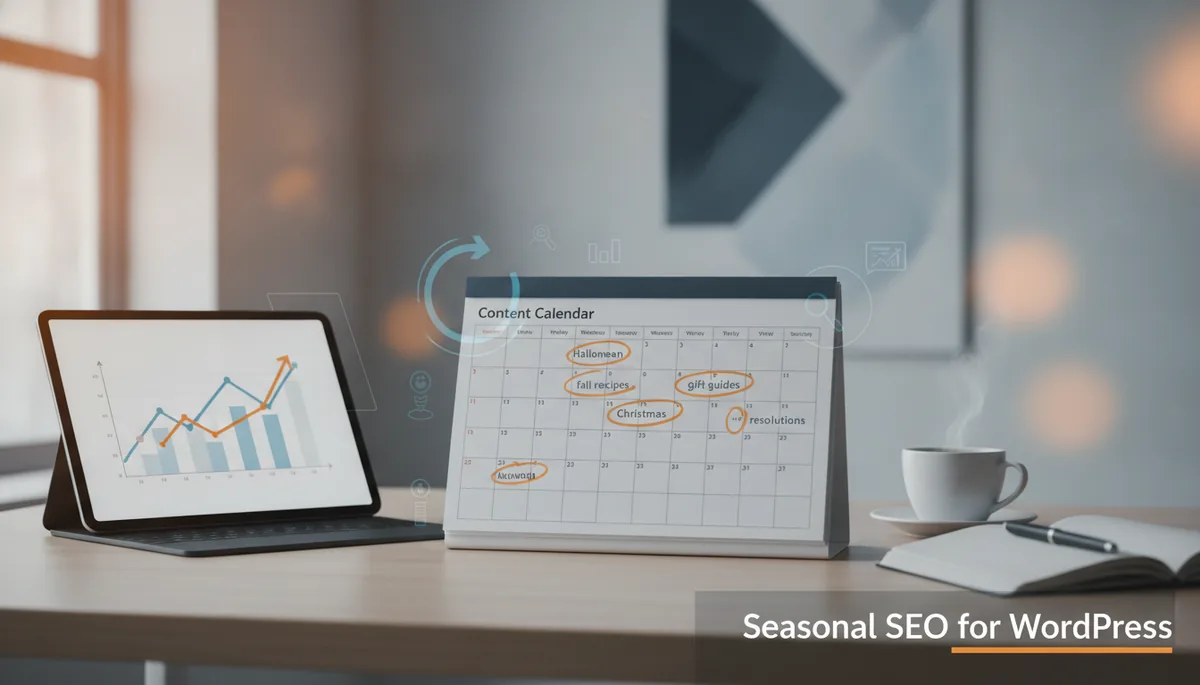
Build a content calendar with a mix of evergreen posts (long-term traffic) and timely pieces (news, seasonal trends). Aim for a cadence you can maintain—publishing sporadically is worse than publishing less often but reliably. Assign topics quarterly, pair them with target keywords and publishing dates, and include promotion tasks. A simple spreadsheet with columns for intent, target keyword, outline status, publish date, and promotion channels will save your life later—think of it as the control panel for your future traffic empire.
Promotion, Internal Linking, and Update Strategy
Publishing is step one; promotion gets your work noticed. Share posts where your audience already hangs out—X, LinkedIn, Pinterest (for visuals), or niche forums. Customize captions for each platform; a single auto-post rarely performs well across the board. I always send a short email to subscribers with the single most compelling takeaway and a clear "read more" CTA. If you’re shy about outreach, start small: reach out to three bloggers who link to similar content and offer an updated resource—often they’ll swap an outdated link for yours if it’s better.
Internal linking is the secret plumbing of a healthy site. Create a topic map and link newer posts to pillar pages and vice versa. Use descriptive anchor text that tells both users and search engines what the linked page is about. Fix orphaned posts (pages with no internal links) and add contextual links from related articles—this improves crawlability and distributes PageRank where it matters. A simple weekly audit of new posts to add 3–5 internal links can pay dividends.
Refresh high-potential posts quarterly. Look in Search Console for pages with high impressions but low CTR—tweak titles and meta descriptions. For pages with declining traffic, update stats, add recent examples, and consider expanding sections to cover related queries. If a post needs a major overhaul, republish with a new date and redirect the old URL if you restructure. This keeps your content feeling fresh and gives Google a reason to re-crawl. Think of updates like dental checkups: unpleasant, but your site will thank you later.
Measurement, Testing, and Growth: Data-Driven Iteration
“Publish and pray” is not a strategy—measurement is. I track organic traffic, impressions and clicks in Search Console, time on page and conversions in Google Analytics (or GA4), and keyword positions in a rank tracker (Ahrefs, SEMrush). Set up a simple dashboard that answers: Which posts gained traffic this month? Which keywords rose or fell? Which pages have high impressions but poor CTR? These questions guide low-risk experiments that can yield big returns.
Run small, isolated tests: modify the title on one post and monitor CTR changes for 2–4 weeks; tweak meta descriptions; add schema to test whether rich snippets appear. Keep changes small so you can attribute impact. If a test wins, scale it across similar pages. I once improved CTR 18% across a category by adding numbers to titles and tightening meta descriptions—no new content required, just better packaging.
Track engagement metrics beyond visits: scroll depth, average time on page, and form submissions or newsletter signups. If dwell time is low, consider adding a short explainer video or reworking the intro. Use user comments and on-page feedback to identify unclear sections. Over time, patterns emerge: certain formats or lengths perform better in your niche. Double down on the formats that consistently move the needle and drop the ones that don’t—be ruthless, like a benevolent content triage nurse.
Templates, Playbooks, and Real-World Examples
Let’s get practical: here are ready-to-use templates I actually use. Pick one, copy it into your editor, and adapt. Warning: it will feel eerily like being productive.
- How-to Template: H1 with outcome + intro (what they’ll learn in one sentence) + tools/materials list + step-by-step instructions (screenshots every 2–3 steps) + common mistakes/troubleshooting + FAQ + CTA to related guide.
- List Post Template: H1 with number + intro + short description + pros/cons for each item + comparison table + best-for recommendations + CTA to category page.
- Review Template: H1 with product + quick verdict box + testing methodology + benchmark results + pros/cons + final score + affiliate disclosure + alternatives list.
Example outline (real-world inspired): H1 “How to Speed Up WordPress in 30 Minutes” H2 “Quick Wins (5–30 minutes)” H3 “Compress images” H3 “Enable caching” H2 “Deeper fixes (30–90 minutes)” H3 “Defer JS” H3 “Choose a better host” H2 “Ongoing maintenance” H3 “Quarterly checks” H2 “Tools & resources.” This outline maps to user intent: someone searching this wants fast, actionable steps—not a theoretical treatise. I tested a similar post and saw time-on-page and rankings improve within weeks after adding a clear quick-wins section and a TOC.
Use examples from top-ranking posts as inspiration—don’t copy. Analyze what they do well: what headings they use, how they format lists, what images they include. Then make yours better or different: add a checklist, provide downloadable templates, or offer unique testing data. If you need a place to start, Google’s own documentation and Moz’s beginner guides are excellent references. Reference: Google Search Central, Moz Beginner's Guide.
Next step: pick one underperforming post, apply the outline template, update the WordPress settings listed above, and run a focused promotion for two weeks. Observe results, rinse, and repeat—this is how small, steady gains compound into real organic growth. Consider this your content growth sprint plan: write, publish, promote, measure, iterate.