Instagram Story Highlights are short, attention-grabbing moments — perfect for sparking curiosity. But left alone, they fade. The smarter play is to turn those social sparks into durable, searchable WordPress content that feeds your Shopify store and grows organic traffic over time. This article walks you through a practical funnel: audit your highlights, map them to buyer intent, create reusable WordPress templates, and automate publishing with Trafficontent so your social moments seed steady SEO-led growth. ⏱️ 9-min read
Designed for Shopify and WordPress store owners, marketers, and content teams, the steps below balance human judgment with automation. Expect concrete examples, template blueprints, and an operations-ready checklist you can apply this week to convert engagement into evergreen visits and measurable conversions.
Define the funnel: from Instagram highlights to evergreen WordPress content
Start by reframing Highlights as the top of a content funnel: short, visual hooks that identify what your audience cares about. Map each highlight theme to a reusable evergreen topic on WordPress. For every highlight, answer three questions: What stage of the buyer journey does this represent (awareness, consideration, or decision)? What keyword or question should the evergreen piece target? And what content upgrade — checklist, printable, template — will help convert readers into leads or buyers?
For instance, a clothing brand’s Highlight titled "Fabric Care" is an awareness asset. That maps naturally to a how-to guide on your blog: "How to Care for Sustainable Fabrics: A Beginner’s Guide." The consideration stage might be a highlight showing a product comparison (e.g., "Wool vs. Merino"). That becomes a long-form comparison post with a buyer’s guide and a downloadable care checklist as the content upgrade. Decision-stage highlights — customer unboxing, testimonials, or setup guides — map to product pages or case studies with clear CTAs to buy or book a demo.
Document this mapping in a simple spreadsheet or in Trafficontent’s content map: highlight name, funnel stage, target keyword(s), content upgrade, and target Shopify product or collection. This makes every highlight a reusable data point rather than a one-off social moment. When the mapping is complete, you’ll have a prioritized backlog of evergreen topics that reflect real audience interest — the best foundation for SEO-driven content that converts.
Audit Instagram highlights for content gold
A data-led audit separates shiny one-off moments from persistent topics worth expanding. Pull engagement metrics for each highlight: views, taps forward (More taps), replies, and saves if available. If Instagram Insights export is possible, download 6–12 weeks of data to spot consistent performers. Where watch-time isn’t available, treat steady, repeat view counts as a strong signal; a highlight with recurring views signals recurring interest or evergreen questions.
Beyond raw counts, read replies and story polls to extract language your audience uses. Those replies are a goldmine of long-tail keyword phrasing — the exact questions people type into search engines. For example, multiple replies like "How do I wash a linen shirt without shrinkage?" gives you an explicit article title and a search-friendly question to build into your WordPress FAQ or H2s. Tag each highlight with a funnel stage during this audit: awareness, consideration, or decision. This helps you ensure that your content plan covers the full journey.
Finally, capture product prompts and user-generated content (UGC) from highlights. Screenshots of customer photos, short clips with product links, or common objections can become quote blocks, social proof elements, and FAQ entries in evergreen posts. Export high-performing visuals and keep a library. When you later use Trafficontent to automate drafting, those assets become ready inputs, reducing creative friction and preserving the authentic voice that first drove engagement.
Create evergreen WordPress templates aligned with funnels
Templates turn repeatable topics into repeatable production. Build at least three SEO-friendly templates that mirror funnel stages: Awareness (how-to/explainer), Consideration (comparisons/reviews), and Decision (case studies/product pages). Each template should be modular: hero intro with a clear problem statement, H2s that match potential featured snippets, a step or comparison block, a resources/CTA block, and an FAQ section tuned to long-tail queries.
In the Awareness template, reserve a "Quick Answer" box near the top — the short, concise paragraph optimized for featured snippets. Keep subheads actionable: "What causes X," "How to fix X in 5 steps," "Mistakes to avoid." Insert a small, downloadable content upgrade (checklist or mini-template) behind a simple lead capture. For Consideration pieces, include side-by-side comparison tables, pros/cons bullets, and a consistent buyer’s guide section that links to the exact Shopify SKUs. Decision templates should foreground social proof: testimonials, before/after photos, and a crystal-clear CTA tied to an offer or product page.
Every template must also be structured for internal linking. Create anchor blocks that link to relevant product collections and pillar posts. Add schema-ready FAQ snippets and ensure image alt text and captions are templated to include primary and secondary keywords. These small, consistent habits increase the chances of ranking and make it easy to scale content production without losing SEO rigor or brand voice.
Automate publishing and cross-publish with Trafficontent
Trafficontent is the automation layer that converts your highlight-to-template map into a repeatable publishing workflow. Start by connecting your WordPress site and Shopify store to Trafficontent. Define content types that match your templates (e.g., "How-To Blog," "Comparison Post," "Product Resource") and map Instagram highlight inputs — caption copy, images, and video snippets — to the corresponding template fields. This creates a draft-ready article pulled from the social asset.
Use Trafficontent’s WordPress Blog Automation to reflow captions into paragraph copy, select the best images, and auto-populate alt text and meta descriptions based on your keyword map. The Smart Scheduler lets you queue content for optimal publish times and create multi-channel variants automatically: a long-form WordPress post, a shorter email snippet, and a social carousel. You can set rules so that when a post publishes on WordPress, Trafficontent schedules social posts with the correct link and UTM tags — and vice versa.
For Shopify integration, map evergreen blog posts to product collections or specific SKUs so on-page CTAs and product blocks dynamically pull prices and inventory status. That means a highlight about "How to style linen" can generate a blog post that automatically links to the related product pages in your Shopify catalog. Trafficontent also supports content variations management: set tone and length rules per platform and maintain a single source of truth so your brand voice remains consistent across channels without manual duplication.
SEO and keyword workflows for ecommerce blogs
To get organic traction, you need a disciplined keyword workflow that feeds both WordPress articles and Shopify product descriptions. Start by defining buyer personas and mapping product categories to intent stages: informational queries (awareness), comparison queries (consideration), and transactional keywords (decision). Use product pages and customer service transcripts as seed keyword sources, then expand with tools like Google Keyword Planner, Ahrefs, or SEMrush to identify long-tail variations and question-based queries.
Assign primary and secondary keywords to each evergreen post, and integrate them naturally. Put the primary term in an H2 or descriptive subheading and mention it in the opening paragraph. Write meta descriptions of 150–160 characters with the primary keyword and a clear benefit. For images, craft alt text that describes the visual while including keywords when relevant (e.g., "hand-wash linen shirt on drying rack"). Avoid stuffing; aim for natural, readable placement and semantic variations across subheads.
Trafficontent can speed this process by generating keyword suggestions and drafting meta descriptions based on your target terms. Set a cadence for content refreshes — every 3–6 months for evergreen posts — and maintain a keyword taxonomy spreadsheet that tracks intent, search volume, current rank, and next action (update, merge, or retire). For Shopify, use AI-assisted copy to generate long-tail product descriptions that answer common questions surfaced from Replies and polls in Instagram stories. This alignment ensures your social content and on-site copy speak the same language to search engines and customers.
Integrate content calendars across IG, WordPress, and Shopify
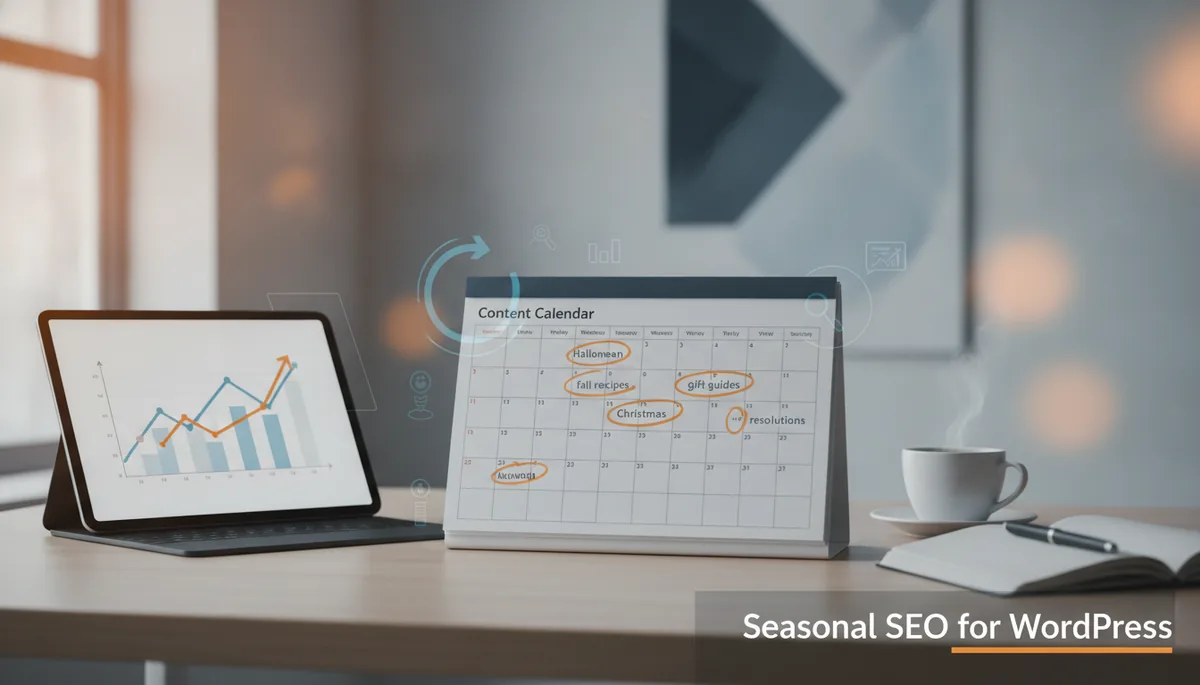
A unified content calendar keeps your funnel synchronized. Create a master calendar that includes Instagram story plans, highlights to update, WordPress publishing dates, and Shopify promotions. Each evergreen blog post should have an associated social sequence: teaser, educational clip, CTA to the blog, and a highlight slot. Use Trafficontent’s Smart Scheduler to coordinate these posts automatically, or sync your calendar with Google Calendar or a project management tool so the whole team sees deadlines and publishing windows.
Plan around product launches and seasonal promotions. For example, if you’re launching a summer collection, schedule a series of highlights showing behind-the-scenes, styling tips, and customer testimonials in the two weeks leading up to the launch. Each highlight maps to a planned evergreen post that goes live the day the collection drops — driving organic SEO interest that compounds over months. Keep buffer slots in your calendar for repurposing high-performing highlights into deeper pieces, and block recurring review time for content refreshes and SEO updates.
Operationally, assign roles: one person curates highlight assets and caption sources, another handles Trafficontent workflows and draft reviews, and a third monitors analytics and email campaigns. Use consistent naming conventions in your calendar: [Highlight] – [Funnel Stage] – [Target Keyword] – [Publish Date]. This reduces friction when automating drafts and ensures the right assets and CTAs land on WordPress and Shopify pages without last-minute rework.
Measurement, iteration, and scaling
Measurement turns this process from a promise into repeatable ROI. Track core metrics: organic traffic to evergreen posts, time on page, bounce rate, IG link-through rate (from story link stickers and bio), and micro-conversions like newsletter sign-ups or content upgrade downloads. Tie these to business outcomes: product clicks, add-to-carts, and assisted conversions in Google Analytics or your ecommerce analytics platform. Track UTM parameters on every cross-posted link so you know which highlight or social sequence drove the visit.
Use quick A/B tests to learn fast. Test two headline variants, different CTAs in the hero, or a short vs. long lead paragraph. Run each test for a minimum of two weeks or until you hit a meaningful sample size. Document results and fold winning variants into your WordPress templates in Trafficontent so future drafts adopt proven formats. Monthly cadence is practical: review performance, update underperforming posts (optimize headings, add FAQ, refresh images), and promote winners with paid social to amplify reach.
To scale, codify successful templates and traffic drivers, then replicate them across product lines. If a highlight-to-post path converts well for one product category, use the same template and workflow for adjacent categories. Keep a living playbook — a short internal doc that lists best-performing highlight types, headline formulas, and CTA language. Combine that playbook with Trafficontent automation to move from one high-performing case study to a program that consistently turns social moments into sustainable organic growth.
Next step: Run a 30-minute audit this week—export the last 8–12 weeks of Instagram Highlights data, pick your top 5 recurring themes, and map them to the three template types above. Load one highlight into Trafficontent, auto-generate a draft, and publish a single evergreen post linked to the relevant Shopify collection. Track results for 30 days and iterate from there.