The holiday season is a sprint wrapped in a relay race: search intent emerges early, moves fast through promotional windows, and spikes in the final days before delivery cutoffs. For Shopify and WordPress store owners, the difference between a noisy season and a breakout quarter often comes down to timing—finding the right keywords at the right moment and getting optimized pages live before inventory and ad costs tighten. ⏱️ 10-min read
This guide lays out a pragmatic, AI-powered framework to surface seasonal keywords, map them across product and content pages, and automate publishing and social promotion with Trafficontent. You’ll get concrete timelines, on-page checklists, measurement techniques, and step-by-step workflows that keep teams aligned and holiday revenue predictable.
Frame Seasonal AI Keyword Strategy for Holiday Ecommerce
Start by defining the seasonal windows you’ll optimize for: early discovery (8–12 weeks before peak), promotion ramp (4–6 weeks), peak sales weeks (Black Friday, Cyber Monday), and last-minute purchases (final 7–10 days for delivery). Treat each window as a separate campaign with its own intent profile—early searchers want “gift ideas” and “best for,” mid-season shoppers look for “deals” and “bundle,” and late buyers search for “next-day shipping” and “gift card.”
Use AI to continuously scan for rising modifiers and long-tail phrases that combine products with seasonal intent—phrases such as “budget stocking stuffers under $25,” “eco-friendly Christmas decor,” or “men’s waterproof boots Black Friday.” When AI flags an upward trend, tag those keywords to the campaign window and prioritize updates to titles, meta descriptions, and category pages. The key is proactive optimization: publish before traffic peaks so you capture clicks and conversions without competing solely on price.
Set measurable success metrics at the outset: target organic traffic lift percentages, page-level conversion improvements (add-to-cart and checkout rates), and campaign ROI. Back each KPI with a publishing timeline—e.g., “Publish 10 gift guides and optimize top 50 product pages at least four weeks before Black Friday.” Those timelines convert AI signals into action.
AI-Driven Keyword Research for WordPress and Shopify in 2025
AI changes keyword research from a single sprint to a continuous weather watch. Modern tools analyze search volume trajectories, social chatter, product review language, and competitor signals to forecast phrases that will matter next season—not just today. For Shopify and WordPress stores, this means you can build a prioritized set of long-tail keywords tied to product detail or promotional intent weeks earlier than competitors.
Workflows that deliver value include: feeding category-level prompts into the AI (e.g., “holiday gifts for gardeners”), letting it surface covariant modifiers (DIY, budget, luxury), and requesting keyword lists segmented by intent (discovery, consideration, purchase). AI will suggest compound queries like “LED string lights energy-saving Christmas decor” or “men’s waterproof winter boots Black Friday sale”—phrases you can map directly to products.
Always validate AI output with human judgment. Check for brand voice alignment, local language nuances, and seasonal context—AI may propose region-specific phrases (e.g., “boxing day deals” vs. “post-Christmas sales”) that require localization. Evaluate tools by three features: transparent forecasting history (how it performed previously), real-time data feeds, and direct integration with your CMS. Prefer tools that export lists and content briefs into Trafficontent or provide plugins/apps for WordPress and Shopify so you can skip manual copy-paste steps.
Map Keywords to Product Pages and Blog Content
Mapping is where keywords become revenue. Start by matching each keyword to the most relevant page based on user intent. A query focused on a specific variant—“red knit scarf gift for mom”—should point to the variant or product page, not the homepage. For broader queries—“cozy winter gifts under $50”—create a hub page or gift guide that aggregates linked product pages and category filters.
Build content clusters around seasonal themes (eco gifts, cozy home, last-minute tech) and create a hub landing page for each theme. Link from the hub to the highest-converting product pages and related blog posts. This topology signals topical authority to search engines and helps users progress from idea to purchase with consistent messaging.
On-page cues matter: craft seasonal title tags that start with the primary intent + product (e.g., “Christmas Gift Guide: Cozy Throws & Blankets — Ships Fast”), keep meta descriptions under 155–160 characters highlighting promotions and shipping cutoffs, and use header structures that reflect the content hierarchy. Add JSON-LD Product schema including name, image, description, sku, brand, offers (price, currency, availability), and aggregate rating to improve rich results. Use internal linking templates to ensure gift guides automatically surface the correct variants as offers change during the season—Trafficontent’s Blog Automation can help automate those interlinks and keep hubs fresh.
Automating Content Publishing and Social Scheduling with Trafficontent
Trafficontent turns an SEO calendar into a hands-free distribution engine. Start by connecting the platform to your WordPress or Shopify site and linking your social profiles. Configure keyword-driven templates that map keywords to content types (product page updates, blog posts, listicles, or social teasers) and set publishing rules for each seasonal window.
Use Trafficontent’s AI content suggestions to generate initial drafts and topic briefs. The workflow should be: AI suggests keywords → Trafficontent generates content outlines and meta drafts → a human editor refines voice and facts → Trafficontent schedules publication and social posts. This keeps brand voice intact while saving time at scale. For example, push a single hub post to your blog, then queue five teaser assets (Instagram carousel, Facebook post, Twitter copy, Pinterest pin, and an email snippet) to publish in a coordinated drip during the promotion week.
Key automation features to use: multipost scheduling across channels, keyword-tagged templates (so posts inherit keywords and UTM parameters), dynamic placeholders for product prices and availability, and approval gates to prevent errors. The result: consistent messaging across your storefront and social channels and fewer last-minute edits when inventory or promo details change.
Seasonal Content Calendar and Workflow for Holiday Campaigns
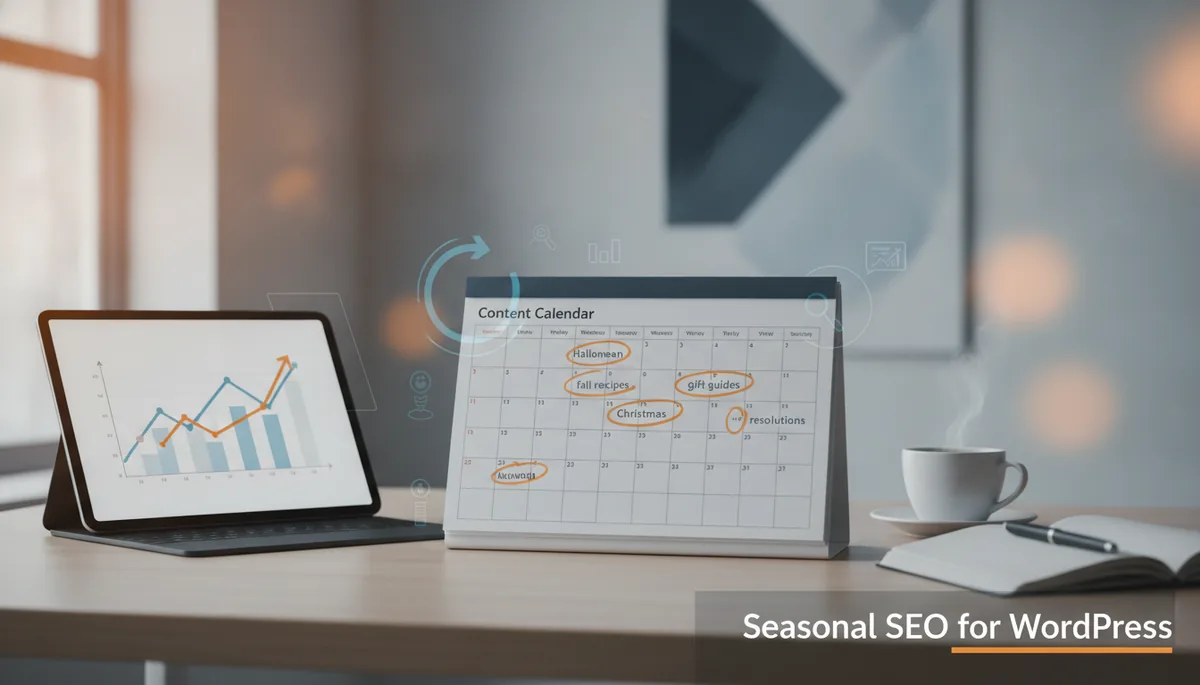
A holiday content calendar is a project plan and an execution tool. Build your calendar around campaign windows and AI-generated keyword clusters. Begin ideation 8–12 weeks before the holiday peak: assign owners, set draft deadlines, and define publish dates for blogs, product page updates, and promotional emails. Break work down by theme and channel so every item has a single owner (content lead, copywriter, designer, SEO/promo owner).
- Week −12 to −8 (Ideation & Keyword Lock): AI generates topic clusters and prioritized keyword lists.
- Week −8 to −4 (Creation & Optimization): Draft blog posts, optimize product titles and meta, produce imagery and schema.
- Week −4 to 0 (Distribution & Amplification): Publish hubs, activate paid ads, and schedule social cadence; monitor inventory and update dynamic content placeholders.
- Week 0 to +2 (Late-Stage & Post-Sale): Push last-minute shipping promos and post-sale content such as “Best bargains this season” or “Gift returns and exchanges”.
Integrate your calendar with CMS publishing rules. For WordPress, ensure posts are set to the correct category and include canonical tags for seasonal variants. For Shopify, use blog posts to drive category pages and ensure collection templates pick up seasonal tags. Trafficontent can automate approvals and schedule publishes tied to inventory triggers—so if a top product sells out, your template can automatically de-prioritize it in gift guides and surface alternatives.
SEO Best Practices for Product Pages and Ecommerce Blogs
Seasonal traffic converts poorly if pages are slow, duplicated, or unclear. Prioritize technical and on-page hygiene early. Title tags should start with the season and keyword, stay under 60–70 characters, and be unique per page. Meta descriptions should emphasize deals and shipping info. For images, use WebP or AVIF where supported, compress files, and include descriptive alt text that includes natural keyword phrases.
Apply structured data with JSON-LD Product schema—include offers with price, currency, and availability, and update the schema dynamically during promotions. Use canonical tags to avoid duplicate content across seasonal variants (e.g., “product?color=red&holiday=christmas”), and implement rel="next"/rel="prev" for paginated category lists. If you sell in multiple markets, use hreflang to serve regional holiday terms and keep local landing pages optimized for local intent.
For WordPress, pair Trafficontent with a strong SEO plugin (Yoast SEO or Rank Math) to automate sitemaps, schema snippets, and on-page suggestions. For Shopify, use apps that help surface and edit meta fields and manage redirects. Keep keyword density natural—aim for helpful signals (title, H1, first paragraph, H2s, alt text) rather than stuffing. Finally, test mobile UX aggressively: large CTAs, quick add-to-cart flows, and visible shipping cutoffs make the difference on slower shopping days.
Measurement, Testing, and Iteration
Define what "winning" looks like before you publish. Track organic sessions, keyword rankings for priority phrases, page-level conversion rate, and revenue attribution from organic traffic. Use Google Search Console to monitor impressions and rising queries, Google Analytics 4 (or your analytics stack) to measure funnel behavior, and Shopify/WordPress commerce reports to tie sessions to transactions. Tag campaign posts with UTM parameters to measure cross-channel influence.
Run quick experiments: A/B test titles and meta descriptions, swap hero images, or test “free shipping” vs “fast shipping” language. Small headline changes can shift click-through rates—experiment early on a sample of product pages and scale what works. For title experiments, use Trafficontent to publish alternative versions on separate landing pages or use controlled time-limited swaps and compare performance with UTM-tagged traffic.
Feed results back into your AI model and Trafficontent workflows. If certain modifiers (like “eco” or “next-day”) improve conversions, update templates so future drafts include those phrases. Create a post-season retrospective in your calendar: export keyword performance, list top converting pages, and log lessons so next year’s AI prompts start with a performance-informed baseline.
Best Practices, Pitfalls, and Tools for Seasonal AI SEO
Use the right mix of automation and human oversight. Tools like Trafficontent accelerate ideation, content generation, and distribution—but avoid over-automation. Pitfalls include publishing low-quality AI copy without review, keyword stuffing, and failing to update schema or inventory-based content. Keep a human editor in loop for tone and factual accuracy.
Recommended tools and plugins:
- WordPress SEO: Yoast SEO or Rank Math for on-page guidance and schema templates.
- Shopify tools: SEO apps for meta field edits and bulk redirects (e.g., Plug in SEO-style functionality and Shopify’s native SEO settings).
- Automation: Trafficontent for keyword-driven content generation, scheduling, and social multiposts.
- Measurement: Google Search Console, GA4, a rank-tracker (Ahrefs/SEMrush/Serpstat), and Shopify sales reports.
Connecting Shopify to Trafficontent in practical steps:
- Install the Trafficontent Shopify app or connect via API keys in the Trafficontent dashboard.
- Authorize content publishing scopes and map blog post destinations or product page templates.
- Link social accounts (Instagram, Facebook, X, Pinterest) for multiposting and set UTM defaults.
- Create keyword-driven templates and define publishing rules tied to inventory tags or price thresholds.
- Set approval workflows and run a dry-run publish to a staging blog or draft products before going live.
Keep the balance: automate repetitive tasks (scheduling, interlinks, basic meta generation) and keep humans focused on strategy, creative differentiation, and final QA. Avoid the temptation to stuff seasonal pages with repeated keywords; instead, use focused keyword clustering and supporting LSI phrases to cover intent comprehensively.
Next step: pick one holiday window and run a focused sprint—use Trafficontent’s AI to generate 10 gift-guide topics from your catalog, map them to 20 product pages, and schedule a two-week social promotion. Measure CTR and conversions, then iterate. That small loop—generate, publish, measure, repeat—is how seasonal SEO turns into scalable holiday revenue.