Seasonal posts aren’t just short-term traffic spikes—they’re the friendly, timely handshake that turns a one-time visitor into a fan. I’ve used holiday guides and timely how-tos to turn casual readers into email subscribers, repeat visitors, and even clients, and you can too without hiring a full agency or learning sorcery. ⏱️ 10-min read
This guide walks you through aligning seasonal topics with reader intent, building a year-long plan, writing posts that convert, optimizing for search, keeping your WordPress site fast and pretty, automating promotion, and measuring what matters. Think of it as a repeatable playbook: pick a season, plug in the structure, and scale with smart promotion. No fluff—just practical steps, examples, and templates you can reuse next year (and the year after).
Seasonal Topic Alignment: Match Holidays, Events, and Trends
Seasonal calendars are your content GPS. I keep a living doc that mixes obvious dates (Black Friday, Valentine’s Day) with the weird-but-useful ones (National Small Business Week, school term dates, product-launch conferences). This helps me ideate 2–3 concrete post ideas per theme grounded in real reader questions—because nobody searches for “Why is Christmas great?”; they search for “last-minute gift ideas for gardeners.”
Scan three buckets: holidays (national and regional), seasonal workflows (tax season, back-to-school), and cultural moments (big sports finals, viral meme days). For each bucket, jot 2–3 article ideas framed as user intent: “how-to,” “best-of,” or “checklist.” Example: for spring cleaning, you might draft “Spring WordPress Health Checklist,” “Top 5 Plugins for a Faster Site Before Summer Sales,” and “Backup and Restore: A Simple Guide for Small Blogs.”
Trend listening matters. Use Google Trends and social listening to spot what’s actually rising—don’t be the person bringing snow shovels to a beach party. When a term spikes, prioritize quick, useful pieces: checklists, short FAQs, or a photo-based guide. Keep a running “idea bank” so when a timely hook appears, you can batch-create and publish fast—like a content fast-food kitchen, but with better SEO and fewer grease stains.
A Year-Long Seasonal Content Plan
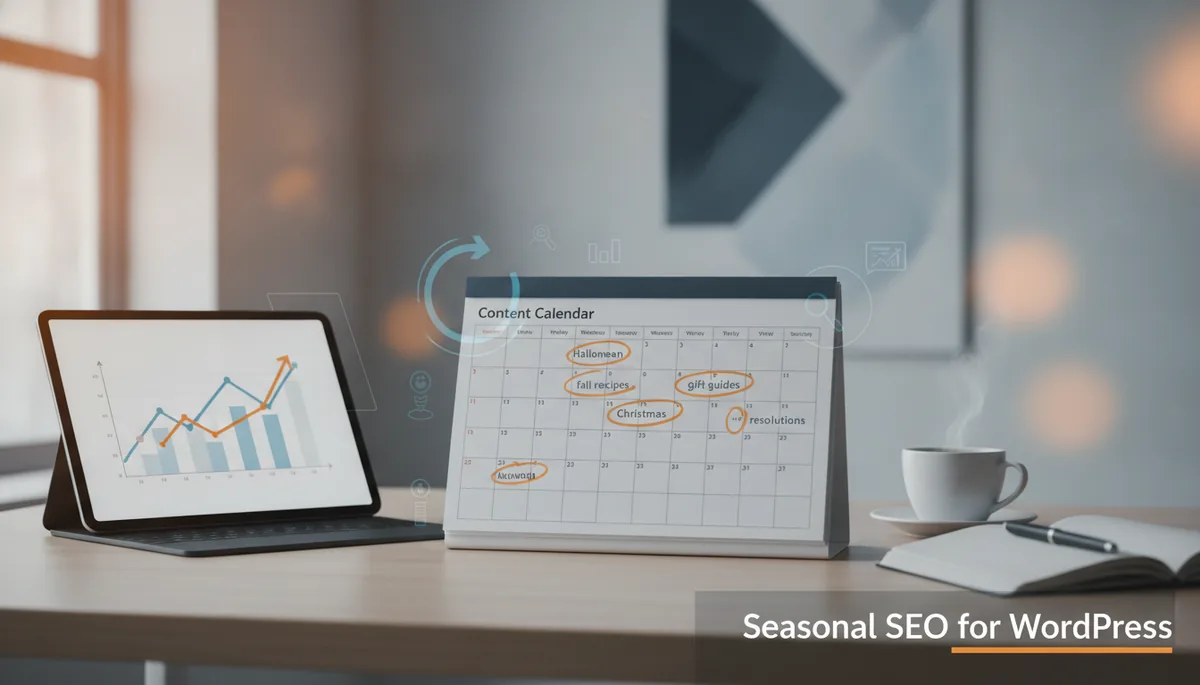
If you treat seasonal posts as one-off fireworks, you’ll be exhausted and inconsistent. Instead, plan your year like a restaurant menu: evergreen signature dishes plus a rotating seasonal special. I build a 12-month cadence that groups posts into quarterly themes and reserves two weeks each quarter for batch-creation—write three posts, schedule images, and prepare social snippets in one go.
Start by mapping peak windows: the weeks leading into major sales, tax deadlines, or industry events. Then backfill with pre-season prep posts and post-season follow-ups. For example, publish a “Holiday Prep” guide in late October, a “Gift Guide” in early November, and a “What Sold Well” recap in January. This keeps your site relevant before, during, and after the moment—like showing up early to claim the best seat at a concert.
Repurposing is where the real ROI lives. Convert a blog post into 5–10 Pinterest pins, a short X thread, a LinkedIn post, and a two-paragraph newsletter. Automation tools will schedule these across platforms so your content resurfaces without babysitting. A simple workflow: write → create 6 visuals (templated) → schedule across channels → set a 30/60/90-day reshare. That cadence keeps posts feeding new audiences each season without making you a full-time social media octopus.
Conversion-Focused Post Structure
Seasonal posts should feel like fast, generous help—with a clear path to become a fan. I use a repeatable skeleton that works every time: a hook that names the season and the payoff, a short primer on what to expect, skimmable steps or lists, and a single clear call-to-action that nudges the reader toward membership, download, or subscription.
Template (use like a Lego set):
- Hook: Name the season and the benefit in one line. (“Summer Site Speed: 5 Quick Fixes to Avoid Crashing During Peak Traffic.”)
- Why it matters: 2–3 sentences tying pain point to emotional payoff.
- Actionable steps: 3–8 skimmable items with bullets, screenshots, or short code snippets.
- Seasonal bonus: a one-click freebie (checklist, printable, mini-plugin setup file).
- Primary CTA: single, obvious action (newsletter signup, download, join community).
Your CTAs should be direct but season-aware: “Download the Black Friday Checklist” works better than “Subscribe.” Place the CTA near the top and again at the end—think of it as asking for a coffee date twice: once when you catch someone’s eye and again when you’ve made your case. Sprinkle one micro-conversion for fence-sitters—a popup that offers a printable checklist in exchange for email, or a comment prompt like “What’s the #1 product you’ll be buying this Black Friday?”
Storytelling helps. Open with a one-paragraph anecdote—mine’s usually “I once watched a site melt down on Cyber Monday like an ice cream cone in hell”—to humanize the problem, then deliver the calm solution. This keeps readers engaged and more likely to follow your CTA, because they now trust you’ve been in the mud and can get them out.
SEO and Rich Snippets for Seasonal Posts
Seasonal posts need to grab attention in search while the topic is hot. Start with focused keyword research: validate seasonal terms in Google Trends and add long-tail, intent-rich phrases like “best WordPress themes for holiday sales 2025.” Pick 2–3 core terms and map them to headline and H2s. Refresh posts monthly during the window to stay current—search engines prefer content that looks alive, not embalmed.
Next, structure your page to win rich results. Use Article or BlogPosting schema and include a concise FAQ block for common seasonal queries. FAQs increase your chances of appearing in “People Also Ask” and featured snippets. Keep JSON-LD consistent with visible content—mismatches are like promising cake and showing up with kale. For schema references and how-to, check Schema.org’s documentation for Article and FAQPage: https://schema.org/FAQPage.
Title tags should reflect intent and urgency: include the season or year and a benefit (e.g., “Spring 2026 WordPress Speed Checklist — Fix It in 20 Minutes”). Use internal links to your evergreen pillars—seasonal posts should point readers to deeper how-to resources (and vice versa). Finally, add a short update note near the top (e.g., “Updated Nov 2025”)—it’s small trust candy for both readers and search engines.
Reference: Google Trends is your friend when picking terms—see trends at https://trends.google.com.
Design, Speed, and Free WordPress Tools
Pretty seasonal graphics are great—until they turn your post into a loading snail. Aim for a professional look with minimal bloat. I usually pick a clean free theme, add a child theme style tweak, and keep images lean. Use TinyPNG for occasional manual compression, or a WordPress plugin for automated optimization so you don’t have to play file roulette every time you publish.
For big traffic days, caching and CDNs are non-negotiable. Free caching plugins like WP Super Cache or W3 Total Cache can help, and many hosts offer a built-in CDN. Test your site under load with a tool like WebPageTest or GTmetrix if you suspect traffic spikes could vaporize your UX (because nothing kills a seasonal campaign faster than a 500 error and a crying customer).
Plugins matter, but fewer is better. Stick to essentials: an image optimizer, a caching plugin, and a lightweight SEO plugin. You can explore vetted plugins and themes at the WordPress plugin directory: https://wordpress.org/plugins/. Also enable Open Graph images and Twitter cards so your seasonally branded visuals look great when shared—because a pixelated holiday banner is the content equivalent of showing up to a party in underwear.
Promotion Playbook: Automate That Seasonal Spread
Writing a seasonal post is half the battle; promotion is where the fans are won. I recommend mapping each post to 3–4 channels where your audience actually lives—Pinterest for evergreen visual guides, X for quick updates, LinkedIn for professional how-tos, and email for your warmest audience. Use a cross-posting tool to schedule once and publish everywhere, then set reshare times at 7, 30, and 90 days to catch different segments.
Automation saves time but plan for manual boosts during peak windows: pin high-performing images to multiple boards, run a threaded X post linking back to your guide, and send a segmented email to readers who opened similar seasonal content last year. Use UTM parameters on all links so you know which channels produced signups or repeat visits—data that separates guesswork from strategy.
Email sequences are crucial. Build a light-triggered flow: announcement → reminder → last chance → follow-up. Personalize subject lines for segments (e.g., “Quick tip for store owners—holiday shipping hacks”) and include the seasonal freebie as the main incentive. Social proof—reader quotes, screenshot testimonials, or UGC—adds credibility. Ask for micro-actions too: “Did this checklist help? Reply and tell me—I'll feature the best tips.” That kind of invite turns fans into contributors without sounding clingy.
Real-World Inspiration: Case Studies of Seasonal Wins
Real stories are more useful than theory. Here are two distilled wins I’ve seen and replicated.
1) E-commerce gift guide: A small store created a curated gift guide ahead of the holiday surge, paired it with time-limited bundles, and used countdown banners and checkout cross-sells. They published blog posts that linked directly to product pages and ran an email series highlighting best-sellers. Result: double-digit revenue growth year-over-year, higher average order value, and increased gift-guide conversions. The secret? Tight alignment between content, product discovery, and checkout incentives.
2) Service-based seasonal hub: An accounting firm built a tax-season hub with deadlines, checklists, and simple calculators. They promoted it via short videos and blog posts, gated a downloadable “tax organizer” for emails, and followed up with segmented nurture sequences. Traffic tripled during the season, demo bookings rose, and the email list grew substantially. The takeaway: practical tools timed to urgent needs convert browsers into clients.
Across both cases, patterns emerge: early publication (so you rank and build links), a clear seasonal offer (download or bundle), and short, useful content optimized for quick action. None of this required a massive ad budget—just alignment and execution.
Templates, Checklists, and Measurement Kit
Here are plug-and-play templates and a quick metrics guide so you can launch a seasonal campaign this week.
Starter WordPress Blog Checklist:
- Choose a lightweight theme and child theme tweaks
- Install caching, image optimization, and SEO plugins
- Set up analytics and UTM tracking
- Create a seasonal content folder with images and templates
- Define 1 primary CTA and one micro-conversion per post
Seasonal Content Calendar Template (quarterly view):
- Week 1: Idea validation + keyword research
- Week 2: Batch write 2–3 posts and create visuals
- Week 3: Schedule cross-channel promotion and email sequence
- Week 4: Monitor, tweak headlines, and refresh content
Two post templates:
- Checklist Post: Hook → why it matters → numbered checklist with screenshots → seasonal downloadable PDF → CTA to subscribe.
- Gift Guide: Hook → curated categories (under $25, splurge, stocking stuffers) → product picks with short blurbs → affiliate or shop links → CTA to join the VIP list for early access next year.
Metrics to track fans, not just clicks:
- Email signups attributed to the post
- Repeat visits within 30 days
- Comments or UGC submissions
- Micro-conversions (checklist downloads, shares)
Run experiments in small batches: change one variable (CTA wording, hero image, FAQ presence) and measure the lift over the next seasonal window. Your goal is not vanity metrics—it's building a small, loyal audience that comes back when the season rolls around again. Next step: choose one upcoming seasonal date, pick a template above, and schedule a two-week batch work sprint. You’ll thank me when your inbox fills with new fans instead of tumbleweeds.