Starting a hobby blog on free hosting is like adopting a rescued puppy: low cost, high joy, and surprisingly doable with a little patience. I’ve helped hobbyists—from vintage postcard restorers to home-brew coffee tinkerers—turn tiny, free sites into steady streams of organic traffic, and I’ll show you the exact setup, content plan, and low-budget tactics that work. No developer degree, no paid ads, just sensible SEO moves you can implement this weekend. ⏱️ 11-min read
Below I’ll walk you through choosing the right free WordPress setup, the SEO fundamentals that actually matter, a content calendar that won’t eat your life, hands-on on-page and technical tweaks, theme choices that look pro without slowing down, repeatable templates to write faster, organic growth tactics that don’t cost a fortune, and the measurement practices that keep you improving. Think of this as the practical playbook for hobby bloggers who want real momentum—not vanity metrics or snake-oil shortcuts.
Choosing the right free WordPress setup for SEO wins
Let’s get the awkward part out of the way: “free WordPress” comes in two flavors and they behave very differently. WordPress.com’s free plan is the cozy, managed resort—no hosting bills, automatic updates, and a gentle onboarding. But it’s also a bit like living in a dorm: your domain will be yourblog.wordpress.com, you can’t use many plugins, and you might see ads you didn’t approve. If your aim is to test ideas, journal, or write for fun, it’s perfect. If you’re aiming for search engine visibility and control? It’s limited. For the official spin, see WordPress.com’s plan comparison.
On the other hand, self-hosted WordPress using a free subdomain from a host (or a low-cost shared host if you later upgrade) gives you ownership of your site files, access to themes and plugins, and the freedom to install SEO tools like Yoast or Rank Math. That’s the route I recommend for hobbyists who want scalable SEO. I’ve seen bloggers switch from WordPress.com to self-hosted and double their organic traffic within months simply because they could install caching, better themes, and proper permalink structures. WordPress.org explains self-hosted WordPress in plain language if you want the official guide.
If you’re truly staying on a free plan, optimize what you can: choose the clearest site name, set a readable URL structure, and use built-in customization to keep navigation logical. But if you anticipate growth—more than a few posts and some backlink interest—start with self-hosted (even on a free subdomain or low-cost provider). Ownership matters: renting (WordPress.com free) limits your long-term SEO options; owning your files (WordPress.org/self-hosted) gives you leverage. It’s the difference between trying to win a marathon in flip-flops and switching to running shoes—both get you from A to B, but one is a lot less painful.
Foundations: SEO basics for hobby blogs on free hosting
Your SEO foundation is mostly about intent and structure. Start by turning hobby topics into searchable questions. Use free tools like Google Keyword Planner and Ubersuggest’s free tier to find long-tail phrases—these are the gentle, low-competition searches where hobby blogs shine. I always recommend listing 10–20 potential targets based on what real people ask: "how to clean vintage postcards without damage" beats “postcard care” because it mirrors a clear intent and is easier to rank for.
Understanding search intent means looking at the current SERP for your target phrase. Does Google return how-to guides, product pages, or lists? If the SERP is full of how-tos, deliver a practical guide. If it’s reviews, you might need to add comparison content. A quick trick I use: open an incognito window, search your keyword, and note whether the top results are articles, videos, or shop pages. Match the format and your content will feel less like a square peg in a round hole—because nobody likes being that awkward peg.
Beyond keywords, your site structure must be clean and crawl-friendly. Set simple permalinks (post-name or /blog/post-name), create a sitemap (most SEO plugins or hosting panels will generate one), and keep navigation shallow—three clicks from the homepage to any post. Use categories that reflect real topic groups and keep tags minimal to avoid thin, duplicate pages. On free hosting you may not have plugin access, so focus on tidy menus, a visible search box, and clearly labeled “Start Here” or “Beginner Guides” pages. Think of your site like a tidy workshop: no one wants to dig through boxes to find the wrench.
Content planning that drives traffic on a shoestring
Content planning for a hobby blog shouldn’t be random bursts of enthusiasm followed by radio silence. The most sustainable model I’ve used with hobbyists is the pillar-and-cluster approach: write 2–4 pillar posts that cover broad fundamentals (e.g., "Complete Beginner's Guide to Vintage Postcard Care") and build smaller, targeted cluster posts around subtopics (cleaning methods, storage options, identifying marks). Pillars attract broader queries and cluster posts capture long-tail searches—together they create topical depth that search engines like.
Start your topic discovery with free signals: Google Trends to see what’s rising, People Also Ask boxes for common questions, and niche forums or Reddit threads for real, pain-point language. I once found a week’s worth of post ideas living inside one subreddit thread—people were asking the same three vague questions, and answering them thoroughly led to a steady trickle of visitors. Save those questions in a spreadsheet or calendar: title, target keyword, intent, and a planned publish date.
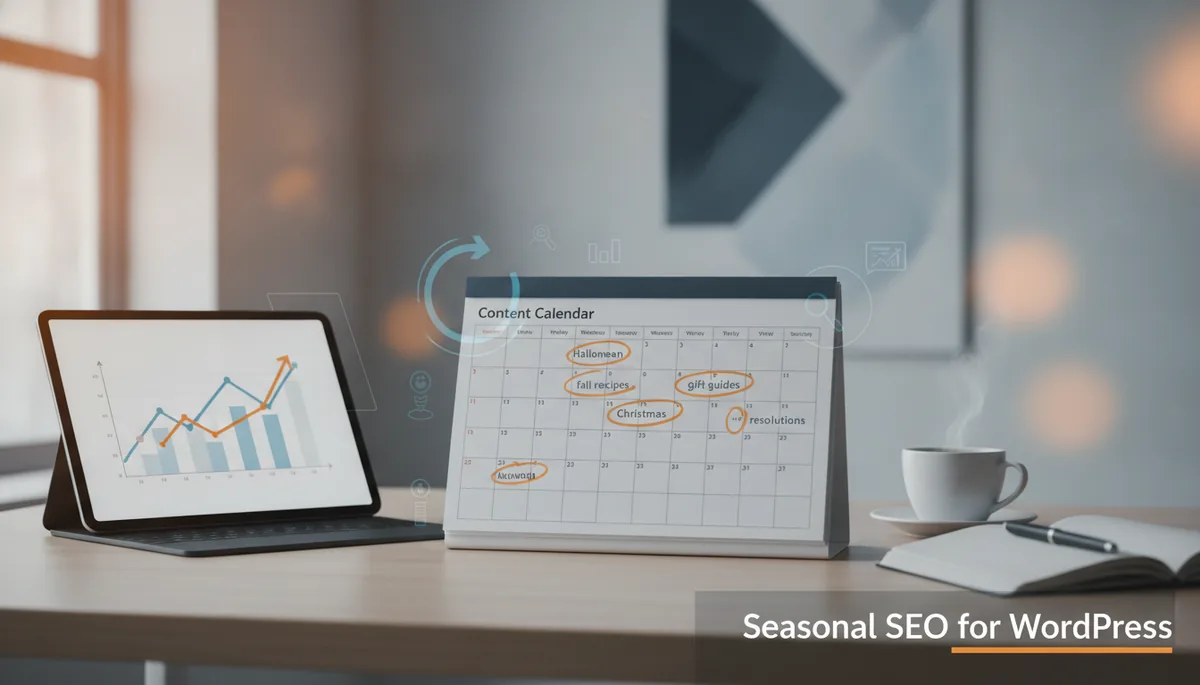
Batch writing is your friend. Reserve a single afternoon to outline or draft multiple posts—knock out structure, key headers, and the main steps or tips. That reduces setup friction and keeps publishing predictable. A practical cadence: create one pillar post per month and two or three cluster posts that link to it. Make evergreen content your priority (how-tos, troubleshooting, best practices), then add seasonal or trending pieces as quick wins. With this approach, you publish fewer but higher-quality posts, and the traffic compounds—like planting perennials instead of annuals that need replanting every spring.
On-page SEO and technical tweaks you can do in WordPress
On-page SEO is where your writing meets search engines. Start with magnetic, descriptive titles and meta descriptions that include your target keyword and a reason to click. Think of the title as an invitation, not a billboard: “How to Clean Vintage Postcards Safely (3 Proven Methods)” is far better than “Postcard Cleaning Info.” Meta descriptions should add context and a hook—write them like the blurb on a book jacket. If you’re on a WordPress.com free plan without a plugin, use the built-in editor to edit excerpt/meta where possible.
Structure your content with proper heading tags. Use H1 for post title (WordPress does this), H2s for main sections, and H3s for finer points. Headings act like a table of contents for both humans and bots—scan-friendly and persuasive. For images, compress them (TinyPNG or Squoosh), add descriptive filenames and alt text that naturally includes the topic: instead of “IMG1234.jpg,” use “cleaning-vintage-postcard-alcohol-method.jpg” and alt="cleaning vintage postcard with isopropyl alcohol." This helps with accessibility and gives an SEO nudge.
Internal linking is a low-effort, high-ROI habit. Link new posts to relevant existing content and vice versa; use natural anchor text like “cleaning methods” or “postcard storage tips.” On free hosting, where plugin options may be limited, do this manually—create a short list of “Related Posts” at the end of each article. Also, make sure your site is mobile-friendly: use short paragraphs, large fonts, and buttons sized for thumbs. Finally, add a simple schema where possible (FAQ schema is often supported by the block editor or theme enhancements). If that sounds scary, start with clear FAQs at the end of posts—search engines will often pick up and display those answers in snippets anyway. Your readers will thank you, and so will Google—unlike that one relative who never returns your texts.
Professional-looking, fast WordPress setup with free themes
Design decisions on free hosting matter. Visitors form an opinion about your site in milliseconds; pick a theme that looks clean, loads fast, and plays well with SEO. Lightweight, well-reviewed free themes such as Astra, GeneratePress, Kadence, Neve, and OceanWP are excellent starting points. They strip away the flash that kills performance (you don’t need animated unicorns scrolling across your header) and give you sensible defaults for typography and layout.
When customizing, less is more. Choose a two- or three-color palette, set a readable font pair (one for headings, one for body), and keep your header navigation concise—Home, About, Start Here, Blog, and Contact is plenty. Upload a simple logo (use a PNG or SVG if supported) and ensure your site title/tagline clearly communicates what you write about. Avoid hero sliders and heavy page-builder demo content—those convince your site to load slower than molasses.
Performance basics: optimize images, enable lazy loading (modern WordPress has built-in lazy loading for images), and use caching where your host allows. If you’re on a self-hosted environment, a lightweight caching plugin can shave seconds off load time. On some free hosts, you won’t have plugin access—so focus on small images, avoiding external widgets, and keeping fewer plugins active. Remember: speed affects both user experience and SEO. If your site loads slowly, readers bounce; if readers bounce, search engines notice. Treat speed like a first date: show up on time and leave a good impression.
Templates and workflows to write faster posts that rank
One of the best productivity upgrades for hobby bloggers is using templates. I create a repeatable post template that includes standard SEO fields and structure—title, URL slug, meta description, intro (what the post solves), H2 setup/why, H2 step-by-step or main body, H3 subsections, H2 FAQ, conclusion/next steps, and a short related-posts list. That template reduces cognitive load: when you sit down to write, you’re not inventing structure—you’re filling in a proven shell. In WordPress, use the block editor’s reusable blocks or the template feature to save this layout.
Pair templates with lightweight workflows. For example: research (30–60 minutes), outline (15–30), draft (60–90), add images/alt text (15), optimize meta + internal links (15). Batch similar tasks—research for four posts in one sitting, then write drafts in another. If you’re pressed for time, AI can help with outlines or first drafts, but treat it like a power tool: it’s useful, but if you leave it unsupervised it’ll put the wrong nails in the wall. I’ve used AI-assisted outlines and then humanized the copy, added personal photos, and inserted local examples. That mix accelerates production and keeps voice authentic.
Tools like Trafficontent can automate post creation, image prompts, and Open Graph data if you want to scale later, but they aren’t necessary when you’re starting. The key is repeatability—create one strong post template, a short checklist (optimize title, meta, headings, images, internal links), and follow it every time. You’ll produce faster articles that still hit the SEO basics. It’s like meal prepping for content: fewer decisions, more consistency, less midnight panic-snacking on poor headlines.
Growth tactics on free hosting: win without heavy ads
On a shoestring budget, you win with distribution and relationships more than flashy ads. First, maximize internal linking: create an obvious “hub” or pillar page for each main topic and link cluster posts to it. I once doubled pageviews on a niche blog simply by adding a "Start Here" pillar and linking 12 related posts to it. Google rewards topical structure; visitors stay longer when they can freely click through helpful related content.
Next, get strategic about backlinks—don’t chase high-authority sites blindly. For hobby niches, niche-specific backlinks (forum profiles, guest posts on hobby newsletters, local clubs' websites) provide contextually relevant traffic and are easier to earn. Offer to write a short how-to for a hobby group newsletter, or provide a resource link to a club's “recommended reading” page. Small, relevant links beat random high-DR links that don’t send engaged visitors. If outreach feels awkward, start by being genuinely helpful in forums and linking to your posts when they answer a question—be useful, not spammy.
Repurpose content to punch above its weight. Turn a how-to post into a Pinterest-friendly infographic, a short X (Twitter) thread, or a short video for Reels/TikTok. Pinterest is particularly powerful for hobby niches—visual how-tos and tips often have long lifespans there. Also consider an email list; even a small, engaged newsletter drives repeat traffic and amplifies new posts. Finally, use social as distribution, not validation: post helpful bits, link back to your evergreen posts, and track what formats produce clicks. Growth on free hosting is patient and relational, like building a tiny, enthusiastic community rather than buying a billboard in Times Square.
Measurement and iteration: know what moves the needle
Measure the few things that actually tell you whether your work is working. Start with Google Search Console to see impressions, clicks, CTR, and which queries lead to your pages—this tool is indispensable and works on free hosts. Google Search Console shows what people typed before they found you, and that’s like having free market research for your niche. Pair it with Google Analytics/GA4 to understand behavior (time on page, engagement, journey through your site). If you prefer privacy-focused analytics, Matomo or Plausible are solid free/low-cost alternatives.
Track keyword rankings with a simple spreadsheet if you don’t want another tool. Keep columns for Keyword, Target URL, Current Position (weekly), Impressions