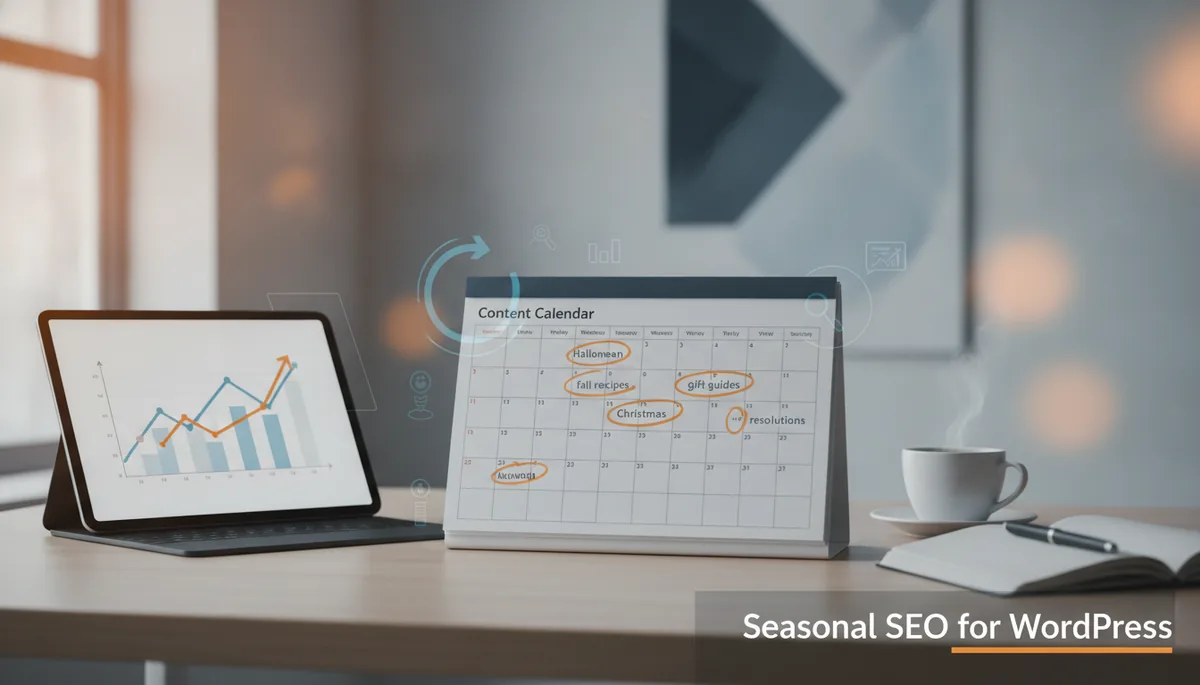
Before you fire up WordPress and get lost in themes, widgets, and the siren song of “one-click demo imports,” do this instead: plan the posts. I’ve helped early-stage bloggers get traction far faster by mapping topics, audience needs, and SEO goals before touching the editor. Think of it as drafting the restaurant menu before picking paint colors—nobody wants a Michelin-starred wallpaper with a menu of soggy fries. ⏱️ 11-min read
This guide walks you step-by-step through a content-first approach: how to think, plan, and measure so your WordPress build serves strategy instead of distracting from it. You’ll find practical templates, post-format blueprints, platform tradeoffs, and mini case studies that prove this works. No fluff, just a clear path from idea to measurable growth.
Adopt a Content Strategy First Mindset
Starting with content strategy is like building a house with a floor plan instead of stacking bricks and hoping the roof happens to land in the right spot. I learned this the hard way: early sites I helped were beautiful—until we realized the pages didn’t answer audience questions or move any KPIs. That’s when I stopped letting design dictate direction. You should too. Before installing a theme, define the “why”: what does each post need to achieve? Traffic? Leads? Sales? Pick 2–3 measurable objectives and set modest month-one targets—say, 1,000 pageviews or 50 newsletter signups in the first 90 days—so the site is built to meet them.
Create a lightweight timeline. A content-first timeline might be: three pillar posts and six supporting articles in month one, then a biweekly cadence to test topics. This prevents feature bloat—because nothing screams “I have no plan” like a homepage full of plugins you’ll never use. Put your goals on a visible dashboard (a simple Google Sheet works) and map every new idea back to those metrics. If an idea doesn’t move the needle, shelve it.
Do audience research early: search forums, skim Q&As on Reddit or niche Facebook groups, use Google’s People Also Ask, and glance at top-ranking pages. These aren’t fancy rituals; they are the breadcrumbs your readers leave that tell you what to write next. Prioritize problems and journeys over aesthetics. Your WordPress site should be a vessel for content that serves people, not a trophy case for plugins.
Define Your Audience and Value Before You Build
Write for a real person. Not “DIY hobbyists,” not “techies,” and definitely not “everyone.” Create concise personas—give them a name, a goal, and one painful problem. For example: “Maya, 32, solopreneur, needs fast, budget-friendly website tips without tech jargon; she wants clear how-tos she can implement in an afternoon.” A named persona makes your editorial choices less existential and more tactical: what headlines will grab Maya? What length and format will she finish on a busy lunch break?
Translate those needs into a unique value proposition. Why should Maya return to your blog instead of the 12 other WordPress tutorials she sees on Google? Maybe you promise "30-minute WordPress fixes for time-poor founders" or "case-studied theme choices for non-designers." That concise promise becomes your editorial north star—every headline, subhead, and CTA either aligns with it or gets shown the door. If your value proposition is fuzzy, your content will be too.
Practical persona template: name, role, top goal, biggest obstacle, favorite content format, where they hang out online. Keep it one page. Then map 3–5 core questions your audience asks and seed those topics into your initial editorial calendar. If you can’t succinctly answer “what problem does this post solve?” you’re probably writing into the void. And yes, that’s where the tumbleweeds live.
Map Content to WordPress Objectives: SEO, Traffic, Revenue
Every post should move a metric. That’s the cardinal rule. Map topics to a clear objective—SEO visibility, audience growth, or direct revenue—and choose the format that best serves that objective. For SEO and discoverability, aim for pillar posts and evergreen how-tos that target informative intent. For conversions, create comparison pages and product roundups that serve buyers deeper in the funnel. If you want email growth, craft resource-rich lead magnets paired with landing pages that convert at a higher rate than your average blog post.
Define success for each content type with concrete KPIs. Examples: “Target 1,500 organic visits in 60 days” for pillar posts, “3% landing page conversion rate” for downloadable guides, and “Top-5 SERP for a primary keyword within 90 days” for a corner-stone article. Use past performance to set realistic benchmarks; if you’re new, look at industry averages and set a stretch but achievable target. Keep KPIs visible and tied to publishing decisions so your editorial calendar becomes a performance roadmap, not a wish list.
Map content to funnel stages. Use awareness content (how-tos, listicles) to feed the top of the funnel; use case studies and comparisons to nudge consideration; use reviews and product-focused content for bottom-of-funnel conversions. Internal linking should reflect that journey—each awareness post should naturally point readers to relevant guides or landing pages. This planning is what turns a WordPress blog into a content engine rather than a collection of interesting but disconnected essays.
Build a Content Planning Template You Can Reuse
A reusable template is your superhero cape when deadlines loom and creativity naps. I suggest a single-row template that travels with every idea from brief to publish. Core fields: topic/title, audience persona, primary and secondary keywords, intent (informational, commercial, navigational), target CTA, wordcount guideline, publish date, status, and owner. That’s it—small, disciplined, and deadly effective.
Pick tools that match your scale and temperament. A shared spreadsheet fits most solo bloggers and small teams—it's fast, shareable, and editable without plugin drama. If you prefer your planning closer to publishing, embed those fields inside WordPress via custom post meta or use an editorial plugin that surfaces the plan in the editor. For teams, a project tool like Trello, Asana, or Notion that mirrors your workflow (idea → brief → draft → review → publish) keeps approvals and deadlines visible.
Enforce strategic completeness. Every time a writer or contributor starts an article, they should complete the template. This prevents the “I’ll add SEO later” trap and keeps posts aligned with your KPIs. Use the template to mandate CTA placement and internal links, and require at least one performance hypothesis—what metric this post is expected to move. Over time, this discipline builds a library of repeatable, testable content plays you can scale, rather than one-off hits driven by caffeine and hope.
Outline Post Formats and SEO-Friendly Templates
Choose 3–5 core post formats and make them ridiculously easy to execute. My favorites for WordPress publishers: how-tos, listicles, case studies, reviews/comparisons, and pillar guides. A typical site will see 60–80% of traffic from two formats: evergreen how-tos and comparison pages. Decide which ones you’ll use and build templates for each, including H1-H2 structure, suggested length, and SEO fields. That way writing focuses on substance, not structure—like having a proven recipe instead of inventing dinner at midnight.
Each template should include SEO-ready prompts: recommended header structure (H2s that match search intent subtopics), meta description guidance, internal link targets, image prompts and alt-text suggestions, and an FAQ block that maps to schema. This FAQ block is a tiny SEO multiplier—Google loves structured answers, and schema increases the chance of getting a rich result. Using tools like Google’s Search Console or the documentation at Google Search Central can help you identify question patterns to answer directly in your templates (see developers.google.com/search).
Visual prompts matter. Tell writers how many screenshots, photos, or charts to include and where to place them. A template for a review might require a product specs table, pros/cons bullet list, and a quick buyer’s checklist. Templates speed production, maintain brand voice, and make your content crawl-ready from day one—no late-night tag-team to fix missing meta descriptions. If you want automation, content engines like Trafficontent can turn these templates into scheduled posts with image suggestions, UTM tracking, and Open Graph previews, so you publish smarter, not just harder.
Choose the Right WordPress Setup to Fit Your Plan
Your theme and plugins should serve your content, not the other way around. Start lean. If you’re experimenting or budget-sensitive, WordPress.com or a low-cost shared host can work fine while you validate topics and audience fit. If you expect custom monetization, advanced SEO control, or increased traffic, self-hosted WordPress.org on a reliable host is the better long-term bet. WordPress.org gives you plugin freedom and performance control—useful when you need caching tweaks or custom redirects that hosted platforms sometimes lock down (see wordpress.org for platform details).
Pick content-first themes like Astra, GeneratePress, or Kadence. These prioritize clean typography, responsive layout, and fast performance—basically the readability essentials your posts need. Test themes with real content on mobile and desktop: open a draft and ask, “Can I skim this in 10 seconds?” If not, change the theme. Avoid themes that bury content under sliders and animated widgets; they look flashy in demos but are SEO and usability nightmares.
Limit plugins to essentials: one SEO plugin (Yoast or Rank Math), a caching/performance tool, an image optimization plugin, and an editorial workflow tool if you need it. Plugins are like spices—too many and the dish becomes confusing. For analytics and search insights, set up Google Search Console and GA4 early to start collecting data. If you anticipate scaling content across languages or channels, consider a content engine that automates distribution and schema so publishing doesn’t become a full-time admin job.
Content Production Workflow: Steps to Plan, Create, and Publish
Turn planning into habit with a simple, repeatable workflow. I follow a five-step sequence: Plan, Brief, Create, Edit, Publish. The Plan and Brief stages are where strategy belongs—don’t skip them. Plan defines the KPI and audience; Brief sets the outline, keywords, required visuals, and CTA. This reduces rewrite drag later and prevents the classic workflow leak where everyone expects the editor to invent strategy at 2 a.m.
When creating, use the template you built earlier: intro that hooks, problem definition, actionable solution(s), proof or examples, and a crisp CTA. Insert SEO elements while you write: the primary keyword in the title and first 100 words, logical H2s that match search intent, and 3–5 internal links to related posts. Keep images optimized and include descriptive alt text; visuals make articles scannable and support social sharing cards.
Editing should be a two-step process: one pass for clarity and structure, another pass for SEO and conversion. Use checklists: does the article answer the user’s question? Are headings scannable? Is the CTA clear and relevant? Run basic SEO checks using your plugin—meta description, slug, H1 uniqueness—and preview the Open Graph cards. Finally, schedule and distribute: post at a predictable time, share to channels where your persona lives, and consider automated syndication if you’ve set up a content engine. Repeat often—consistency beats occasional perfection.
Examples and Mini Case Studies
Seeing strategy in action makes it real. Take "Yarn Yeti," a niche knitting blog that transformed chaotic posting into a traffic engine. They created pillar guides—“The Definitive Guide to Left-Handed Crocheting”—with SEO-optimized structure and FAQ schema. The result? A 60% boost in organic traffic to pillar content after three months because search engines and users loved the clarity. That’s the power of planning: write fewer, better posts and watch them compound.
Then there’s "Gadget Galaxy," an ecommerce store selling smart pet feeders. Instead of launching products and hoping customers stumble across them, they mapped content to the buyer’s journey. Pre-launch posts compared feeders by battery life and durability; product pages linked back to those comparisons. The conversion rate on product pages improved because readers were pre-qualified—content did the educating, so the product page closed the sale. A modest investment in planned content turned product launches into predictable revenue, not lucky guesses.
These aren’t unicorn stories. They’re repeatable plays: choose a handful of pillar topics, create supporting content with intent-driven templates, and link it into funnels that match your goals. Tools like Trafficontent can speed the technical parts—SEO prompts, schema, distribution—so small teams act like bigger ones. The lesson: planning converts ideas into outcomes faster than hoping your homepage is pretty enough to do the heavy lifting.
Launch with a Calendar, Then Grow: Measurement, Iteration, and Scale
Publish predictably. A regular cadence trains both readers and search engines. Start with a realistic calendar—three to five posts per month is better than burning out trying to publish daily. Track core KPIs: organic traffic, keyword ranking movement, time on page, scroll depth, email signups, and conversion events like add-to-cart or downloads. Use GA4 and Google Search Console to gather performance data; these are free and indispensable for content decisions (see developers.google.com/search for best practices on search performance).
Iterate with small experiments. Change one variable at a time—headlines, CTA language, featured image—and test for 2–4 weeks. Small A/B tests reveal what nudges readers without wrecking your publishing schedule. Document wins and codify them into templates: if a certain intro hook increases scroll depth by 20%, make it part of the template for similar posts. Scale what works by cloning successful post structures across topics and, if you use automation, by streamlining distribution to social and newsletters.
As you scale, keep the data honest. Build a simple dashboard that shows the metrics you care about at a glance. Revisit your editorial plan quarterly: which pillars are growing? Which need refreshes? And when traffic outgrows your hosting plan or you need advanced caching, upgrade the platform—not before. This measured approach avoids wasted build time and keeps you growing predictably rather than frantically.
Next step: pick one pillar topic, create a one-page brief using the templates