Holidays are the biggest test of a store’s operations—and its content strategy. When shoppers search for gift ideas, shipping cutoffs, and last-minute deals, the stores that win are the ones whose pages, posts, and social posts are already live, consistent, and optimized. For busy store owners and ecommerce teams, that shouldn’t mean late nights and manual uploads. It should mean a predictable system. ⏱️ 10-min read
This guide walks through a practical, Trafficontent-driven approach to planning, generating, and auto-publishing seasonal content across Shopify and WordPress. You’ll learn how to build a calendar that maps content to products, use AI to find the seasonal keywords that convert, configure automated workflows and templates, and measure the results so each holiday performs better than the last.
Build a Seasonal Content Calendar for Shopify and WordPress
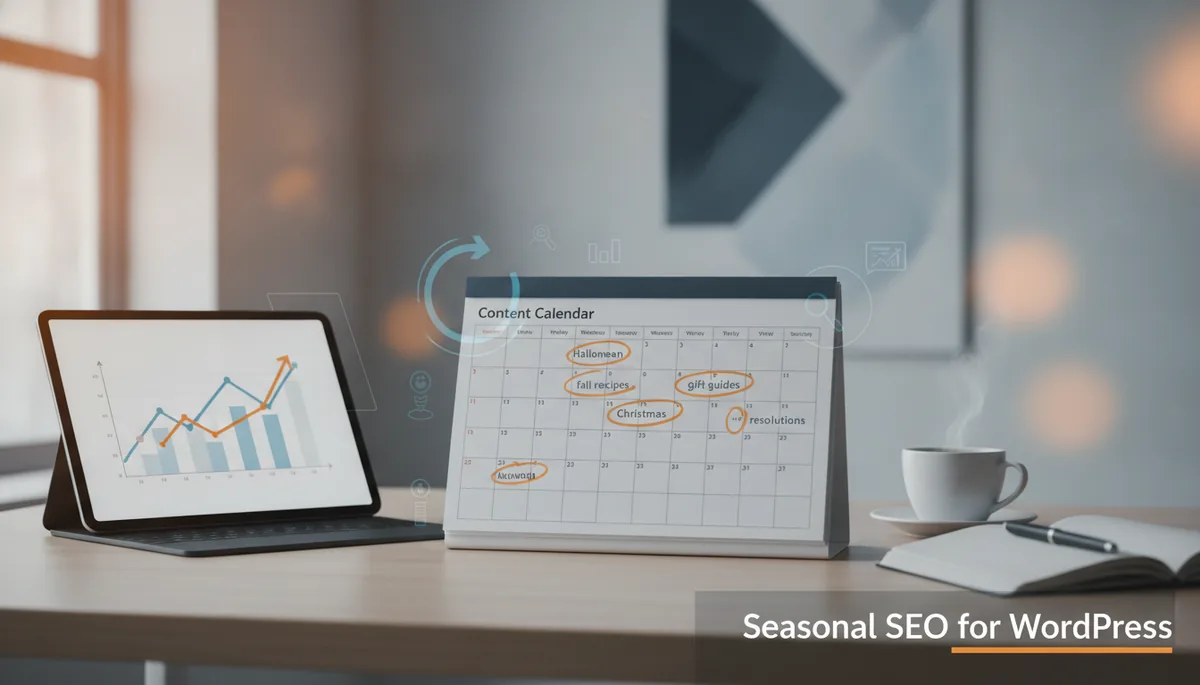
Start with a master calendar that captures every date that matters: national holidays, industry events, local observances, vendor lead times, and niche moments (like “Back-to-Ski Week” for outdoor shops). A single source-of-truth prevents duplicated campaigns and last-minute asset hunts. Map each event to specific content types—product collection launches, blog gift guides, banner swaps, email blasts, and social sequences—so every channel has a role.
Practical windows matter. For example:
- Early deals: Begin messaging Nov 1 to capture early bargain hunters.
- Peak purchase window: Nov 20–Dec 10 for most gift purchases.
- Last-minute shoppers: Dec 15–24, focused on fast-shipping products and e-gift cards.
Assign channel-specific outputs. Shopify needs collection pages, promo banners, and product copy updated with shipping cutoffs. WordPress handles long-form SEO content—how-tos, gift guides, and category landing pages that pull organic traffic. For each calendar item, note image sizes, meta copy, and internal links to ensure cross-platform consistency.
Finally, connect that calendar to your automation stack. Tools like Trafficontent’s Smart Scheduler let you translate calendar items into templated jobs that auto-populate platforms on schedule—so your holiday plan becomes executable without frantic, manual uploads.
Automate Holiday Post Publishing Across Shopify and WordPress
Automation turns repetitive publishing into a one-time setup. Once you create publishing rules and templates, posts can cascade across Shopify and WordPress at predetermined times. The core idea is simple: define the trigger, attach a template, and let the system publish.
Begin by cataloging content types and associated triggers. Examples:
- Gift guide blog posts → publish 30 days before a major holiday.
- Product pages with holiday messaging → swap copy and images 14 days before peak dates.
- Promotional banners → schedule to switch at midnight local time on the first day of a sale.
Use cross-platform schedulers to avoid platform silos. Shopify supports scheduled product and blog publishes; WordPress’s editor allows timed posts. For coordinated cross-posting—blog post on WordPress + collection launch on Shopify + social cascade—Trafficontent acts as the orchestration layer. It queues content, applies templates, and executes publish actions across both platforms without manual uploads.
Automation reduces errors: timezone mishaps, duplicate posts, or mismatched promotional copy become rare. To keep control, implement an approval gate for critical items—banner swaps or price changes—so editors can intervene. For everything else, trust templates and triggers to roll work out reliably during the busiest weeks of the year.
AI-Powered Keyword Research for Seasonal Campaigns
Seasonal SEO isn't just about chasing high-volume terms; it's about identifying time-sensitive intent and acting quickly. AI-powered keyword tools analyze search patterns and social signals to surface long-tail queries that spike around holidays. These include transactional phrases—“buy [product] by Christmas”—and discovery terms like “best gifts for [persona].”
Workflow to apply AI-driven keywords:
- Run an AI seasonal scan for each event to produce long-tail keyword clusters (e.g., “gifts under $50 for dad,” “Hanukkah fast shipping kitchen gadgets”).
- Prioritize by intent: mapping high-purchase intent queries to product pages and informational queries to blog posts.
- Assign keywords to calendar items and content owners via Trafficontent so each post is built around a clear query set.
AI also surfaces competitive gaps—terms your competitors ignore. If bigger retailers target “holiday gift ideas,” you might capture underserved intent with “sustainable stocking stuffers under $30.” Map those long-tail terms into topic clusters: primary page (collection or pillar post) plus supporting blog posts that link back to product pages. That internal linking reinforces topical authority during the season.
Practical tip: export keyword lists, tag them by buyer stage (discover, compare, buy), and schedule content accordingly. Ready-to-publish product pages should target “buy” phrases and shipping cutoffs. Longer blog content, optimized for discovery, needs to be live earlier to gain traction in organic search.
Optimize Product Pages for Seasonal Traffic
Product pages must answer two seasonal questions immediately: “Is this a good gift?” and “Will it arrive on time?” Use titles and meta descriptions to surface seasonal relevance—“Cozy Wool Scarf — Holiday Gift, Ships by Dec 20.” In the on-page copy, lead with benefits (warm, gift-ready packaging) and provide precise shipping cutoffs and guarantees for holiday delivery.
To streamline updates, create product page templates with dynamic fields for seasonal elements. Template elements might include:
- Seasonal title suffix (e.g., “— Holiday Gift”)
- Shipping cutoff date field
- Stock indicator and urgency block
- Gift packaging and personalization options
Swap imagery to match the season—hero shots in seasonal contexts, packaging close-ups, and lifestyle photos showing gift exchange moments. Keep alt text consistent and keyword-rich, such as “holiday gift scarf in gift box.” Consistent image dimensions help automated swaps run without layout issues.
Use schema to clarify availability and shipping deadlines for search engines, which can increase click-through rates. And avoid misleading urgency: if you use countdown timers, tie them to clear shipping or promotion end dates. When combined with Trafficontent’s scheduling features, these template-driven changes can roll out automatically across hundreds of SKUs, so last-minute stock updates won’t require manual edits to each product page.
Set Up an Auto-Publish Workflow with Trafficontent
Trafficontent becomes your seasonal operations center: it pulls product data, applies templates, generates content (including AI-assisted copy and keywords), and publishes to Shopify and WordPress. Here’s a step-by-step workflow you can adopt this season.
- Integrate platforms: connect Shopify and WordPress to Trafficontent so product metadata and post templates are accessible from one dashboard.
- Create templates: design reusable templates for gift guides, product pages, banners, and social snippets. Include dynamic fields for dates, product SKUs, and keywords.
- Define triggers: link templates to calendar events or inventory signals—e.g., “publish holiday collection page when SKU bundle is live” or “publish blog post 30 days before Black Friday.”
- Enable AI assist: generate headline and meta suggestions and a prioritized keyword list for each template.
- Set approval gates: choose which items require manual review and which publish automatically.
- Schedule publishing: queue posts to publish at precise times with timezone awareness, including banners and product copy swaps.
- Monitor and adjust: use Trafficontent logs to confirm publishes and quickly rollback if needed.
One practical configuration: tag templates with “holiday-2026” so every associated item can be audited and tweaked in bulk. For teams that rely on upstream tools (like Klaviyo for email), map content records to external campaigns so promotions align with site content. The result is an end-to-end pipeline from keyword research to live post—with far fewer manual uploads.
Cross-Platform Social Scheduling for Holiday Peaks
Social channels amplify seasonal content, but each platform requires a native approach. The goal is to connect publish events on Shopify and WordPress to a coordinated social roll-out that feels native and timed for peak engagement.
Start by linking social assets to your content templates. When a blog post or product collection publishes, Trafficontent can queue social snippets that reference the live URLs, include UTM parameters for tracking, and adapt captions per platform. Follow these channel-specific rules:
- Instagram: high-quality visuals, short captions, product tags, and Reels for gift-unboxing or styling. Schedule 1–2 posts/day near major shopping dates.
- Facebook: longer posts that support community and event promos. Use links to long-form blog posts and event pages.
- Pinterest: vertical pins with keyword-rich descriptions that link to gift guides and collection pages—especially effective early in the season.
Timing matters. Analyze past holiday engagement to identify when your audience browses—mornings for mobile browsing, evenings for research. During the two-week peak, increase cadence to 1–3 posts per platform daily and stagger times across time zones. Always use UTM tagging so you can trace social-driven sessions back to conversions in Shopify and WordPress analytics.
Automation lets you avoid manual cross-posting. Build a social calendar within Trafficontent or your social scheduler and tie it to the content calendar. When a new product page or post goes live, the linked social assets publish on the schedule you defined, preserving consistency and freeing the team to focus on creative or customer questions.
Measure Impact and Iterate: SEO Analytics for Shopify and WordPress
Publishing is only half the job. To improve next season, you need clear metrics tied to your calendar. Track organic traffic, keyword rankings, engagement, and conversions for each seasonal piece. Use Google Analytics to see traffic sources and behavior, Shopify analytics for SKU-level conversions, and WordPress stats or an SEO plugin to track page-level performance.
Key metrics to monitor during the season:
- Organic sessions to holiday pages and gift guides
- Top landing pages and their bounce/engagement rates
- Conversion rate and revenue by promoted collection or blog-referred traffic
- Keyword ranking movement for priority seasonal terms
- Social clicks and UTM-tagged campaign performance
Use these insights to iterate. If a gift guide draws traffic but not conversions, check internal links to product pages and align CTAs. If a product page has strong searches but low conversion, test shipping language, images, and urgency cues. Export performance by calendar item in Trafficontent so you can attribute which templates and keyword clusters produced the best ROI.
Mini-case learnings are useful: an outdoor gear retailer that scheduled six holiday posts saw a 12% lift in blog-driven sessions after Black Friday. A fashion brand that automated weekly roundup posts increased newsletter opens by 18% during the season. Capture similar lessons—hours saved, conversion lift, and traffic gains—so you can justify automation investments and refine your content calendar for the following year.
Template-Driven Content Formats for Seasonal Posts
Templates are the workhorse of scale. Build a small library of modular templates that cover your common holiday needs: gift guides, product spotlights, event announcements, and promo landing pages. Each template should be SEO-aware, include structured data placeholders, and be easy to update with dynamic product pulls.
Elements to include in every template:
- Headline with seasonal keyword slot (e.g., “[Holiday] Gift Guide: Top Picks for [Recipient]”)
- Intro paragraph that matches search intent and includes primary keyword
- Product blocks with dynamic SKU inserts, price, and shipping cutoff fields
- Schema fields for product availability and review snippets
- Internal linking suggestions to related categories and blog posts
Maintain modular blocks—hero, product grid, tips section, FAQ—so you can rearrange content based on platform needs. WordPress templates should support longer-form text and more robust schema; Shopify snippets should be optimized for quick conversions and product-focused detail. When Trafficontent inserts a template across multiple products, these blocks ensure each page remains structured and search-engine friendly.
Finally, version templates for quick A/B testing. Try two headline templates across similar gift guides and measure which drives higher organic CTR and conversions. Templates shorten creation time and make automated publishing reliable—two things any holiday-strapped team will value.
Next step: Pick one holiday, create three templates (product page, gift guide, social carousel), and schedule them through Trafficontent to publish automatically. Monitor performance and use that data to refine your calendar for the next major event.