If you’re reading this, you’ve probably outgrown your free WordPress setup and felt that twinge: “I want more control, more features, and maybe less ugly footer branding.” Good news — upgrading is doable without sending your search traffic into a nosedive or burning money on ads that don’t convert. I’ve moved blogs from free plans to pro setups enough times to know the scary bits, the small wins, and the parts where Murphy will absolutely show up wearing a hard hat. ⏱️ 10-min read
This guide is a pragmatic, step-by-step roadmap. I’ll walk you through choosing the right “pro” path, auditing what must be preserved, the technical migration that prevents traffic loss, SEO and performance to retain and boost rankings, content strategy, monetization that doesn’t depend on crazy ad spend, design and plugin choices, and a launch-day + 30/90-day monitoring plan. Think of it as a moving checklist with seatbelts — you’ll keep the hits that matter and level up the rest.
Choose the right "Pro" for you: WordPress.com Business vs self-hosted WordPress.org
Deciding between WordPress.com Business and self-hosted WordPress.org is like choosing between a ready-to-ride scooter and building a van for a cross-country trip. The scooter (WordPress.com Business) gets you rolling fast: hosting, backups, SSL, security and updates are handled. You can install third-party plugins and themes on the Business plan, but you don’t get full server-level access. The van (self-hosted WordPress.org) gives you freedom — any plugin, any theme, custom server tweaks — but you’re also the mechanic, the fuel buyer, and the emergency wrecker.
Which fits you? If you want fewer technical headaches and a predictable annual cost (WordPress.com Business is a fixed price), keep Business. If you’re planning serious monetization, custom plugins, advanced speed tuning, or complicated e-commerce, go self-hosted. I’ve moved hobby blogs both directions: Business kept a writer stress-free, while a self-hosted move unlocked affiliate revenue and custom membership tools.
Hosts I recommend for beginners who choose self-hosted: Bluehost, SiteGround, Cloudways, and WP Engine — each offers staging environments and decent support for newbies. For an official primer on self-hosted WordPress, see the WordPress.org site, and if you want Business plan details, check WordPress.com’s Business plan page. Pick based on budget, your tolerance for maintenance, and how bespoke your future features will be. No one-size-fits-all here — unless that size is “panic,” which we’ll avoid.
Pre-upgrade traffic audit: know what to protect
Before you touch DNS or install a single plugin, take a photo of your site’s vital signs. This pre-upgrade audit is your insurance policy against, “Wait—why did my best post disappear?” I treat this like triage: find the posts that keep the lights on and make sure nothing about them changes unless you mean it.
- Export baseline analytics: pull GA4 reports for top landing pages, sessions, average time on page and traffic sources. Save CSVs and screenshots.
- Search Console snapshot: download the Performance report (queries, clicks, impressions, average position) and check Coverage for indexing or crawl issues. Fix any glaring errors now rather than later.
- Top content and backlinks: use a backlink tool or Search Console’s Links report to list referring domains and the pages they point to.
- Fragile assets: flag media-heavy pages, unique URLs, or long-tail posts that drive steady traffic. These are the ones you must keep identical or redirect precisely.
- Speed baseline: record Core Web Vitals (LCP, INP/FID, CLS) for key pages with PageSpeed Insights or the Core Web Vitals report.
I once lost a week of search visibility because a team renamed a permalink for a high-traffic post — classic avoidable facepalm. Export everything, make notes, and prepare a short rollback plan because launch day treats optimism like a speed bump.
Technical migration plan to prevent traffic loss
Think of migration as choreography: every URL, redirect, and DNS move matters. The objective is simple — keep user-facing URLs stable and map old-to-new URLs with 301 redirects where structure changes. The boring details are what save search traffic.
- Staging first: Create a staging environment on the new host. Clone your live site and test themes, plugins, forms and ecommerce flows. Treat staging like your dress rehearsal; the lead actor still needs to learn lines.
- Backups: Make full backups of files and database using UpdraftPlus, Duplicator, or WP-CLI. Verify a restore on staging — a broken backup is just a very expensive paperweight.
- URL mapping: Export all current URLs (sitemap) and create an old-to-new URL map. Keep permalink structure identical when possible; if you rename a URL, implement a 301 redirect immediately after cutover.
- DNS prep: Lower TTL for your DNS records to speed up propagation on switch day. Communicate timing to your audience if downtime is possible.
- Media and canonical tags: Migrate media from wp-content/uploads and ensure canonical tags point to the canonical new URLs. Test that images, PDFs and embedded files load correctly.
- Migration tools and redirects: Use All-in-One WP Migration, Duplicator, or UpdraftPlus to move content. Post migration, use the Redirection plugin (or server-level redirects) to implement your 301 map.
- Final checks before switch: verify SSL, robots.txt, sitemap accessibility and that your SEO plugin settings are intact.
My step-by-step sequence is staging → backup → test restore → URL mapping → lower TTL → synchronized cutover → purge caches → verify. Follow it like it’s a recipe, and don’t skip the tasting part.
SEO and performance checklist to retain and boost rankings
Upgrading gives you a chance to not only protect rankings, but also improve them. If you treat SEO and performance as a checklist you revisit often, you’ll avoid the “we moved and vanished” horror stories. Performance is your site's handshake; a slow page is like a friend who always shows up late — it erodes trust.
- SEO plugin: Install and configure Yoast, Rank Math, or All in One SEO. Set up XML sitemaps, breadcrumbs, and schema for articles and FAQs. Confirm canonical URLs are correct.
- Core Web Vitals: Aim for LCP < 2.5s, INP/FID < 100ms, CLS < 0.1. Quick wins: serve hero images as WebP, enable lazy loading, defer non-critical JS/CSS, and use preconnect for fonts and analytics endpoints.
- Caching & CDN: Add server-side caching (WP Rocket, LiteSpeed, or host-managed caching), and front it with a CDN like Cloudflare to reduce latency globally.
- Image optimization: Use ShortPixel, Smush, or native WordPress image optimization to compress and serve responsive srcset images.
- Sitemap & Search Console: Re-submit your sitemap after the move and watch the Coverage and Performance reports for drops. Don’t panic at first — indexing can take days — but investigate persistent declines.
I once cut 1.5 seconds off a core page load by switching to WebP, lazy-loading below-the-fold images, and enabling a CDN. Rankings didn't jump overnight, but bounce rate dropped and conversions climbed — which is the practical win we want.
Content strategy: protect top posts and build a fast-growth calendar
When you upgrade, your content should feel like it got a haircut — fresher, not a whole new face. The goal is to protect pillar posts while creating a 30/90-day plan that drives momentum. Think clusters, not random posts strewn like laundry.
- Inventory & refresh: Identify pillar content (top traffic, highest backlinks, best conversions). Refresh titles, intros, internal links, and update facts or dates. Preserve slugs or implement 301 redirects if you must rename.
- Post templates that rank: Create a template for how-tos, roundups and case studies with clear H1s, scoped H2s, short intros, evidence blocks, and a single CTA. Templates save time and keep quality consistent.
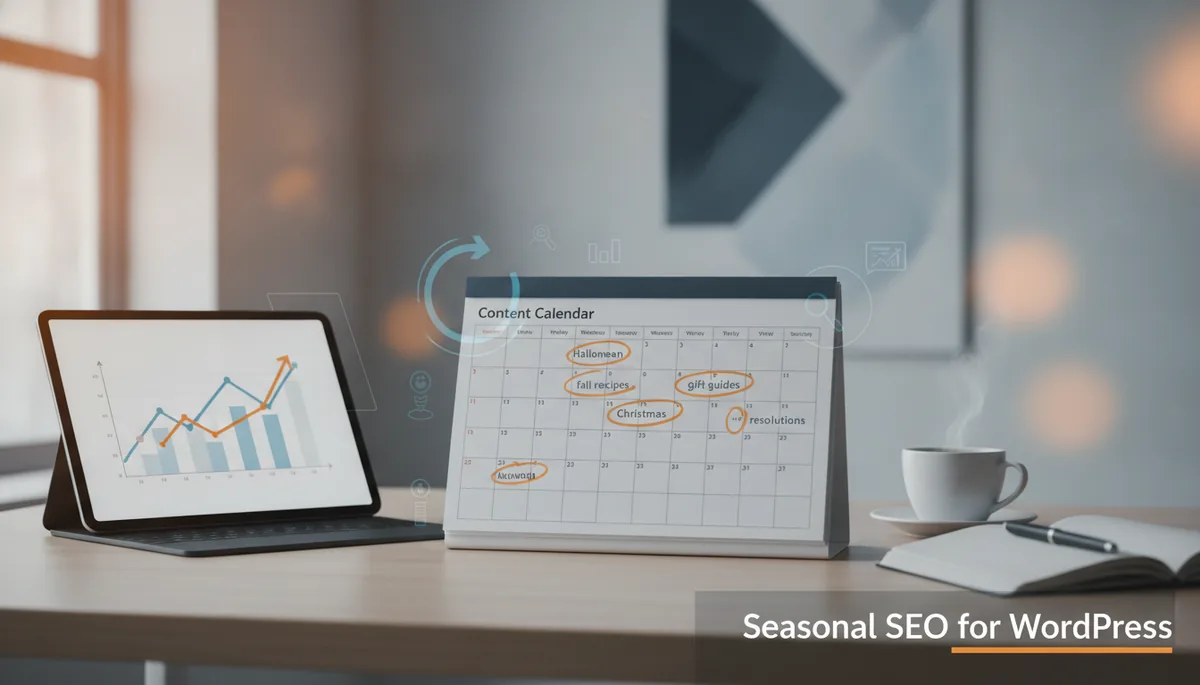
- 30/90-day calendar: In the first 30 days, focus on republishing refreshed top posts and filling cluster gaps around pillar topics. In the 90-day plan, run two link-building outreaches per week and publish 2–3 cluster posts monthly.
- Repurpose winners: Turn a top how-to into an email mini-course, a PDF lead magnet, or a short video. Repurposing is like making coffee and then turning the grounds into compost — efficient and rewarding.
Examples of high-converting posts: how-tos (step-by-step solves), product roundups (best-in-class with affiliate links), and case studies (real results). I’ve used a refreshed case study to drive both organic search and signups — it’s a conversion machine when done right.
Monetization tactics that don’t rely on heavy ad spend
If your wallet cringes at display ad models, that’s because display-only strategies are like asking people to pay attention in a room full of puppies. Instead, prioritize durable revenue that scales with content and audience trust.
- Email list first: Build an email funnel with ConvertKit or Mailchimp. Offer a lead magnet tied to your top post to capture interested readers — that’s where real repeat traffic and sales live.
- Affiliate content: Create honest product roundups and in-depth tutorials. Use affiliate disclosures and prioritize helpfulness over hyperbole.
- Digital products & memberships: Sell templates, mini-courses, or subscriber content with WooCommerce, Easy Digital Downloads, or MemberPress. Start small — validate with a pre-sale offer before building full infrastructure.
- Sponsorships & sponsored posts: Once you have steady traffic and niche authority, pitch sponsored opportunities. Keep pricing simple and deliverable-focused.
- Quick A/B tests: Test CTA language, button color, or a lead magnet headline on high-traffic pages. Use simple A/B tools or run sequential tests to see what moves the needle.
I tested a paid mini-course on a single high-traffic post before committing to a full course build. The pre-sale paid for production and proved demand — the business-savvy version of trying on shoes before buying a whole wardrobe.
Design, plugins and free tools for a professional look without coding
You don’t need a designer’s salary to look like one. With the right theme, a small plugin stack, and a couple of trust-focused design tweaks, your blog can feel professional and convert better. Think clean, readable, and fast — the internet’s version of good lighting.
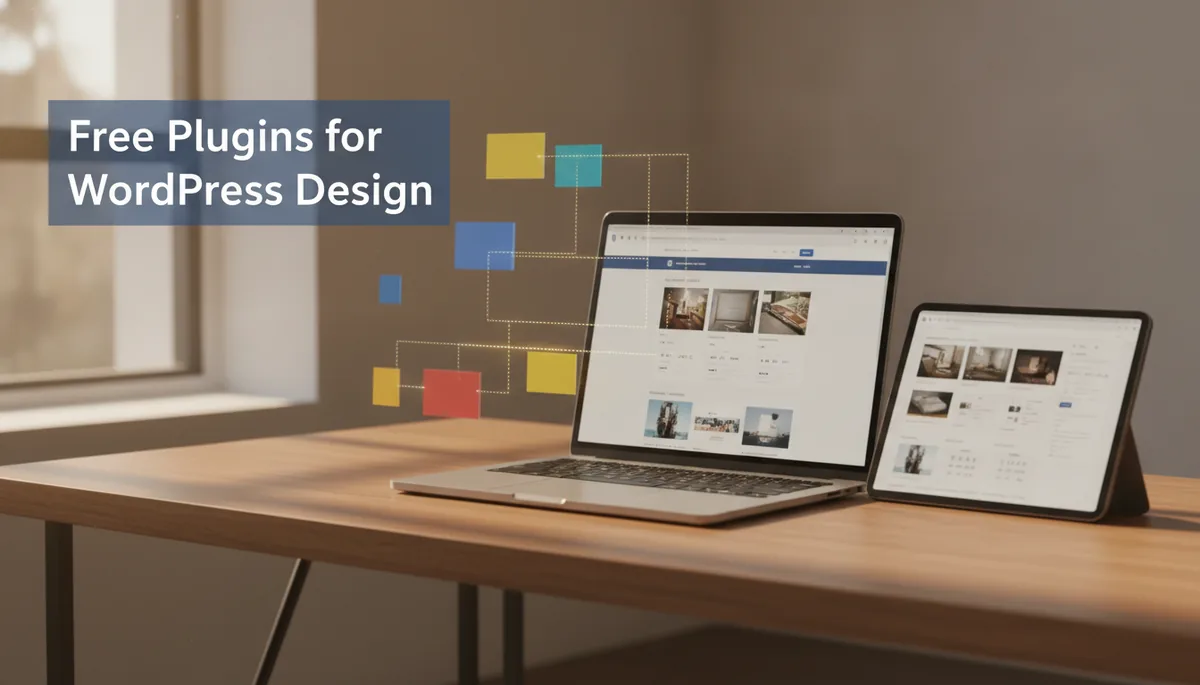
- Themes & builders: Use lightweight, well-maintained free themes like GeneratePress, Astra, Kadence, or Neve. Use Gutenberg patterns or Elementor for layout flexibility without breaking your site.
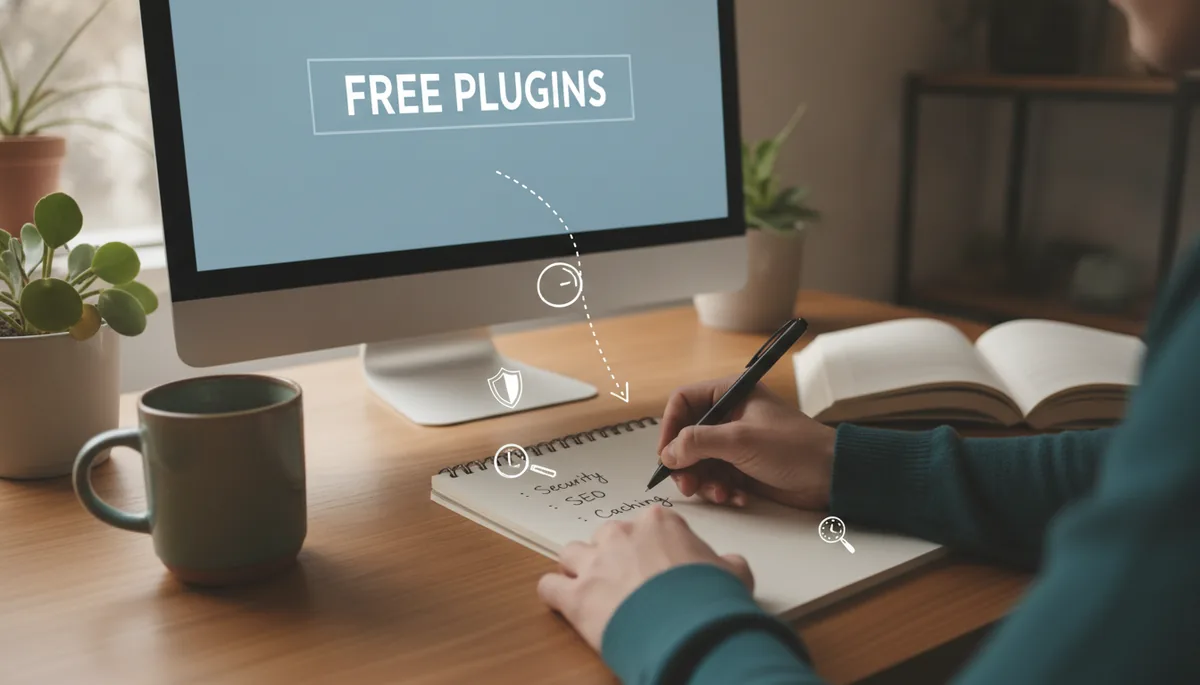
- Essential free plugins: backups (UpdraftPlus), security (Wordfence or Shield), SEO (Rank Math), and redirects (Redirection). Keep plugin count minimal — each plugin is another potential conflict.
- Two quick design fixes that boost trust: show a clear author bio with a friendly photo and an email signup in the sidebar or top banner; and add a visible, simple value-driven CTA above the fold. Also, ensure SSL and a favicon — tiny details that scream “professional.”
- Plugin audit: Review active plugins, check last-updated dates, and remove duplicates. Verify compatibility with your PHP and WordPress versions before migrating.
I once swapped a heavy multi-purpose theme for GeneratePress, removed five plugins that duplicated features, and watched load time drop by nearly half. The site looked cleaner and the bounce rate fell — proving that less is often more, especially when that “less” isn’t slow.
Launch-day checklist plus a 30/90-day monitoring and growth plan
Launch day is less confetti and more checklist. Don’t skip the rituals that stop errors from becoming disasters. After the switch, you’ll be in watchful mode for a few weeks. Treat it like watching a newborn sleep: gentle, attentive, and a little obsessive.
- Launch checklist:
- Switch DNS after lowering TTL, enable SSL, and confirm the site resolves on the new host.
- Purge hosting and CDN caches, enable your server-side caching, then test pages for 200s and canonical correctness.
- Enable redirects and spot-check the top 30 URLs. Submit the new sitemap in Search Console and verify robots.txt.
- Check analytics: ensure GA4 is receiving data and Search Console is tracking coverage.
- Immediate KPIs to watch: organic sessions by landing page, index coverage errors, average position for top queries, bounce rate on core pages, and conversion events (email signups, purchases).
- 30/90-day playbook:
- 30 days: fix broken links, re-optimize slow pages, A/B test headlines on top posts, and re-submit disavow if necessary.
- 90 days: ramp outreach for backlinks, publish cluster content, test a paid test to boost winners, and automate publishing cadence with tools like Trafficontent to scale without burning time.
On one launch I scheduled three days of lightweight content and outreach immediately after cutover. The result: no indexing hiccups, traffic stability, and an email list bump from republished top posts. Launches are boring if done right — which is a compliment.
Next step: pick the “pro” path that matches your goals, run the pre-upgrade audit this week, and schedule a staging migration for next weekend. If you want, send me one high-traffic URL and I’ll quickly tell you the smallest thing to protect first.
References: WordPress.org, WordPress.com Business plan, Google Search Console